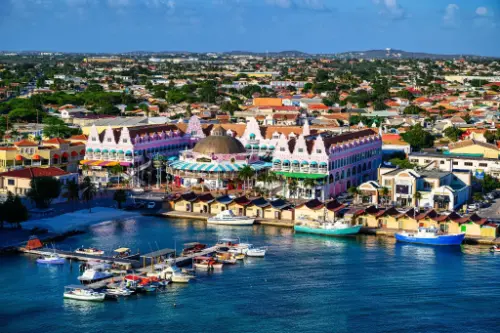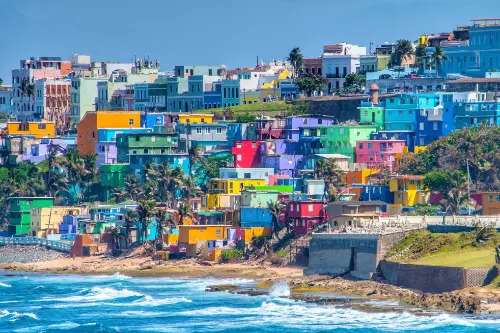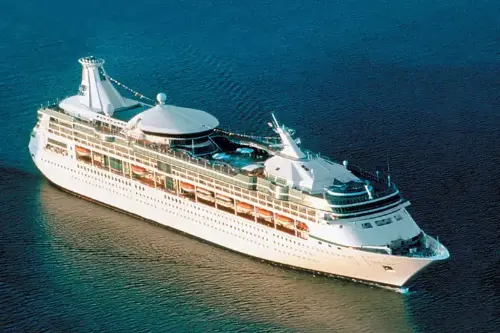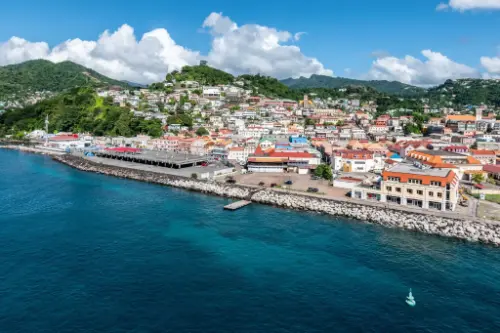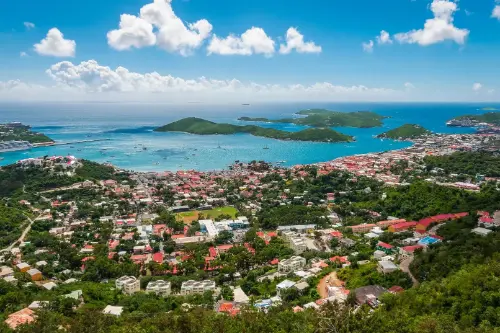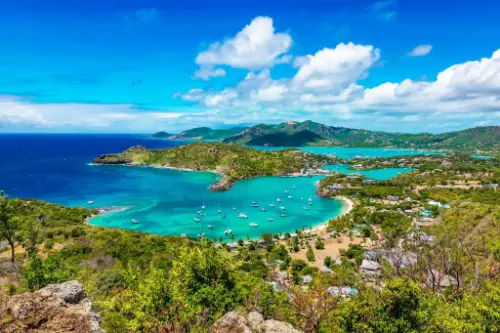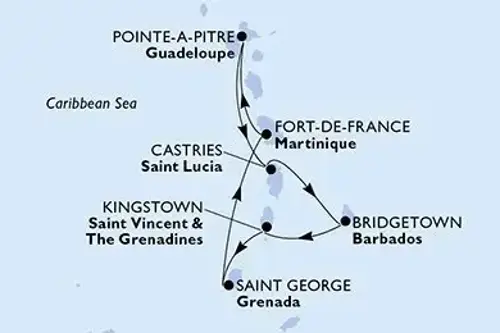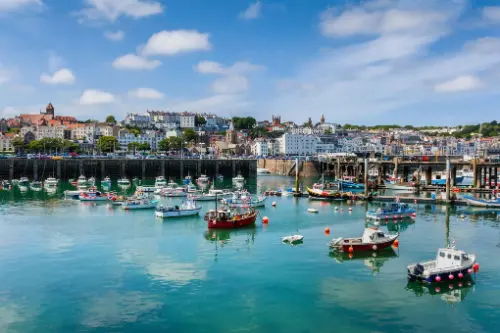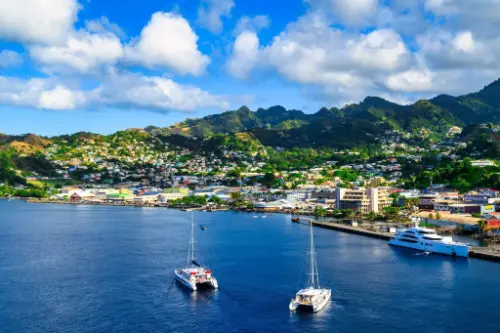
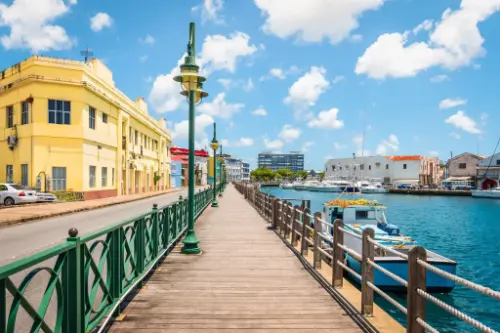
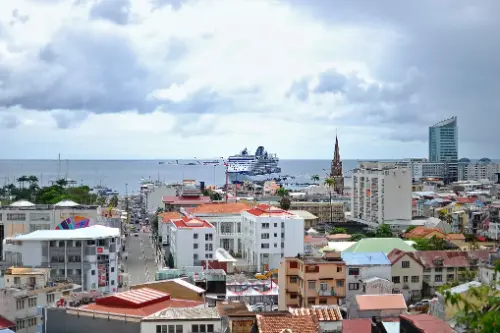
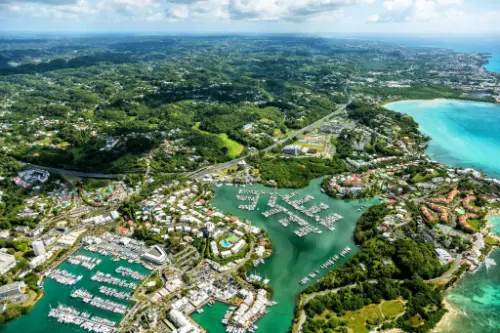
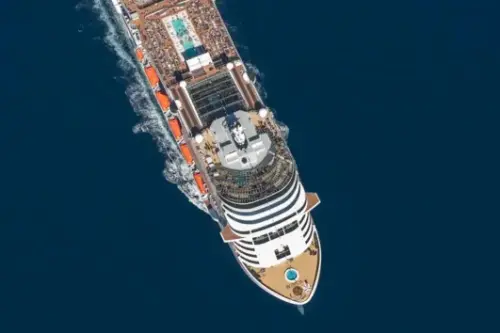
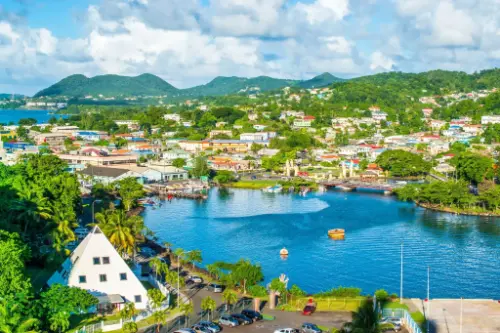
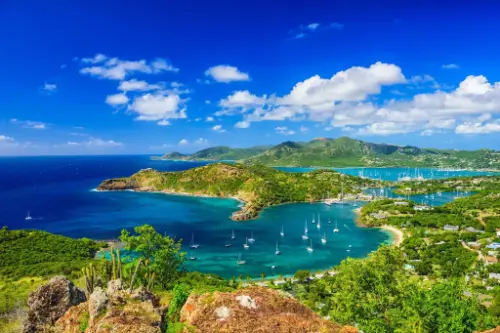
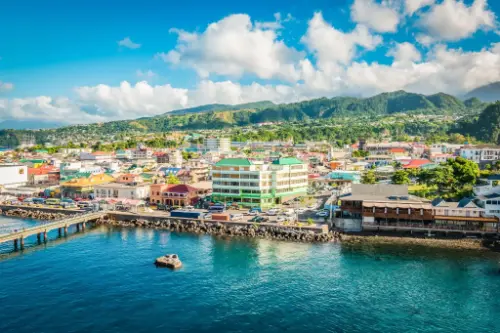
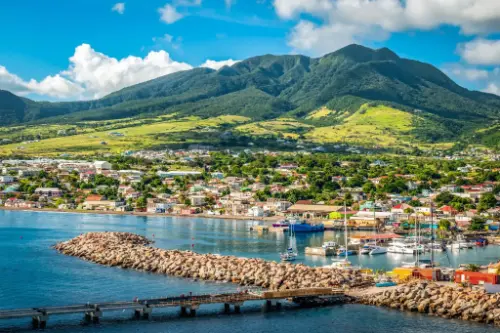
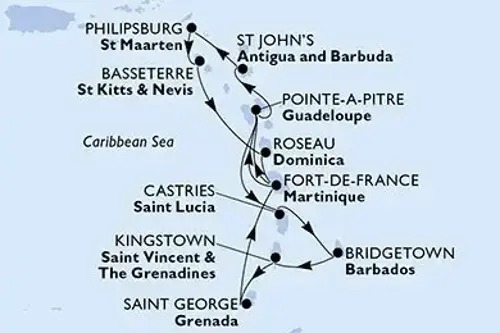
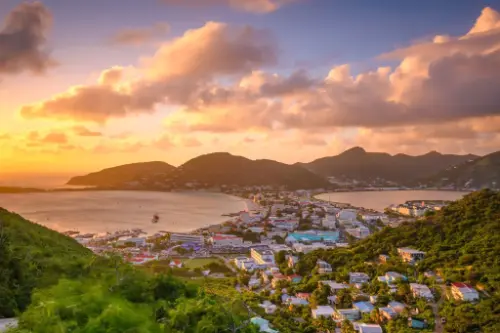
The chief advantage of this destination lies neither in the ships nor in the islands. It lies in what is absent: the US visa. Cruises from Fort-de-France and Pointe-à-Pitre sail the same Lesser Antilles as itineraries out of Miami, but they begin on French territory — so you reach them through Paris rather than through a US consulate. For a traveller from Eastern Europe that is often decisive. The season is a winter one: December to early April.
Martinique and Guadeloupe are French overseas departments. Legally they are the European Union and the Schengen area: Ukrainian citizens with a biometric passport need no visa, and Polish citizens certainly do not. A cruise from Miami requires a US B1/B2 visa or ESTA, and the processing times cannot be planned around.
The destination remains niche but stable. The mass American tourist does not come here — Florida is logistically simpler for them. The European audience, by contrast, is at home: direct flights from France and Germany, a familiar format, often affordable fares and periodic discounts on flights.
The typical buyer is a traveller who wants the Caribbean without visa trouble, or an experienced cruiser who has already done the classic Florida itineraries and is looking for something more intimate.
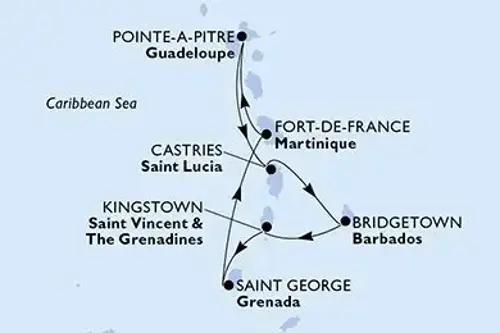
Itineraries are round trips beginning and ending in Fort-de-France or Pointe-à-Pitre. Typical length is 7 or 14 nights. The islands lie close together, so sea days are few and calls come almost daily.
| Island | Port | Known for |
|---|---|---|
| Martinique | Fort-de-France | Departure port. The French West Indies: cuisine, rum, Mount Pelée |
| Guadeloupe | Pointe-à-Pitre | Second departure port. A butterfly-shaped archipelago, waterfalls and mangroves |
| St Lucia | Castries | The Pitons — the most recognisable silhouette in the Antilles |
| Barbados | Bridgetown | British heritage and the west-coast beaches |
| Antigua and Barbuda | St John's | English Harbour and a long sailing tradition |
| Dominica | Roseau | The nature island: the Boiling Lake and rainforest |
| Grenada | St George's | The spice island: nutmeg and cocoa |
| St Kitts and Nevis | Basseterre | Brimstone Hill Fortress and a narrow isthmus between two oceans |
The choice comes down to a simple trade: the widest possible offer against the simplest possible arrangements. For an Eastern European audience the visa barrier usually outweighs everything else.
| Aspect | Miami and Florida | Martinique and Guadeloupe |
|---|---|---|
| Visa | US B1/B2 for Ukrainian citizens, ESTA for Polish citizens | None required: Schengen, visa-free for Ukrainians with a biometric passport |
| Choice of ships | The largest in the world, including the newest mega-ships | Smaller; compact MSC and Costa vessels |
| Logistics | A connection and almost a full day in transit, plus a time-zone shift | A direct flight from Paris or Frankfurt, about nine hours |
| Arrangements | Flight, hotel and transfer booked separately | MSC offers turnkey packages: flight, meet-and-greet, transfer, cruise |
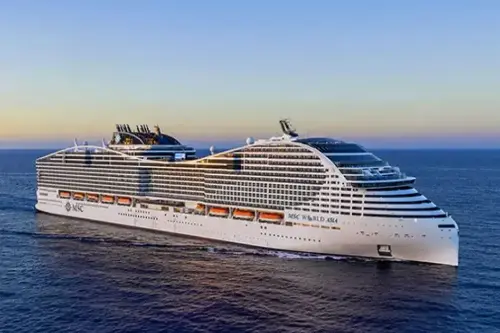
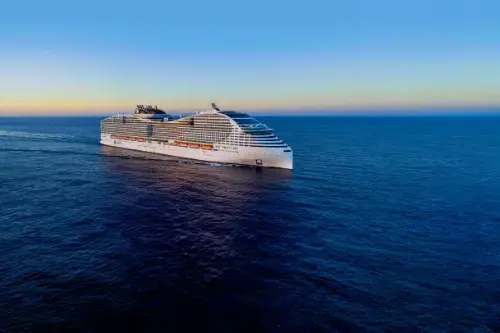
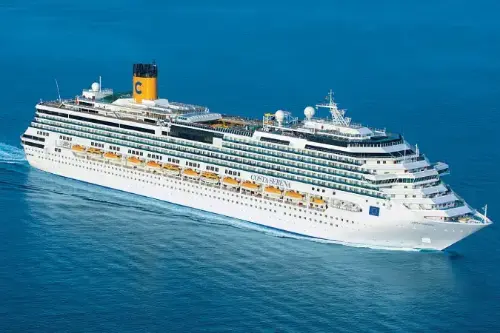
Two lines operate in the Antilles: MSC Cruises and Costa Cruises. The ships are more compact than the Florida fleet, the itineraries more intimate, and the atmosphere closer to European than American.
MSC offers ready-made packages that Center Cruises clients frequently choose: departure from Paris or Frankfurt, a meet-and-greet at the airport, a transfer to the ship and back. The fare covers the cruise, the transfers and the flights. For a traveller who would rather not assemble a trip from three separate bookings, this removes the destination's main difficulty.
The season runs from November to April, and peaks between December and early April, when the Caribbean weather is at its most comfortable and most programmes are on offer.
November and April have a particular quality, though. In November the ships are only crossing from Europe to the Caribbean; in April they return. That makes a transatlantic Europe–Caribbean crossing available in those months: a long itinerary with several sea days and a markedly different nightly rate.
| Period | What is available |
|---|---|
| December to early April | Peak season: most programmes, best weather |
| November | Start of the season. Transatlantic crossing Europe to the Caribbean |
| April | End of the season. Transatlantic crossing Caribbean to Europe |
| May to October | The fleet departs; scheduled programmes are effectively absent |
The main hubs are Paris and Frankfurt, with Air France and Condor the most frequently used carriers. A direct flight from Europe takes about nine hours.
From Poland, Moldova or Ukraine the connection determines everything: total journey time runs from 13 to 18 hours. That is less than Florida once visa preparation is counted, and without the risk of a consular refusal.
Demand for a pre- or post-cruise stay on the islands is growing: travellers typically add two to four nights on Martinique and hire a car to tour the island. Guadeloupe is noticeably less popular in that role.
There is a better answer, though. Instead of a seven-night cruise plus two or three hotel nights, take fourteen nights: the same ship runs two different itineraries that combine neatly. The holiday is longer and the experience richer for a comparable budget.
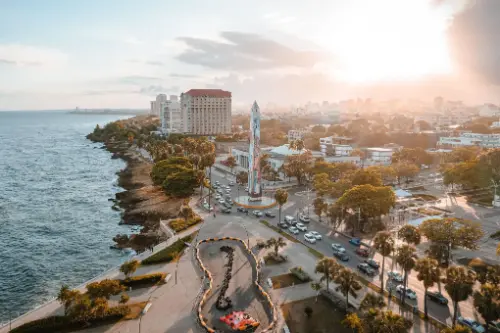
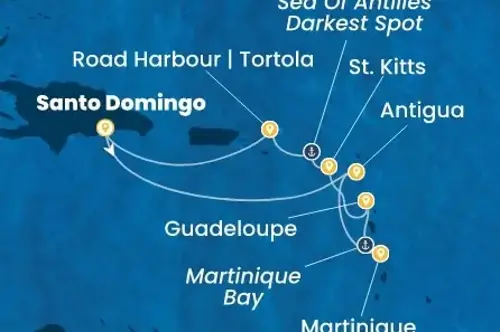
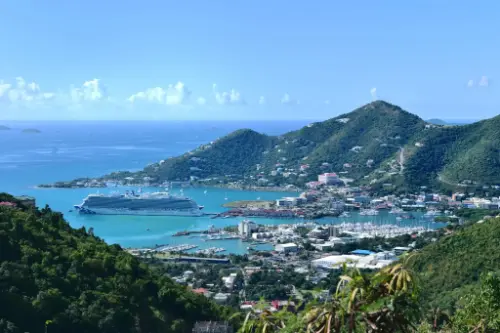
Cruises from the Dominican Republic are gaining ground for the same reason: no US visa is needed, and the number of sailings grows every year. Itineraries leave from La Romana and Santo Domingo and cover the same Lesser Antilles: Catalina Island, Barbados, Fort-de-France, Pointe-à-Pitre, Basseterre, St John's, Ocho Rios in Jamaica and Tortola in the Virgin Islands.
If the Antilles from Martinique feel too intimate, the Dominican itineraries offer the same visa-free entry to the region with a different set of islands.
Cruises from Martinique and Guadeloupe are the simplest way to see the Caribbean without applying for a US visa. The destination is built around the European traveller: a flight via Paris, a round-trip itinerary, several Lesser Antilles islands in one voyage, and turnkey packages from MSC. The choice of ships is narrower than in Florida, but the arrangements are simpler and the winter season is the same.
Do I need a US visa for a cruise from Martinique or Guadeloupe?
No. Martinique and Guadeloupe are French overseas departments, and therefore part of the European Union and the Schengen area. Ukrainian citizens with a biometric passport need no visa, and Polish citizens, as EU nationals, do not either. A US visa is required only for itineraries departing from the United States.
How many cruises from Martinique are listed on center.cruises?
The category holds 661 sailings (snapshot of 9 July 2026). The bulk falls within the winter season, from December to early April. The itineraries are operated by MSC Cruises and Costa Cruises.
Which islands are on a Lesser Antilles itinerary?
Most often St Lucia, Barbados, Antigua and Barbuda, Dominica, Grenada, and St Kitts and Nevis. Departure and return are at Fort-de-France on Martinique or Pointe-à-Pitre on Guadeloupe. Typical length is 7 or 14 nights.
When is the best time to cruise the Antilles?
The season runs November to April and peaks from December to early April: comfortable weather and the widest choice of programmes. In November the ships are still crossing from Europe, and in April they return, so transatlantic Europe–Caribbean itineraries are available in those months.
How do I get to Martinique and how long is the flight?
The main hubs are Paris and Frankfurt, served most often by Air France and Condor. A direct flight from Europe takes about nine hours. From Poland, Moldova or Ukraine, total journey time with a connection runs from 13 to 18 hours.
Are packages with flights and transfers available?
Yes. MSC offers turnkey packages: departure from Paris or Frankfurt, a meet-and-greet at the airport, a transfer to the ship and back. The price covers the cruise, the transfers and the flights. Center Cruises clients frequently choose this option.
Is it worth adding a stay on the island before or after the cruise?
Demand is growing: travellers usually take two to four nights on Martinique and hire a car. Often a better solution exists, though: instead of a seven-night cruise plus a hotel, take fourteen nights. The same ship runs two different itineraries that combine neatly, so the holiday is longer and the experience richer.
How does a cruise from Martinique differ from one out of Miami?
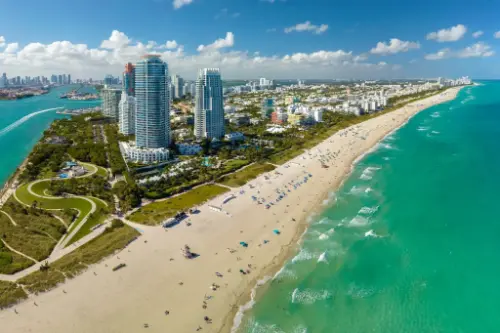
Miami offers the world's widest choice of ships, including the newest mega-vessels, but requires a US visa and almost a full day of travel with a connection. Martinique and Guadeloupe offer fewer ships — compact MSC and Costa vessels — but no visa barrier, a direct nine-hour flight from Paris, and packages that include flights and transfers.