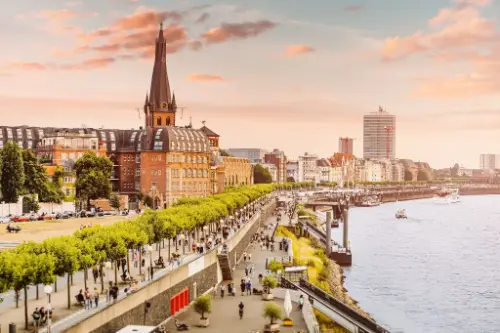
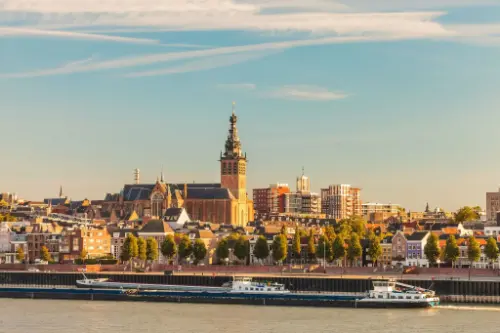
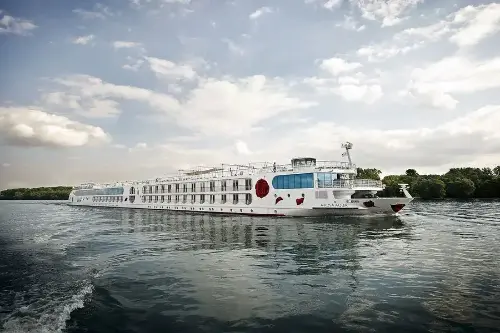
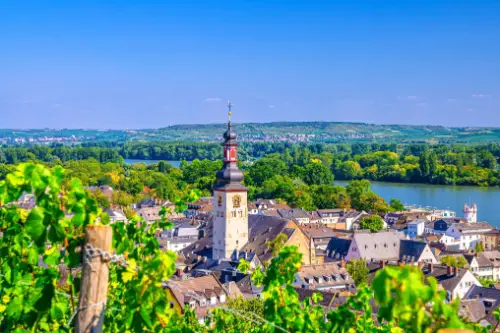
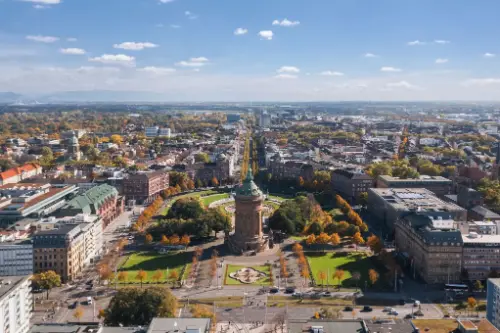
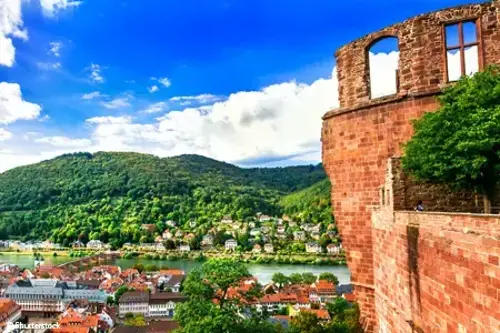
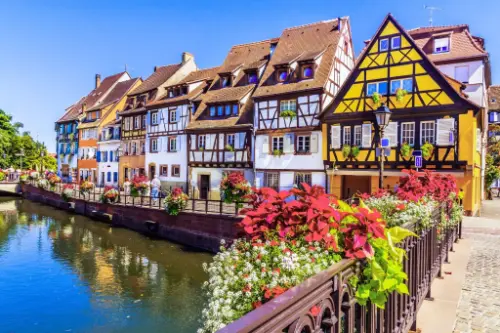
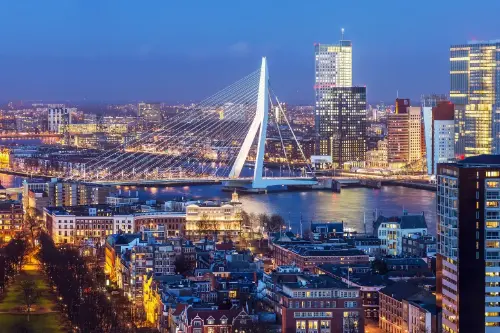
Choosing between the Rhine and the Danube is the first question for anyone planning a European river cruise. The answer is simpler than it looks: they are not competitors but two different trips. The Danube means imperial capitals and grand history — Budapest, Vienna, Bratislava. The Rhine means castles, vineyards and medieval towns, where the strongest impression arrives straight from the deck.
The Rhine or the Danube: what you are really choosing
The difference is not in quality but in the substance of the trip. On the Danube you move from capital to capital: imperial architecture, large cities, museums. On the Rhine you spend most of the time watching the bank: cliffs, terraced vineyards, one castle after another. That is why the Rhine is often called “fairy-tale Europe” — and precisely what a castle-seeker may miss on the Danube. The reverse holds too: anyone dreaming of Vienna and Budapest will not find that concentration of capitals on the Rhine.
| River | What it offers | Who it suits |
|---|
| The Rhine | Castles, vineyards, medieval towns; Germany, France, the Netherlands | Travellers who want the view from the deck and “fairy-tale Europe” |
| The Danube | Budapest, Vienna, Bratislava; imperial history and architecture | Travellers who come for the great capitals |
The UNESCO valley: 65 kilometres and forty castles
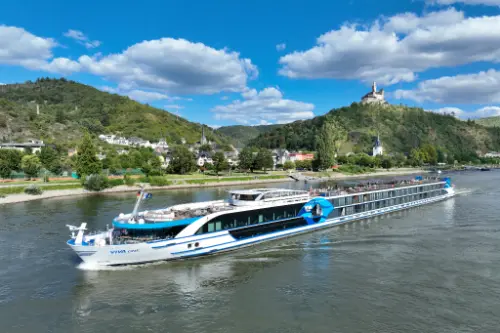
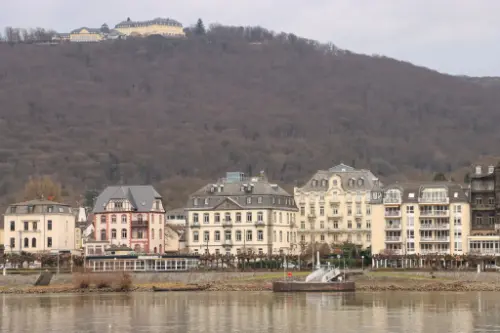
The Rhine’s main visual argument is the Upper Middle Rhine between Bingen and Rüdesheim in the south and Koblenz in the north. These 65 kilometres of valley are UNESCO-protected: some forty castles and fortresses, vineyards on both banks and the famous Lorelei rock, where the river narrows and turns sharply.
In practice this means the best of the itinerary happens not on an excursion but on the sun deck: a cup of coffee, the bank, a castle, another castle. When planning the day, simply leave time for this stretch.
The classic route
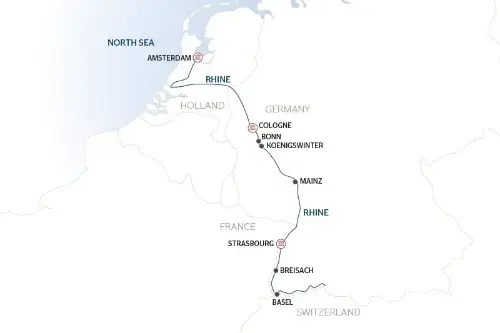
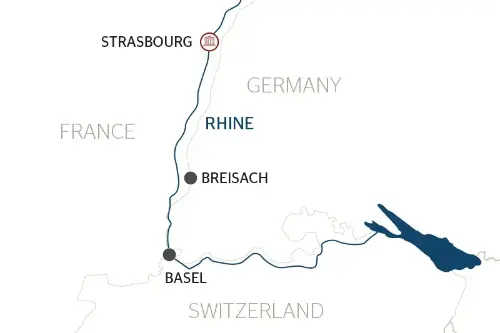
The core itinerary is Amsterdam → Cologne → Koblenz → Rüdesheim → Strasbourg → Basel, or the reverse. The exact set of ports depends on the line; Cologne and Strasbourg are also principal ports of the destination. The standard length is 7 nights and 8 days, with short 4–5-night programmes and extended 10–14-day itineraries alongside.
| Port | What it offers |
|---|
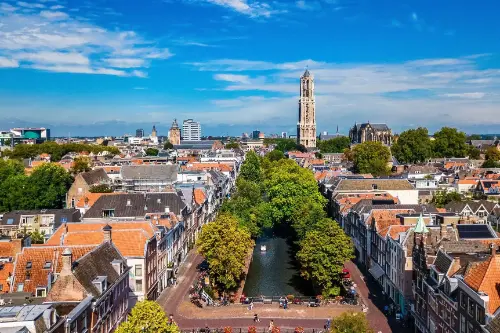
| Amsterdam | Canals and museums; a frequent start or finish |
| Cologne | The Gothic cathedral above the river; most programmes start here |
| Koblenz | The northern gate of the UNESCO valley, where the Rhine meets the Moselle |
| Rüdesheim | A wine town at the southern edge of the valley, where the castle stretch begins |
| Strasbourg | Alsace: the half-timbered Petite France quarter and the cathedral |
| Basel | The Swiss finish of the route, where three countries meet |
Combinations: the Main, the Moselle and the Danube
Combined itineraries are a defining feature of the Rhine and the reason it offers so many options. There are Rhine + Main, Rhine + Moselle and Rhine + Danube pairings, as well as programmes with land sections in Switzerland, the Netherlands and Germany. The Moselle adds a narrow wine valley, the Main leads inland towards Franconia, and the Danube pairing turns the cruise into a grand European journey. The Rhine therefore works well as the backbone of a longer trip, not only as a week on its own.
Lines, duration and ships
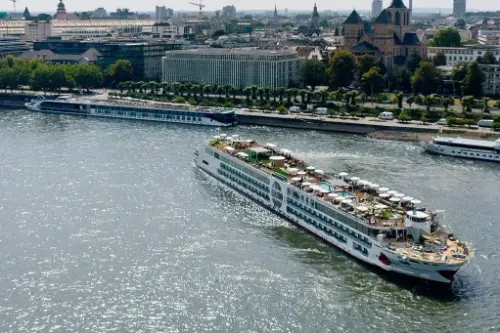
The Rhine is served by CroisiEurope, Viking, AmaWaterways, A-ROSA, Scenic, Emerald, Avalon and Uniworld — it is one of the two principal markets of European river cruising, alongside the Danube.
Typical Rhine vessels carry around 120–190 passengers, with smaller ships in the luxury segment. Demand is growing and lines are building larger vessels, from 200 guests upwards. Check capacity for the specific ship: the difference between 120 and 200 passengers is noticeable both in the atmosphere on board and in how excursions are run.
Three seasons of the Rhine
The main season runs from April to October, but the Rhine effectively has three faces. May and June offer comfortable weather and a green valley. September and October bring the wine season and autumn colour. December is a story of its own: Christmas cruises, when Cologne, Koblenz, Rüdesheim, Strasbourg, Basel and other cities turn into Christmas destinations with their markets. It is a rare case of one river offering three fundamentally different trips across the year.
Prices and what to weigh
Segment guides:
| Segment | Price guide per person |
|---|
| Standard | around €1,000–1,800 |
| Premium | around €2,000–3,500 |
| Luxury | around €3,500–6,000 and above |
The lowest fare on the platform at the snapshot date starts from €348: the category holds both short programmes and full week-long itineraries. The table shows indicative segment ranges; the final price depends on the line, fare, ship and date. December Christmas departures are worth booking early — the season is short.
Logistics and visas
Visas. Ukrainian citizens do not need a Schengen visa: with a valid biometric passport, visa-free travel applies for short stays — up to 90 days within any 180, subject to entry conditions. Medical insurance with cover from €30,000 is mandatory. Switzerland (Basel) is not in the EU but is in the Schengen area — the same rule applies. Polish citizens need no visa as EU citizens.
Most itineraries start in Cologne, with Frankfurt am Main as the convenient airport for that option. Amsterdam and Basel serve as alternative entry points depending on which end of the route the programme begins. Ukraine’s airports are closed, so flights are routed through neighbouring countries. Plan a night in the departure city before the cruise in any case.
Conclusion
The Rhine is “fairy-tale Europe”: castles, vineyards, medieval towns and the legendary Lorelei on the especially striking stretch between Rüdesheim and Koblenz.
The Rhine and the Danube are not competitors but two different trips: the Danube for capitals and imperial history, the Rhine for landscapes, castles and European towns. And the Rhine is the more versatile by season — a classic scenic cruise in summer, a wine tour in autumn and a Christmas cruise through Germany and France in December.