

Sea cruise · 12.09.2027 – 23.09.2027 · 11 nights
11 nights, from Nice
Route and cruise information
Premium- Nice
- Livorno
- Livorno
- Porto Santo Stefano
- Sorrento, Capri
- Trapani
- Syracuse
- Crotone
- TARANTO
- Kotor
- Fusina
| Date | Port | Arrival | Departure |
|---|---|---|---|
| 12.09.2027 |
Nice
France
|
— | 18:00 |
| 13.09.2027 |
Livorno
Italy
|
07:30 | — |
| 14.09.2027 |
Livorno
Italy
|
— | 20:00 |
| 15.09.2027 |
Porto Santo Stefano
|
08:00 | 16:00 |
| 16.09.2027 |
Sorrento, Capri
Italy
|
08:00 | 18:00 |
| 17.09.2027 |
Trapani
Italy
|
08:30 | 17:00 |
| 18.09.2027 |
Syracuse
Italy
|
09:00 | 20:00 |
| 19.09.2027 |
Crotone
Italy
|
09:00 | 20:00 |
| 20.09.2027 |
TARANTO
Italy
|
08:00 | 16:00 |
| 21.09.2027 |
Kotor
Montenegro
|
10:30 | 21:00 |
| 22.09.2027 |
Day at sea
|
— | — |
| 23.09.2027 |
Fusina
Italy
|
06:00 | — |
-
 Day 1: 18:00
Nice / France
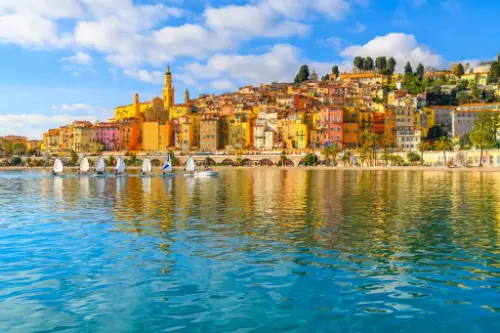
Nice is the seventh most populous urban area in France and the capital of the Alpes-Maritimes département. The metropolitan area of Nice extends beyond the administrative city limits, with a population of about 1 million on an area of 721 km2 (278 sq mi). Located in the French Riviera, on the south east coast of France on the Mediterranean Sea, at the foot of the Alps, Nice is the second-largest French city on the Mediterranean coast and the second-largest city in the Provence-Alpes-Côte d'Azur region after Marseille. Nice is approximately 13 kilometres (8.1 mi) from the principality of Monaco and 30 kilometres (19 mi) from the French-Italian border. Nice's airport serves as a gateway to the region.
The city is nicknamed Nice la Belle (Nissa La Bella in Niçard), which means Nice the Beautiful, which is also the title of the unofficial anthem of Nice, written by Menica Rondelly in 1912.
The area of today's Nice contains Terra Amata, an archaeological site which displays evidence of a very early use of fire. Around 350 BC, Greeks of Marseille founded a permanent settlement and called it Nikaia, after Nike, the goddess of victory. Through the ages, the town has changed hands many times. Its strategic location and port significantly contributed to its maritime strength. For centuries it was a dominion of Savoy, and was then part of France between 1792 and 1815, when it was returned to Piedmont-Sardinia until its re-annexation by France in 1860.
The natural environment of the Nice area and its mild Mediterranean climate came to the attention of the English upper classes in the second half of the 18th century, when an increasing number of aristocratic families took to spending their winters there. The city's main seaside promenade, the Promenade des Anglais ("Walkway of the English") owes its name to visitors to the resort. The clear air and soft light have particularly appealed to notable painters, such as Marc Chagall, Henri Matisse, Niki de Saint Phalle and Arman. Their work is commemorated in many of the city's museums, including Musée Marc Chagall, Musée Matisse and Musée des Beaux-Arts. Nice has the second largest hotel capacity in the country and it is one of its most visited cities, receiving 4 million tourists every year. It also has the third busiest airport in France, after the two main Parisian ones. It is the historical capital city of the County of Nice(Comté de Nice).
Nice is the seventh most populous urban area in France and the capital of the Alpes-Maritimes département. The metropolitan area of Nice extends beyond the administrative city limits, with a population of about 1 million on an area of 721 km2 (278 sq mi). Located in the French Riviera, on the south east coast of France on the Mediterranean Sea, at the foot of the Alps, Nice is the second-largest French city on the Mediterranean coast and the second-largest city in the Provence-Alpes-Côte d'Azur region after Marseille. Nice is approximately 13 kilometres (8.1 mi) from the principality of Monaco and 30 kilometres (19 mi) from the French-Italian border. Nice's airport serves as a gateway to the region.The city is nicknamed Nice la Belle (Nissa La Bella in Niçard), which means Nice the Beautiful, which is also the title of the unofficial anthem of Nice, written by Menica Rondelly in 1912.
The area of today's Nice contains Terra Amata, an archaeological site which displays evidence of a very early use of fire. Around 350 BC, Greeks of Marseille founded a permanent settlement and called it Nikaia, after Nike, the goddess of victory. Through the ages, the town has changed hands many times. Its strategic location and port significantly contributed to its maritime strength. For centuries it was a dominion of Savoy, and was then part of France between 1792 and 1815, when it was returned to Piedmont-Sardinia until its re-annexation by France in 1860.
The natural environment of the Nice area and its mild Mediterranean climate came to the attention of the English upper classes in the second half of the 18th century, when an increasing number of aristocratic families took to spending their winters there. The city's main seaside promenade, the Promenade des Anglais ("Walkway of the English") owes its name to visitors to the resort. The clear air and soft light have particularly appealed to notable painters, such as Marc Chagall, Henri Matisse, Niki de Saint Phalle and Arman. Their work is commemorated in many of the city's museums, including Musée Marc Chagall, Musée Matisse and Musée des Beaux-Arts. Nice has the second largest hotel capacity in the country and it is one of its most visited cities, receiving 4 million tourists every year. It also has the third busiest airport in France, after the two main Parisian ones. It is the historical capital city of the County of Nice(Comté de Nice).
-
 Day 2: 07:30
Livorno / Italy
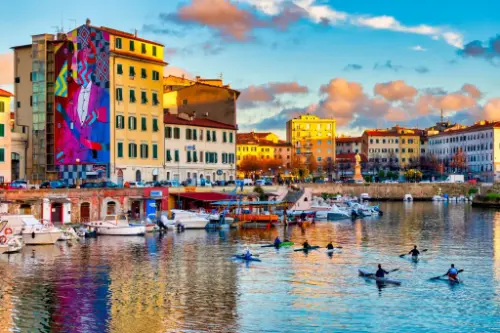
Livorno is a port city on the Ligurian Sea on the western coast of Tuscany, Italy. It is the capital of the Province of Livorno, having a population of 158,493 residents in December 2017. It has traditionally been known in English as Leghorn.
The origins of Livorno are controversial, although the place was inhabited since the Neolithic Age as shown by worked bones, pieces of copper and ceramic found on the Livorno Hills in a cave between Ardenza and Montenero. The construction of the Via Aurelia coincided with the occupation of the region by the Romans, who left traces of their presence in the toponyms and ruins of towers. The natural cove called Liburna, later transformed into Livorna, before becoming Livorno, is a reference to the type of ship, the liburna, used by Roman navy. Others ancient toponyms include: Salviano (Salvius), Antignano (Ante ignem) which was the place situated before Ardenza (Ardentia) where were the beacons for the ships directed to Porto Pisano.
The name Livorna is mentioned for the first time in 1017 as a small coastal village, the port and the remains of a Roman tower. In 1077, a tower was built by Matilda of Tuscany. The Republic of Pisa owned Livorno from 1103 and built a quadrangular Fort called Quadratura dei Pisani ("Quarter of the Pisans") to defend the port. Porto Pisano was destroyed after the crushing defeat of the Pisan fleet in the Battle of Meloria in 1284. In 1399, Pisa sold Livorno to the Visconti of Milan, in 1405 it was sold to the Republic of Genoa and on 28 August 1421 it was bought by the Republic of Florence.
Between 1427 and 1429, a census counted 118 families in Livorno, including 423 persons. Monks, Jews, military personnel, and the homeless were not included in the census. The only remainder of medieval Livorno is a fragment of two towers and a wall, located inside the Fortezza Vecchia.
-
Day 3: 20:00
Livorno / Italy
Livorno is a port city on the Ligurian Sea on the western coast of Tuscany, Italy. It is the capital of the Province of Livorno, having a population of 158,493 residents in December 2017. It has traditionally been known in English as Leghorn.
The origins of Livorno are controversial, although the place was inhabited since the Neolithic Age as shown by worked bones, pieces of copper and ceramic found on the Livorno Hills in a cave between Ardenza and Montenero. The construction of the Via Aurelia coincided with the occupation of the region by the Romans, who left traces of their presence in the toponyms and ruins of towers. The natural cove called Liburna, later transformed into Livorna, before becoming Livorno, is a reference to the type of ship, the liburna, used by Roman navy. Others ancient toponyms include: Salviano (Salvius), Antignano (Ante ignem) which was the place situated before Ardenza (Ardentia) where were the beacons for the ships directed to Porto Pisano.
The name Livorna is mentioned for the first time in 1017 as a small coastal village, the port and the remains of a Roman tower. In 1077, a tower was built by Matilda of Tuscany. The Republic of Pisa owned Livorno from 1103 and built a quadrangular Fort called Quadratura dei Pisani ("Quarter of the Pisans") to defend the port. Porto Pisano was destroyed after the crushing defeat of the Pisan fleet in the Battle of Meloria in 1284. In 1399, Pisa sold Livorno to the Visconti of Milan, in 1405 it was sold to the Republic of Genoa and on 28 August 1421 it was bought by the Republic of Florence.
Between 1427 and 1429, a census counted 118 families in Livorno, including 423 persons. Monks, Jews, military personnel, and the homeless were not included in the census. The only remainder of medieval Livorno is a fragment of two towers and a wall, located inside the Fortezza Vecchia.
-
Day 4: 08:00–16:00
Porto Santo Stefano
-
 Day 5: 08:00–18:00
Sorrento, Capri / Italy
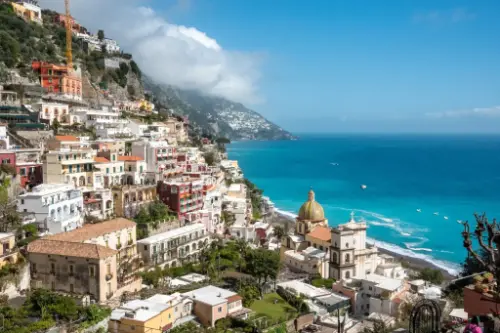
Sorrento is a town overlooking the Bay of Naples in Southern Italy. A popular tourist destination due to its variety of small antique shops and location on the Amalfi Coast, it can be reached easily from Naples and Pompeii as it is at the south-eastern end of the Circumvesuviana rail line. The town is most commonly known for its small shops selling an arrangement of ceramics, lacework and marquetry (woodwork).
The Sorrentine Peninsula has views of Naples, Vesuvius and the Isle of Capri. The Amalfi Drive, connecting Sorrento and Amalfi, is a narrow road that threads along the high cliffs above the Tyrrhenian Sea.
Ferries and hydrofoils connect the town to Naples, Amalfi, Positano, Capri and Ischia. Sorrento's sea cliffs and luxury hotels have attracted celebrities including Enrico Caruso and Luciano Pavarotti.
Limoncello, a digestif made from lemon rinds, alcohol, water and sugar, is produced in Sorrento. Other agricultural production includes citrus fruit, wine, nuts and olives.
-
 Day 6: 08:30–17:00
Trapani / Italy
-
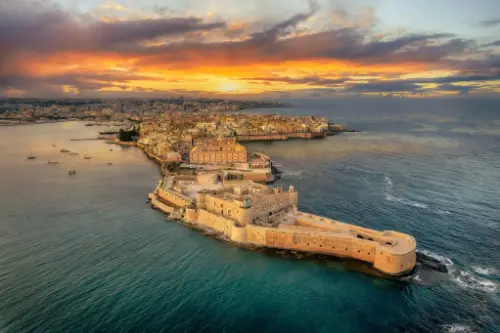 Day 7: 09:00–20:00
Syracuse / Italy
-
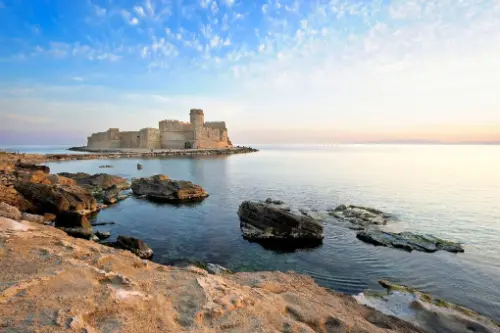 Day 8: 09:00–20:00
Crotone / Italy
-
Day 9: 08:00–16:00
TARANTO / Italy
-
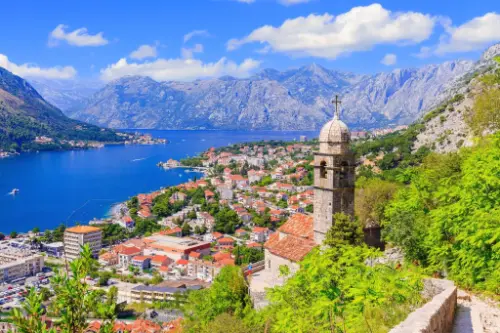 Day 10: 10:30–21:00
Kotor / Montenegro
Kotor is a coastal town in Montenegro. It is located in a secluded part of the Gulf of Kotor. The city has a population of 13,510 and is the administrative center of Kotor Municipality.
The old Mediterranean port of Kotor is surrounded by fortifications built during the Venetian period. It is located on the Bay of Kotor (Boka Kotorska), one of the most indented parts of the Adriatic Sea. Some have called it the southern-most fjord in Europe, but it is a ria, a submerged river canyon. Together with the nearly overhanging limestone cliffs of Orjen and Lovćen, Kotor and its surrounding area form an impressive landscape.
Since the early 2000s Kotor has seen an increase in tourists , many of them coming by cruise ship. Visitors are attracted by the natural environment of the Gulf of Kotor and by the old town of Kotor. Kotor is part of the World Heritage Site dubbed the Natural and Culturo-Historical Region of Kotor.
The fortified city of Kotor was also included in UNESCO's World Heritage Site list as part of Venetian Works of Defence between 15th and 17th centuries: Stato da Terra – western Stato da Mar in 201
-
Day 11:
Day at sea / Sea
-
Day 12: 06:00
Fusina / Italy
Frequently asked questions
We recommend flying in the day before the cruise begins.
- Arrive at the port 2–3 hours before departure.
- When booking an airport–port transfer, allow at least 5 hours between landing and the scheduled sailing.
Still have a question?
We'll help you choose a cruise and answer your questions.