| Cruise Region : Pacific cruises, Australia / New Zealand, Oceania |
| Company : Oceania Cruises |
| Ship : VISTA |
| Journey Start : Fri 26 Feb 2027 |
| Journey End : Mon 05 Jul 2027 |
| Count Nights : 129 nights |
| Day | Date | Port | Arrival | Departure |
|---|---|---|---|---|
| 1 | 26.02 Fri | Sydney / Australia | 07:00 | 22:00 |
| 2 | 27.02 Sat | Day at sea / Sea | ||
| 3 | 28.02 Sun | Mooloolaba / Australia | 08:00 | 17:00 |
| 4 | 1.03 Mon | Day at sea / Sea | ||
| 5 | 2.03 Tue | WHITSUNDAY ISLAND | 08:00 | 17:00 |
| 6 | 3.03 Wed | Cairns / Australia | 11:00 | |
| 7 | 4.03 Thu | Cairns / Australia | 18:00 | |
| 8 | 5.03 Fri | Day at sea / Sea | ||
| 9 | 6.03 Sat | Day at sea / Sea | ||
| 10 | 7.03 Sun | Darwin / Australia | 20:00 | |
| 11 | 8.03 Mon | Darwin / Australia | 16:00 | |
| 12 | 9.03 Tue | Day at sea / Sea | ||
| 13 | 10.03 Wed | Day at sea / Sea | ||
| 14 | 11.03 Thu | Komodo / Indonesia | 08:00 | 16:00 |
| 15 | 12.03 Fri | Praia / Cape Verde | 10:00 | 18:00 |
| 16 | 13.03 Sat | Tangjung Benoa / Indonesia | 07:00 | 19:00 |
| 17 | 14.03 Sun | Day at sea / Sea | ||
| 18 | 15.03 Mon | Semarang / Indonesia | 07:00 | 18:00 |
| 19 | 16.03 Tue | Jakarta / Indonesia | 10:00 | 18:00 |
| 20 | 17.03 Wed | Day at sea / Sea | ||
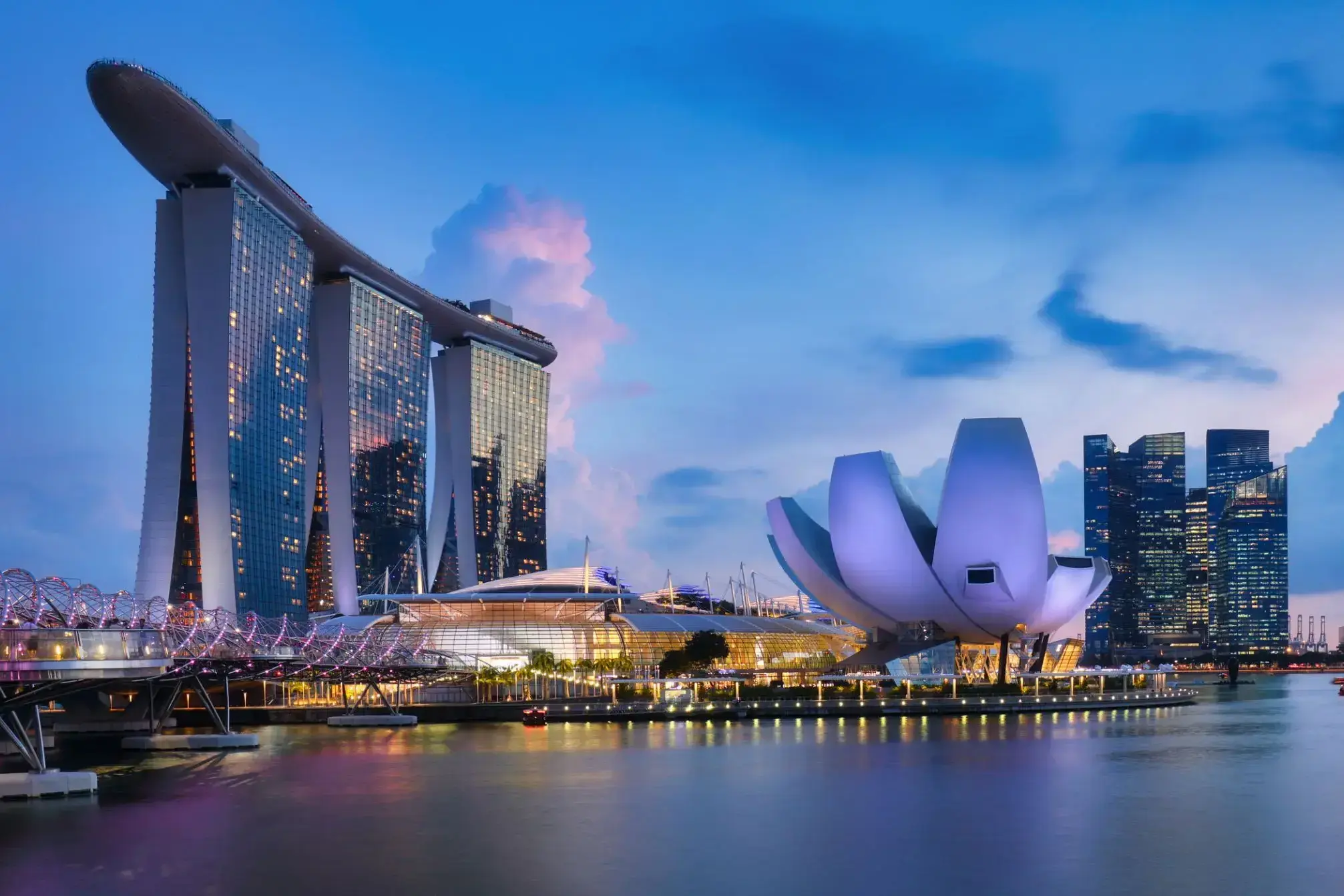
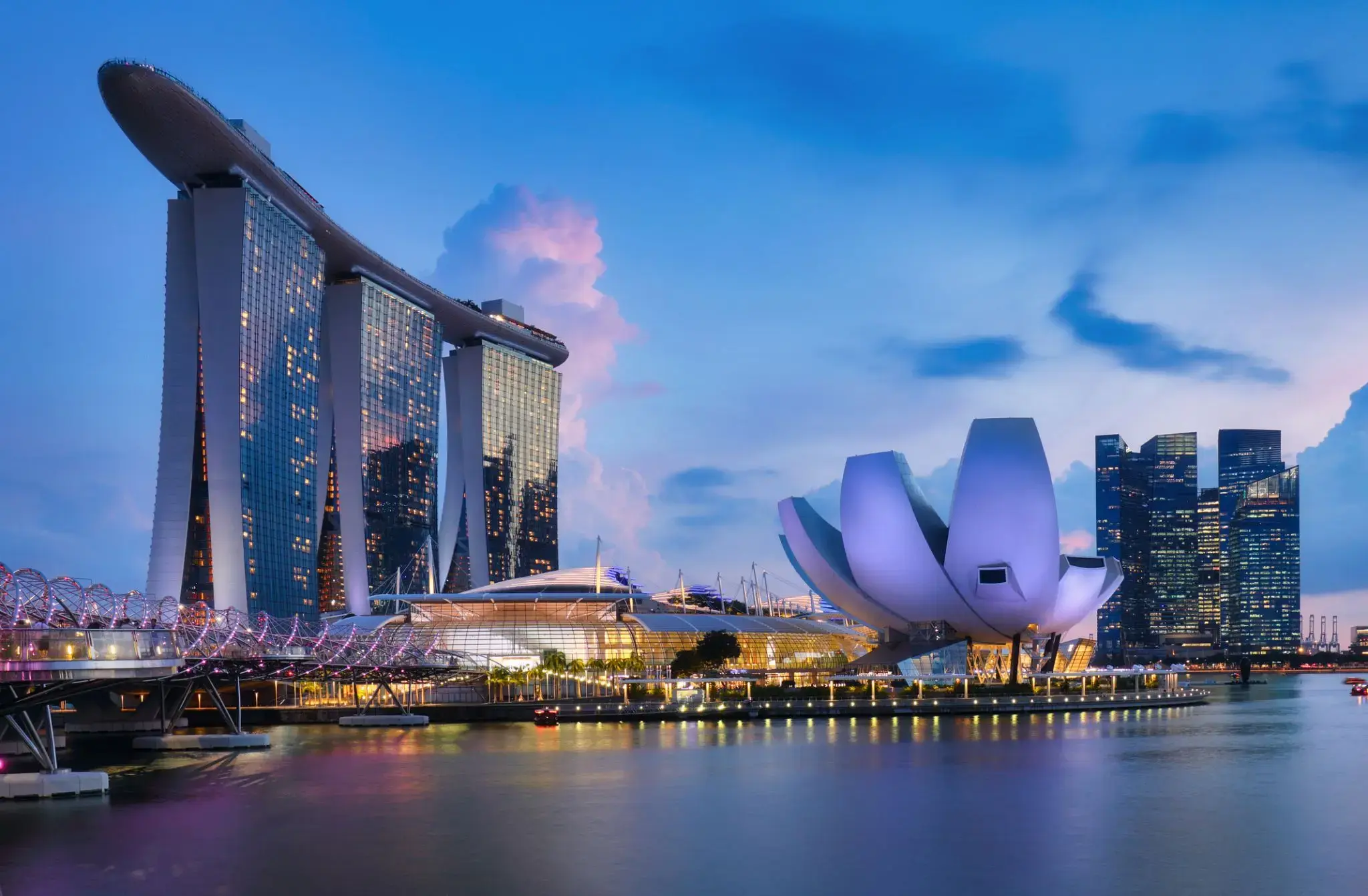
| 21 | 18.03 Thu | Singapore / Singapore | 07:00 | 17:00 |
| 22 | 19.03 Fri | Day at sea / Sea | ||
| 23 | 20.03 Sat | Samui Island / Koh Samui / Thailand | 07:00 | 16:00 |
| 24 | 21.03 Sun | Kampong Saom (Sihanoukville) / Cambodia | 07:00 | 14:00 |
| 25 | 22.03 Mon | Bangkok / Thailand | 07:00 | 16:00 |
| 26 | 23.03 Tue | Day at sea / Sea | ||
| 27 | 24.03 Wed | Ho Chi Minh / Vietnam | 09:00 | 18:00 |
| 28 | 25.03 Thu | Day at sea / Sea | ||
| 29 | 26.03 Fri | Da Nang / Vietnam | 07:00 | 16:00 |
| 30 | 27.03 Sat | Hanoi / Vietnam | 10:00 | 20:00 |
| 31 | 28.03 Sun | Day at sea / Sea | ||
| 32 | 29.03 Mon | Limbe / Cameroon | 06:00 | 18:00 |
| 33 | 30.03 Tue | Day at sea / Sea | ||
| 34 | 31.03 Wed | Day at sea / Sea | ||
| 35 | 1.04 Thu | Shanghai / China | 08:00 | |
| 36 | 2.04 Fri | Shanghai / China | 17:00 | |
| 37 | 3.04 Sat | Day at sea / Sea | ||
| 38 | 4.04 Sun | Seoul / Korea | 08:00 | 17:00 |
| 39 | 5.04 Mon | Day at sea / Sea | ||
| 40 | 6.04 Tue | Nagasaki / Japan | 07:00 | 16:00 |
| 41 | 7.04 Wed | Hiroshima / Japan | 11:00 | 19:00 |
| 42 | 8.04 Thu | Kochi / India | 10:00 | 18:00 |
| 43 | 9.04 Fri | Kyoto | 07:00 | 18:00 |
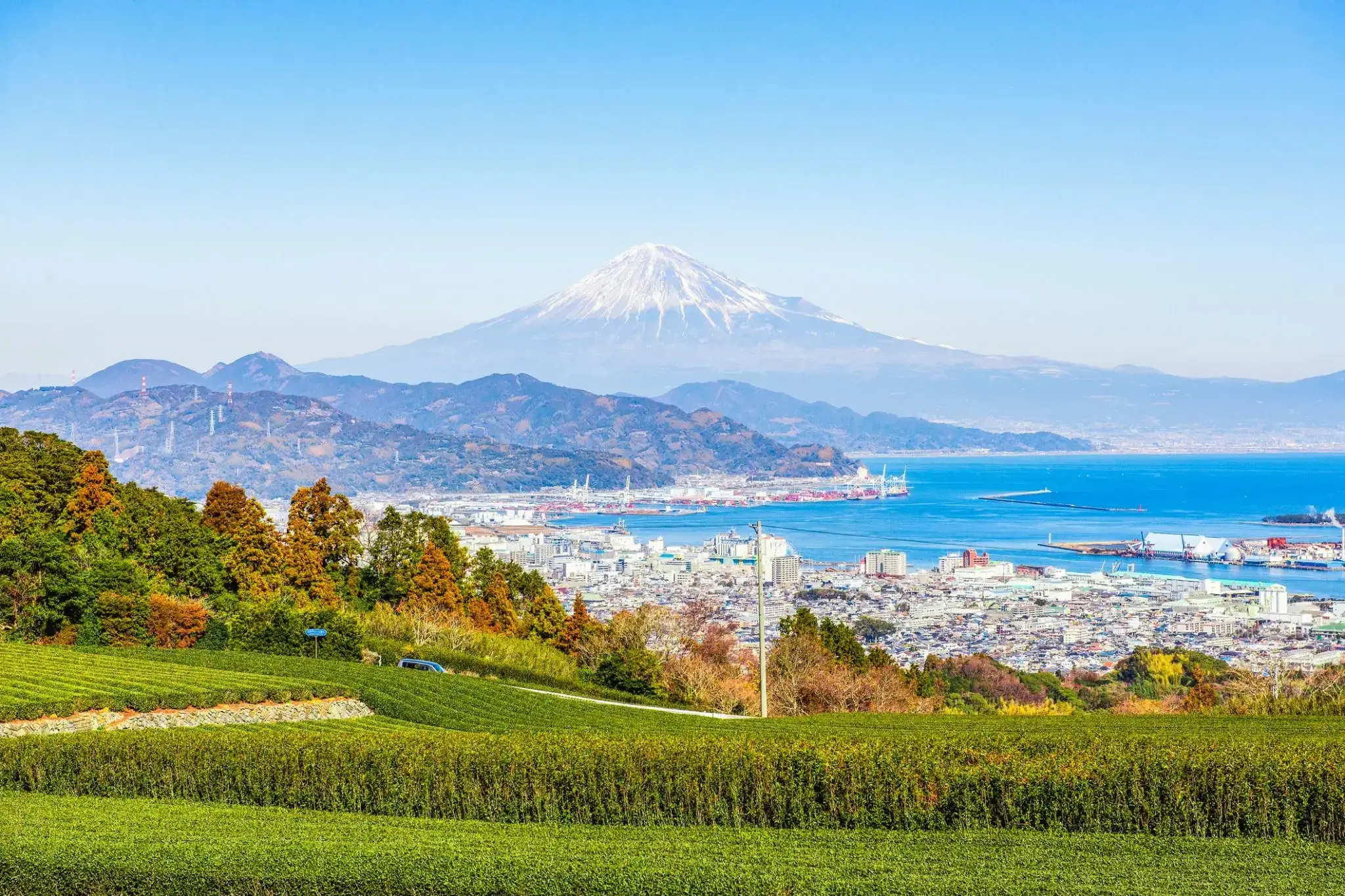
| 44 | 10.04 Sat | Shimizu / Japan | 12:00 | 20:00 |
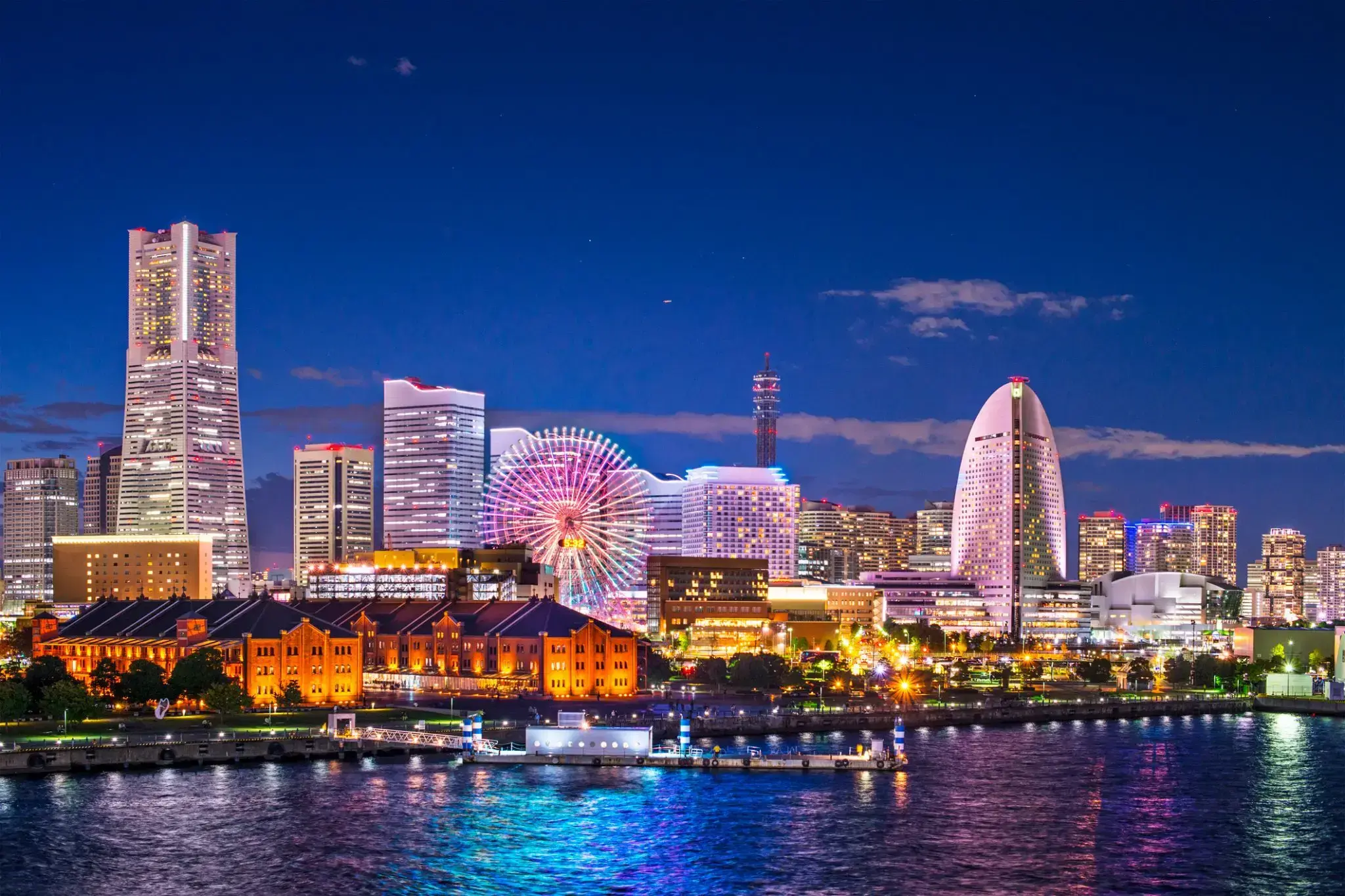
| 45 | 11.04 Sun | Yokohama (Tokyo) / Japan | 07:00 | |
| 46 | 12.04 Mon | Yokohama (Tokyo) / Japan | 17:00 | |
| 47 | 13.04 Tue | Day at sea / Sea | ||
| 48 | 14.04 Wed | Day at sea / Sea | ||
| 49 | 15.04 Thu | Miyakojima Okinawa | 08:00 | 17:00 |
| 50 | 16.04 Fri | Taipei / Taiwan | 08:00 | 17:00 |
| 51 | 17.04 Sat | Kaohsiung / Taiwan | 09:00 | 18:00 |
| 52 | 18.04 Sun | Day at sea / Sea | ||
| 53 | 19.04 Mon | Manila / Philippine Islands | 08:00 | 16:00 |
| 54 | 20.04 Tue | Coron Island / Philippine Islands | 08:00 | 17:00 |
| 55 | 21.04 Wed | Puerto Princesa / Philippine Islands | 08:00 | 17:00 |
| 56 | 22.04 Thu | Kota Kinabalu / Malaysia | 13:00 | 21:00 |
| 57 | 23.04 Fri | Day at sea / Sea | ||
| 58 | 24.04 Sat | Day at sea / Sea | ||
| 59 | 25.04 Sun | Singapore / Singapore | 07:00 | 18:00 |
| 60 | 26.04 Mon | Day at sea / Sea | ||
| 61 | 27.04 Tue | Georgetown / Cayman Islands | 08:00 | 16:00 |
| 62 | 28.04 Wed | Phuket / Thailand | 08:00 | 17:00 |
| 63 | 29.04 Thu | Day at sea / Sea | ||
| 64 | 30.04 Fri | Day at sea / Sea | ||
| 65 | 1.05 Sat | Hambantota / Sri Lanka | 08:00 | 17:00 |
| 66 | 2.05 Sun | Day at sea / Sea | ||
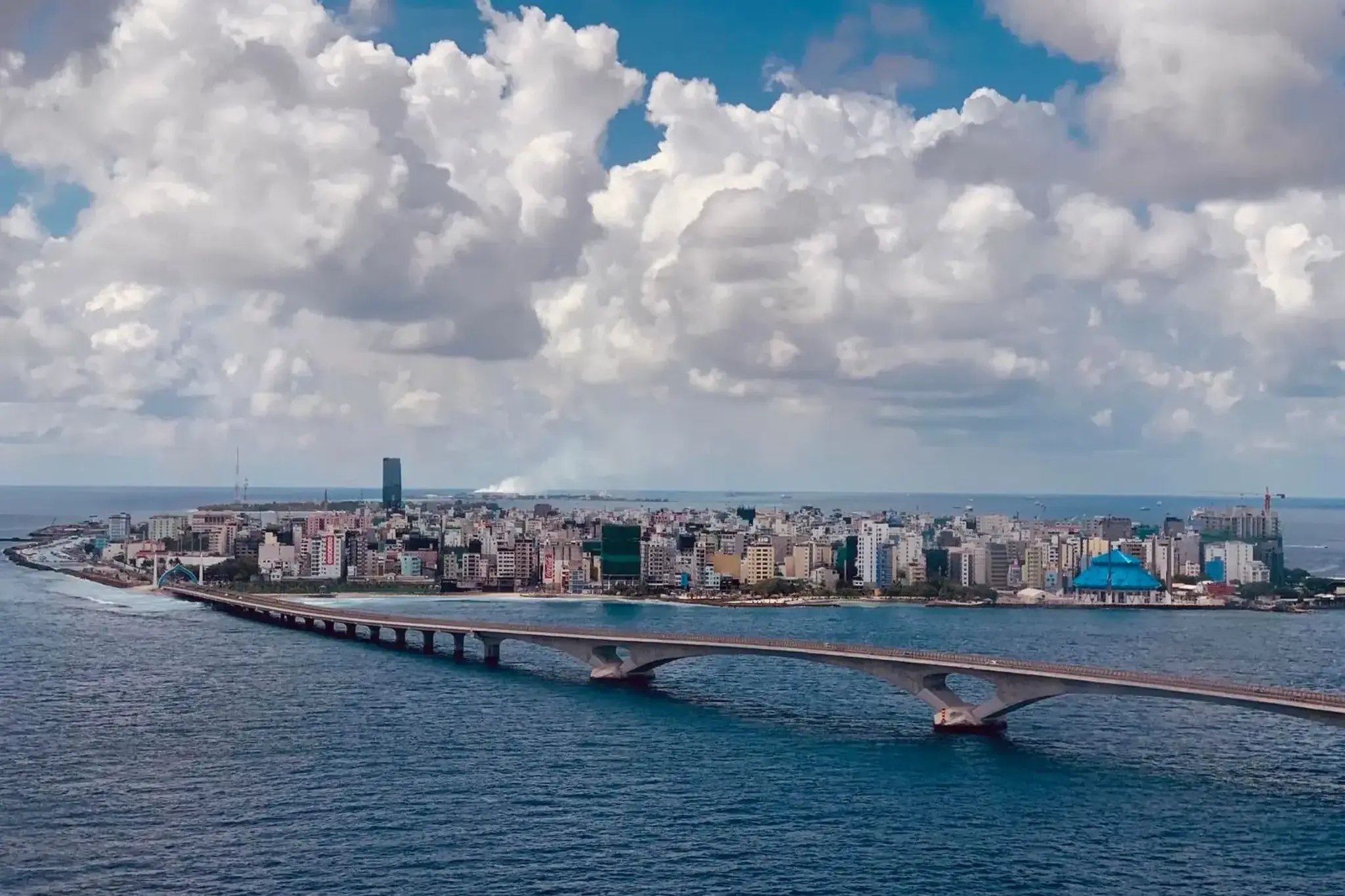
| 67 | 3.05 Mon | Male / Maldives | 07:00 | 23:59 |
| 68 | 4.05 Tue | Day at sea / Sea | ||
| 69 | 5.05 Wed | Day at sea / Sea | ||
| 70 | 6.05 Thu | Day at sea / Sea | ||
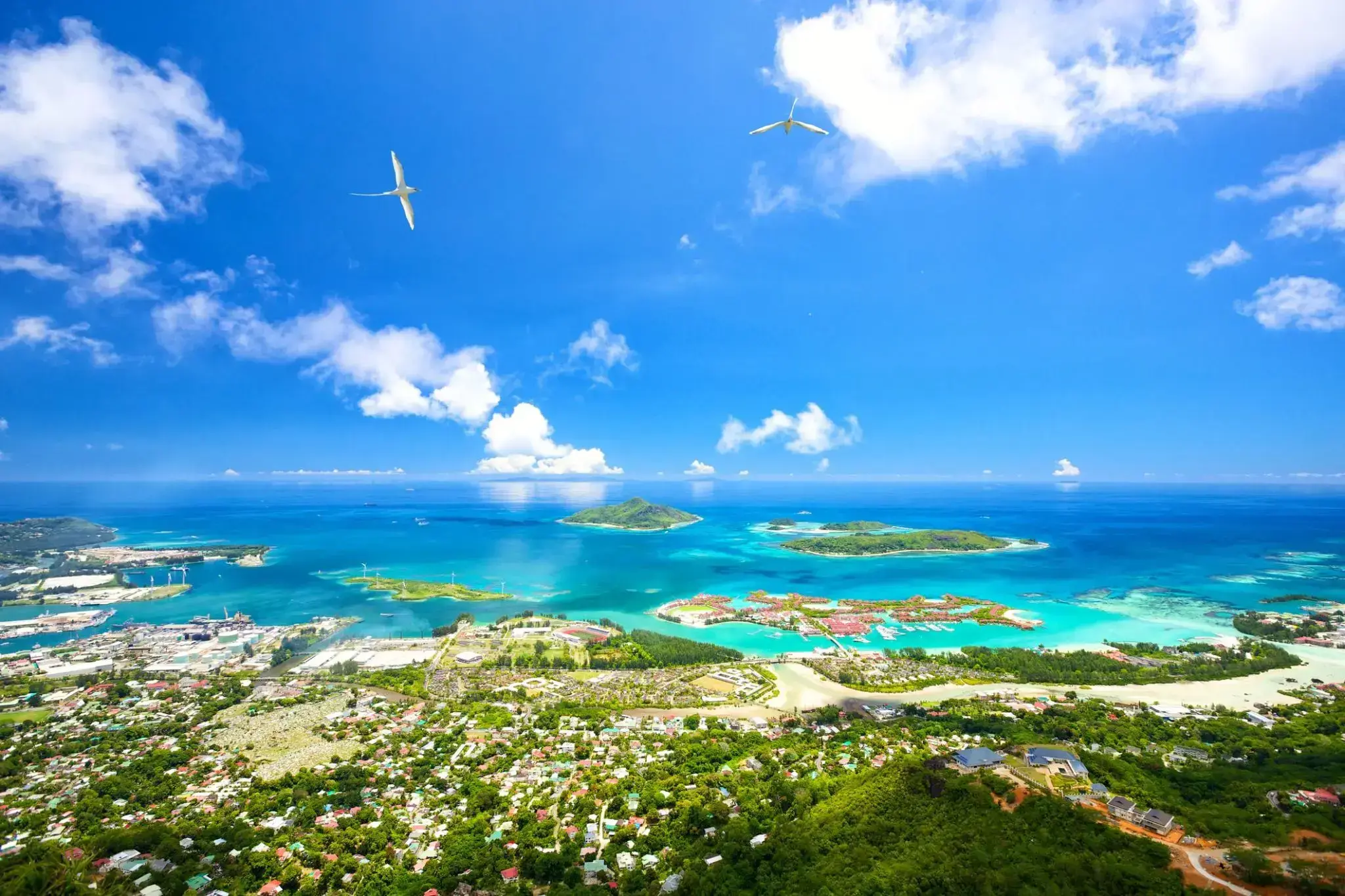
| 71 | 7.05 Fri | Victoria, Mahe Island / Seychelles | 07:00 | 20:00 |
| 72 | 8.05 Sat | Day at sea / Sea | ||
| 73 | 9.05 Sun | Day at sea / Sea | ||
| 74 | 10.05 Mon | Nosy Be / Madagascar | 07:00 | 17:00 |
| 75 | 11.05 Tue | Mamoudzou / Mayotte | 07:00 | 16:00 |
| 76 | 12.05 Wed | Day at sea / Sea | ||
| 77 | 13.05 Thu | Day at sea / Sea | ||
| 78 | 14.05 Fri | Maputo / Mozambique | 11:00 | 18:00 |
| 79 | 15.05 Sat | Day at sea / Sea | ||
| 80 | 16.05 Sun | Day at sea / Sea | ||
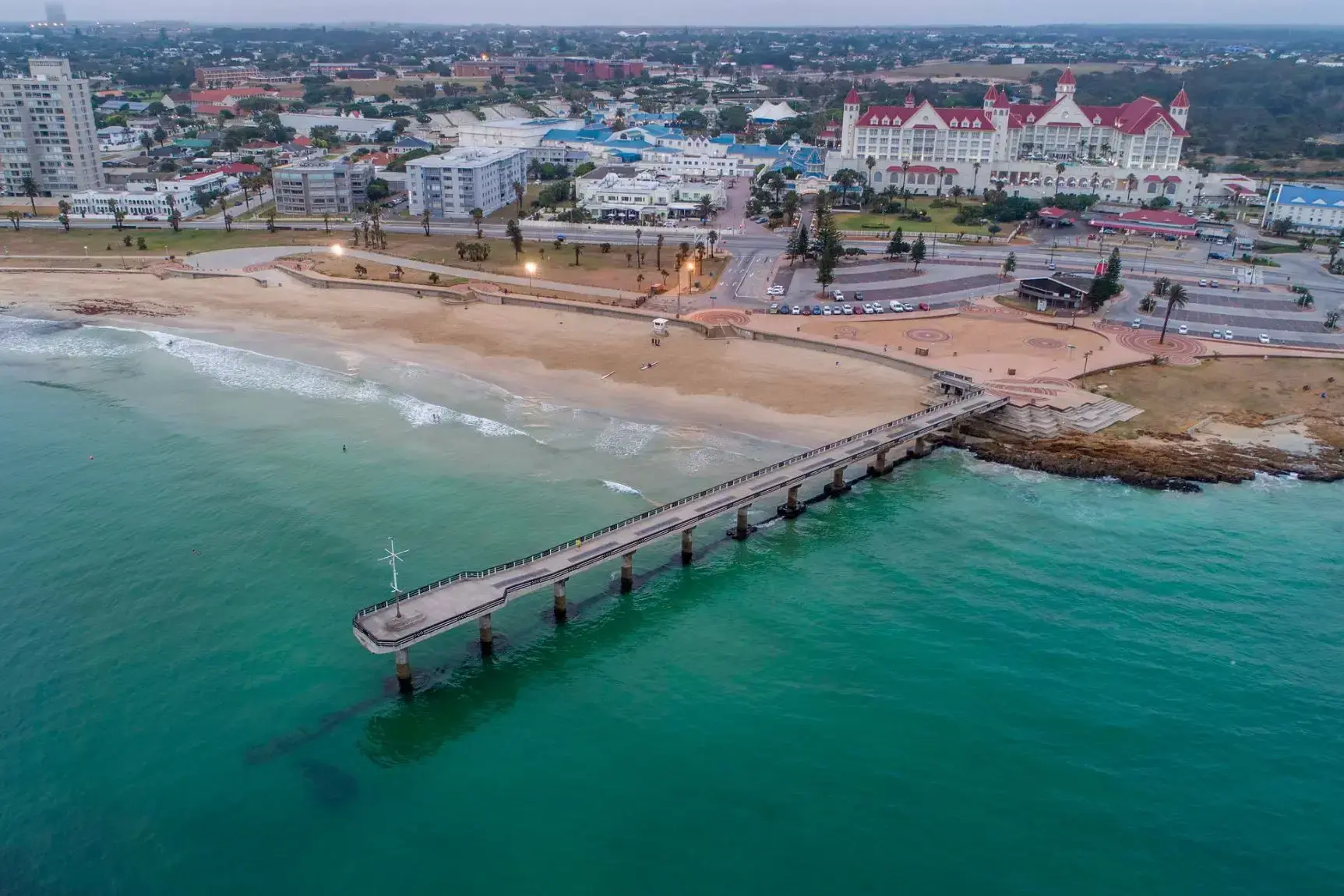
| 81 | 17.05 Mon | Port Elizabeth / South Africa | 07:30 | |
| 82 | 18.05 Tue | Port Elizabeth / South Africa | 19:00 | |
| 83 | 19.05 Wed | Day at sea / Sea | ||
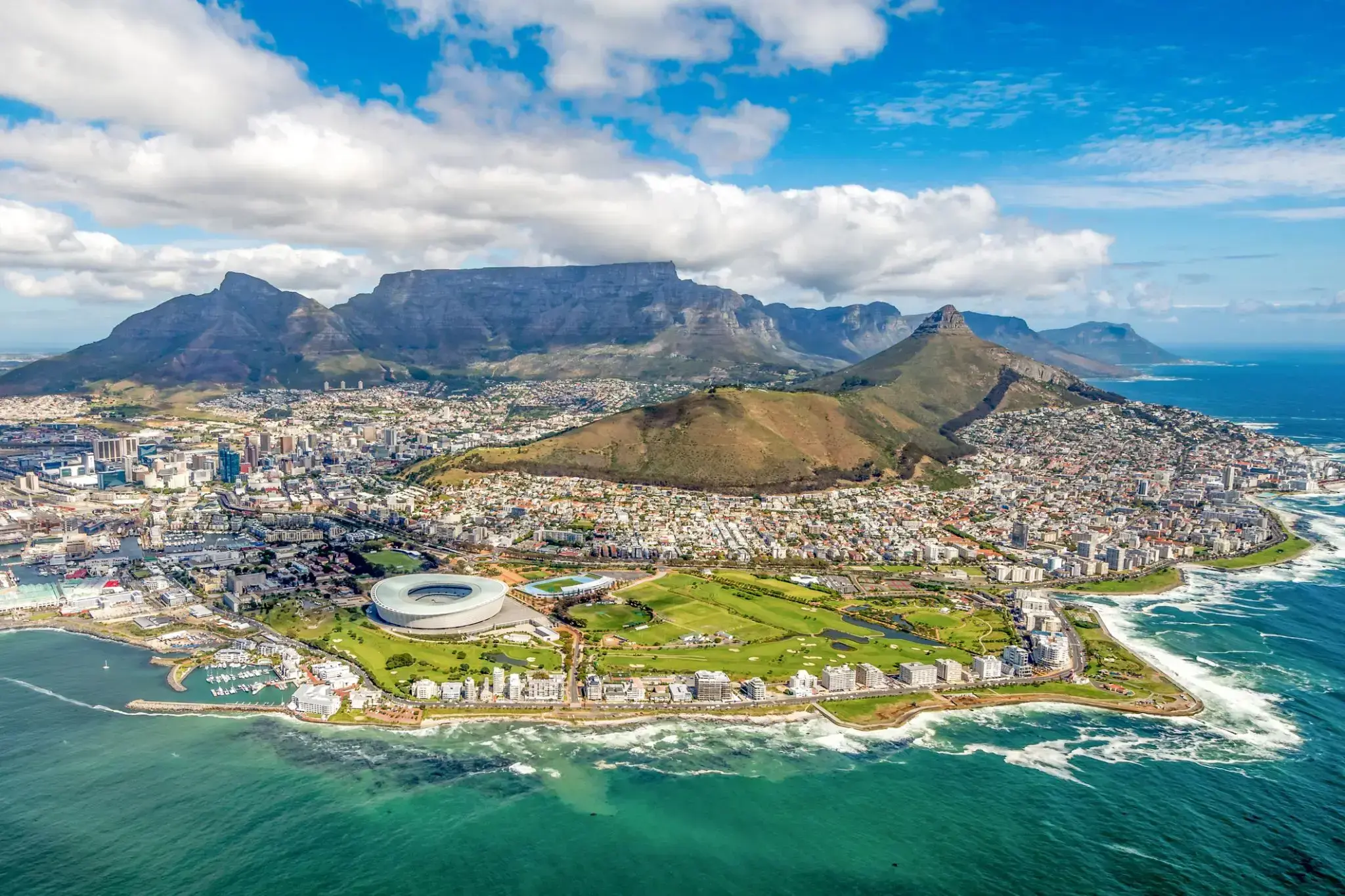
| 84 | 20.05 Thu | Cape Town / South Africa | 05:00 | 17:00 |
| 85 | 21.05 Fri | Day at sea / Sea | ||
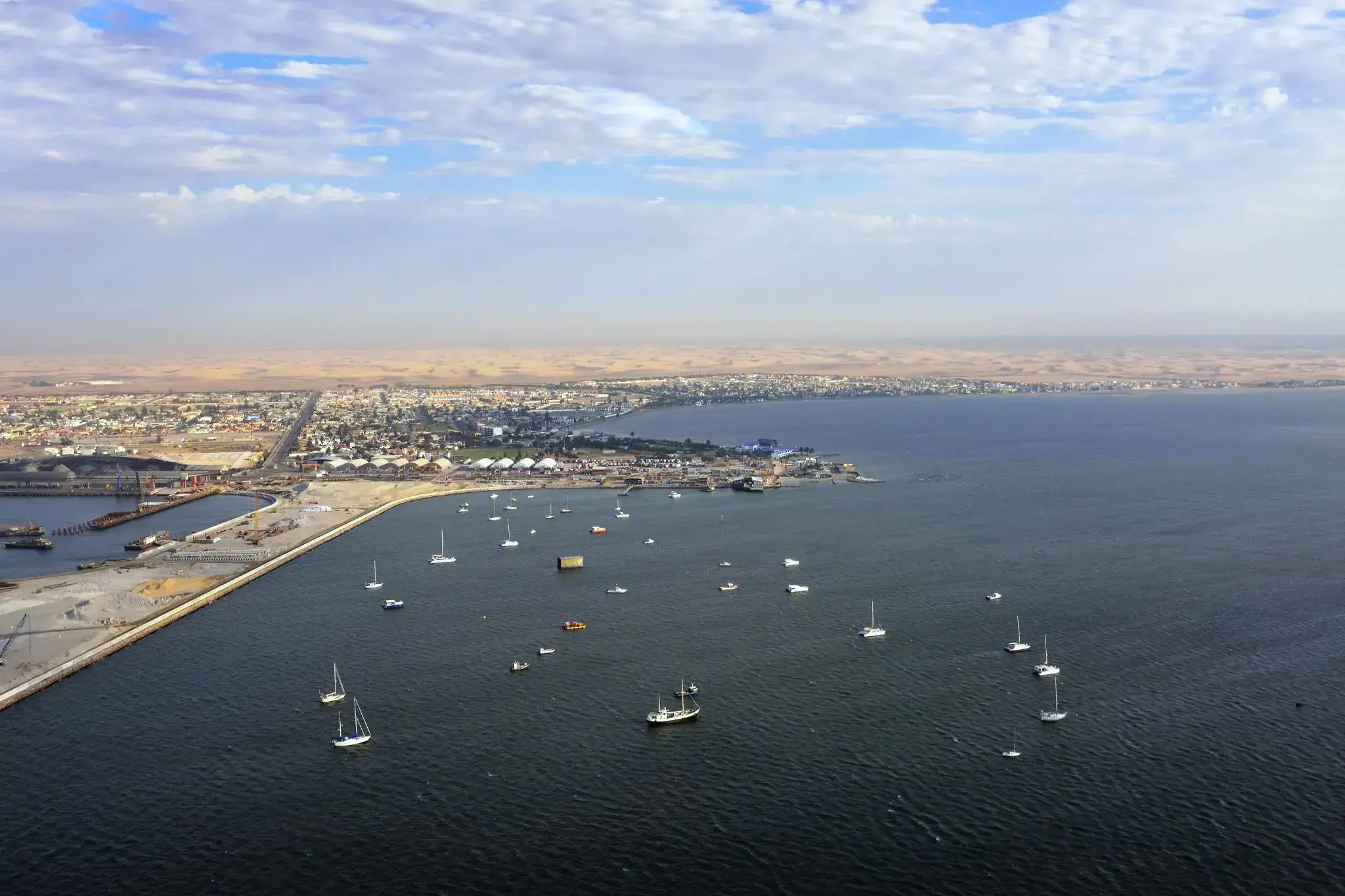
| 86 | 22.05 Sat | Walvis Bay / Namibia | 13:00 | 22:00 |
| 87 | 23.05 Sun | Day at sea / Sea | ||
| 88 | 24.05 Mon | Day at sea / Sea | ||
| 89 | 25.05 Tue | Day at sea / Sea | ||
| 90 | 26.05 Wed | San Tome / Sao Tome and Principe | 10:00 | 19:00 |
| 91 | 27.05 Thu | Day at sea / Sea | ||
| 92 | 28.05 Fri | Sekondi-Takoradi / Ghana | 08:00 | 18:00 |
| 93 | 29.05 Sat | Day at sea / Sea | ||
| 94 | 30.05 Sun | Day at sea / Sea | ||
| 95 | 31.05 Mon | Day at sea / Sea | ||
| 96 | 1.06 Tue | Banjul / Gambia | 07:00 | 17:00 |
| 97 | 2.06 Wed | Day at sea / Sea | ||
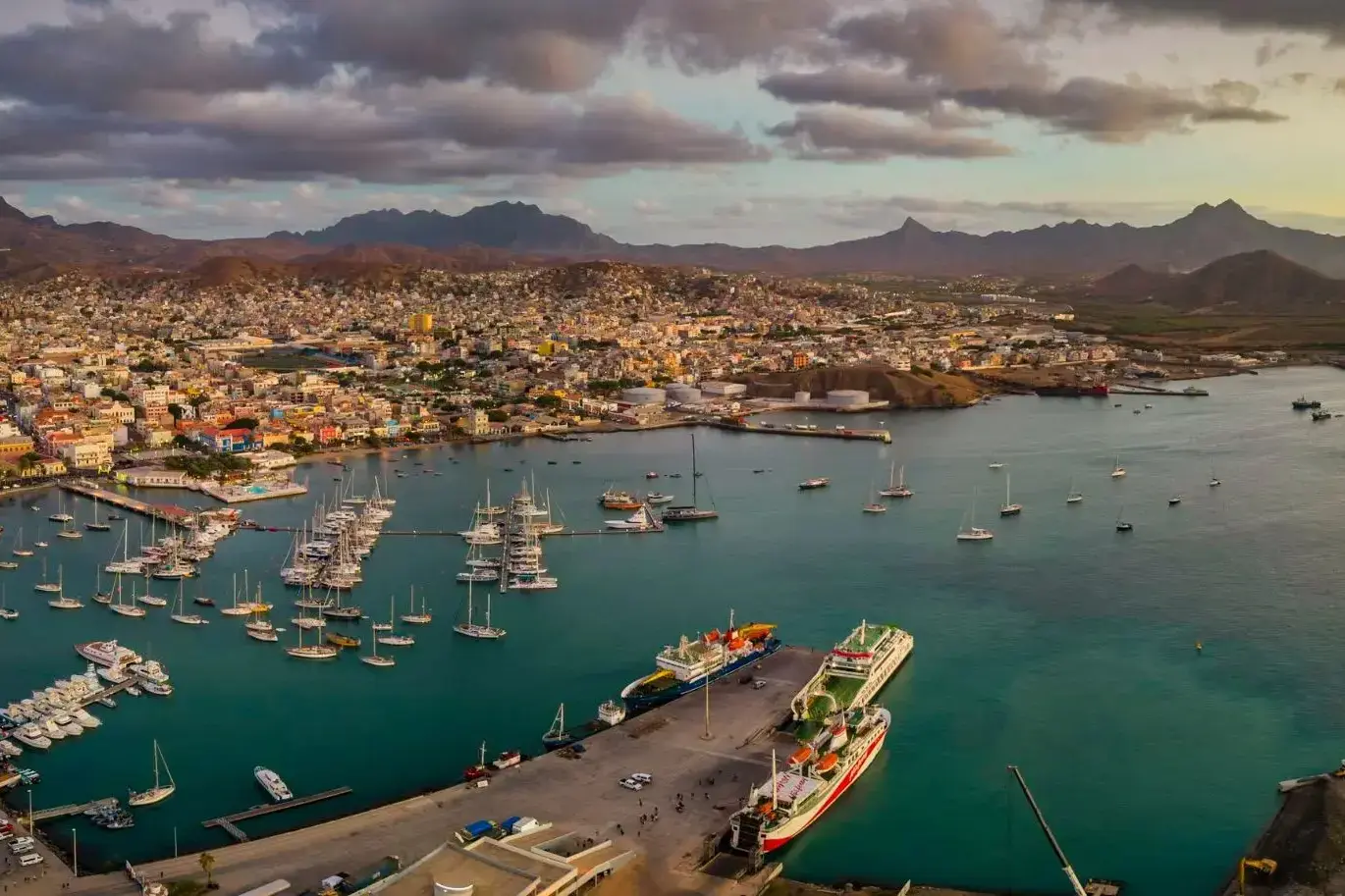
| 98 | 3.06 Thu | Mindelo / Cape Verde | 07:00 | 18:00 |
| 99 | 4.06 Fri | Day at sea / Sea | ||
| 100 | 5.06 Sat | Day at sea / Sea | ||
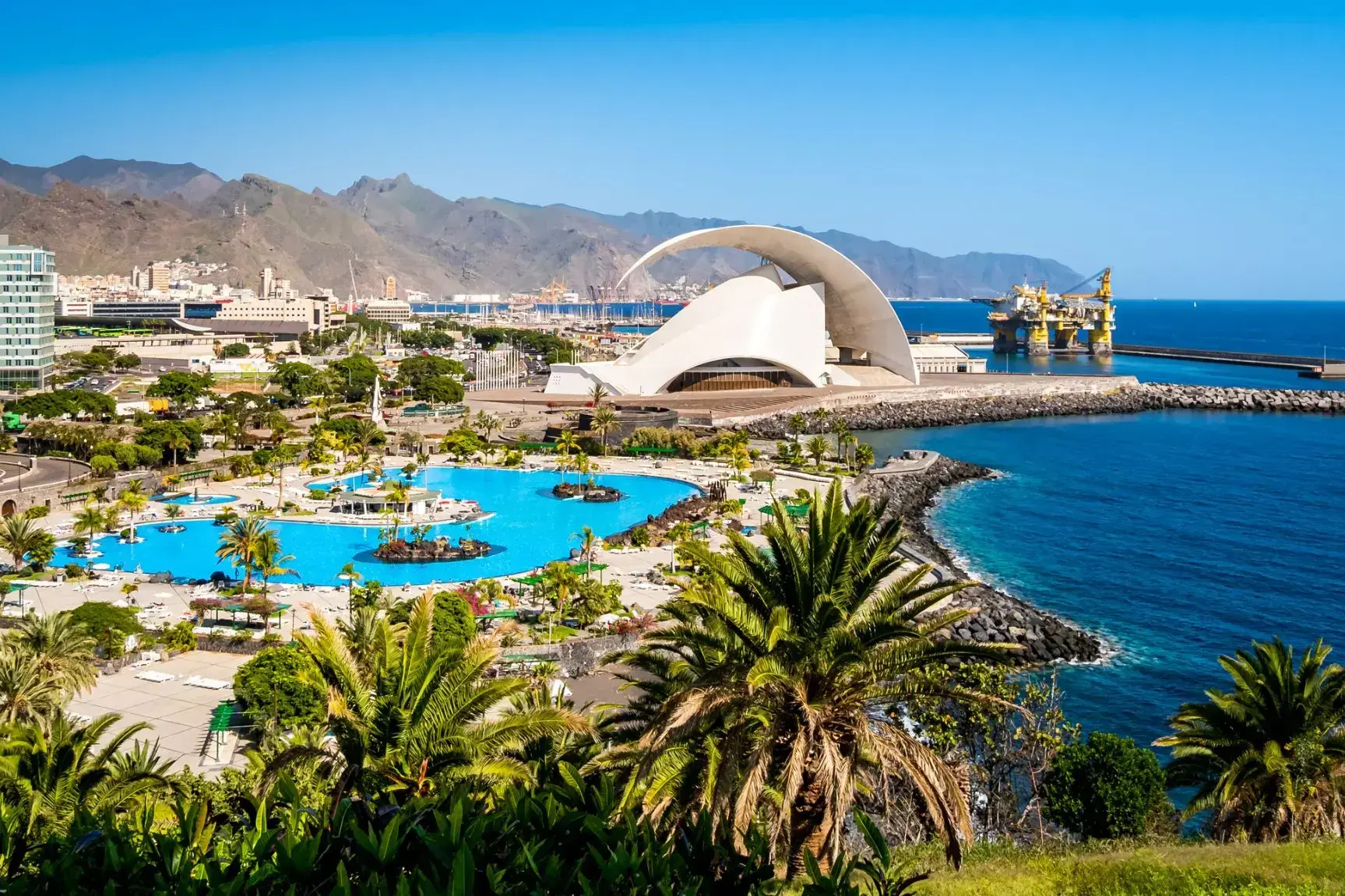
| 101 | 6.06 Sun | Santa Cruz de Tenerife(Canary Islands) / Spain | 08:00 | 18:00 |
| 102 | 7.06 Mon | Day at sea / Sea | ||
| 103 | 8.06 Tue | Day at sea / Sea | ||
| 104 | 9.06 Wed | Almeria / Spain | 07:00 | 18:00 |
| 105 | 10.06 Thu | Alicante / Spain | 08:00 | 18:00 |
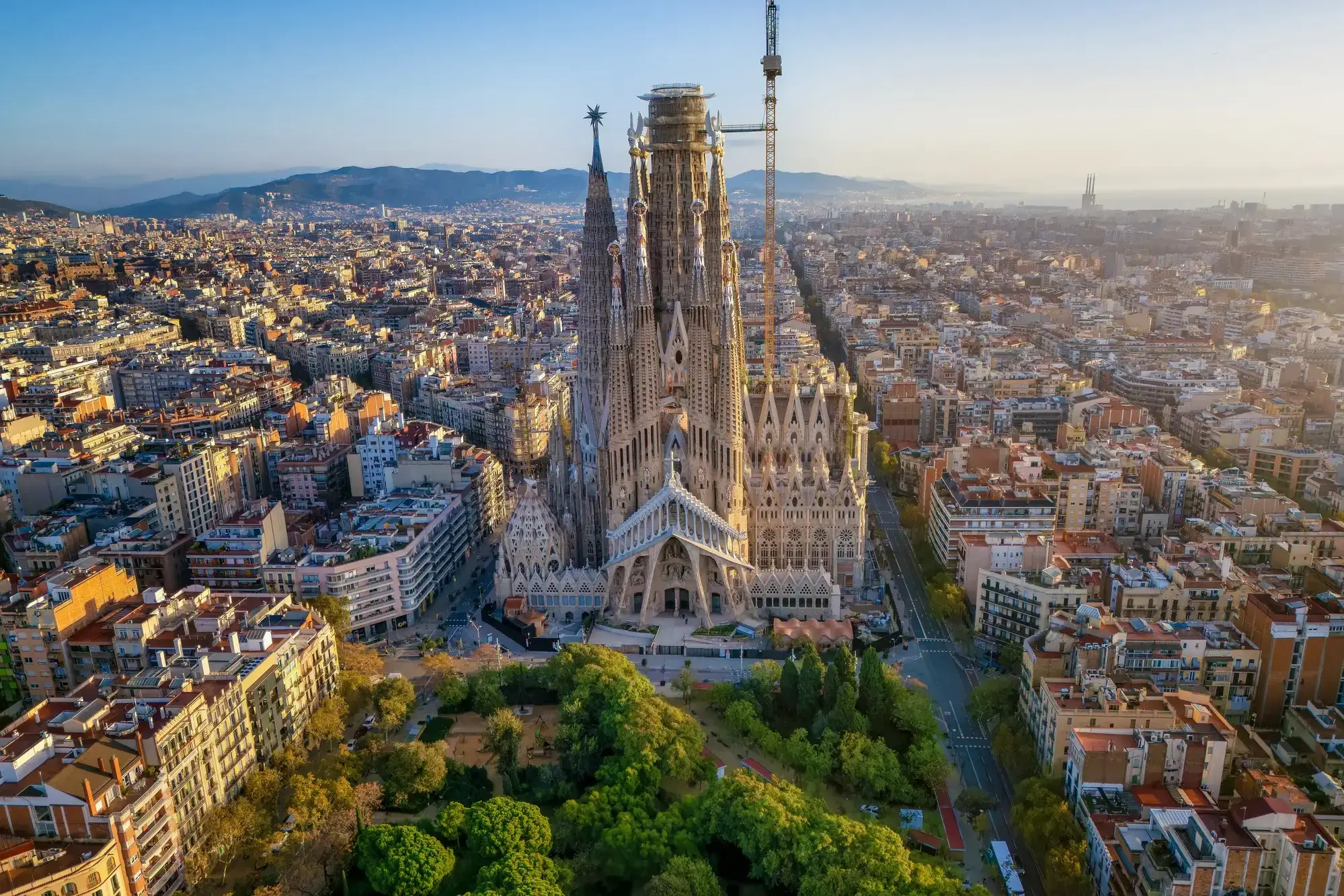
| 106 | 11.06 Fri | Barcelona / Spain | 09:00 | 18:00 |
| 107 | 12.06 Sat | Sete / France | 08:00 | 18:00 |
| 108 | 13.06 Sun | Monte Carlo / Monaco | 08:00 | 19:00 |
| 109 | 14.06 Mon | FLORENCE PISA TUSCANY | 07:00 | 19:00 |
| 110 | 15.06 Tue | Rome (Civitavecchia) / Italy | 07:00 | 16:00 |
| 111 | 16.06 Wed | FLORENCE PISA TUSCANY | 07:00 | 19:00 |
| 112 | 17.06 Thu | Monte Carlo / Monaco | 07:00 | 16:00 |
| 113 | 18.06 Fri | Barcelona / Spain | 10:30 | 20:30 |
| 114 | 19.06 Sat | Valencia / Spain | 09:00 | 19:00 |
| 115 | 20.06 Sun | Day at sea / Sea | ||
| 116 | 21.06 Mon | Grenada / Grenada | 07:00 | 21:30 |
| 117 | 22.06 Tue | Seville / Spain | 11:00 | 22:00 |
| 118 | 23.06 Wed | Gibraltar / Great Britain | 07:00 | 12:30 |
| 119 | 24.06 Thu | Lisbon / Portugal | 07:00 | 16:00 |
| 120 | 25.06 Fri | Porto / Portugal | 08:00 | 17:00 |
| 121 | 26.06 Sat | La Coruna / Spain | 08:00 | 17:00 |
| 122 | 27.06 Sun | Bilbao / Spain | 10:00 | 19:00 |
| 123 | 28.06 Mon | Saint-Jean-de-Luz (Biarritz) / France | 08:00 | 17:00 |
| 124 | 29.06 Tue | Pauillac / France | 14:45 | |
| 125 | 30.06 Wed | Pauillac / France | 16:00 | |
| 126 | 1.07 Thu | Day at sea / Sea | ||
| 127 | 2.07 Fri | Failure / France | 07:00 | 17:00 |
| 128 | 3.07 Sat | ST. HELIER | 08:00 | 16:00 |
| 129 | 4.07 Sun | Paris / France | 07:00 | 21:00 |
| 130 | 5.07 Mon | London / Great Britain | 07:00 | 16:00 |
Your World Included
With Your World Included, you’ll enjoy a wide array of included amenities for the ultimate comfort and value in ultra-premium cruising.
Unforgettable dining experiences at a variety of exquisite restaurants — all at no extra charge.
Complimentary specialty coffees, sodas, freshly pressed juices, and still and sparkling Vero Water® served throughout the ship.
Unlimited free Wi-Fi available in your suite, stateroom, and all public areas.
In-room dining with a superb variety of hot and cold selections.
Smoothies, milkshakes, gelato, and signature Humphry Slocombe ice cream — always included.
Group fitness classes at Aquamar® Spa + Vitality Center are complimentary.
Gratuities are included for your convenience.
Laundry is free for all guests.
With complimentary self-service launderettes on board, plus laundry and pressing services for Concierge and Suite categories, you’ll always look your finest.
Along with our hallmark personalized service, you’ll enjoy an enriching cruise experience with no hidden costs or nickel-and-diming.
Elevate Your Experience
Concierge Level Veranda Staterooms offer an unrivaled combination of luxury, privilege, and value. A wealth of amenities and exclusive benefits elevate your experience to the sublime — from in-room dining selections from The Grand Dining Room and complimentary laundry services to unlimited access to the Aquamar Spa Terrace.
On board Oceania Marina and Oceania Riviera, you’ll also enjoy the services of a dedicated Concierge and exclusive access to the private Concierge Lounge.
Located in the most desired areas of the ship, Concierge Level Veranda Staterooms are far more than just staterooms — they are an experience in themselves.
Concierge Level Veranda — Exclusive Privileges
Expanded in-room dining menu for lunch and dinner from The Grand Dining Room
Laundry service — up to 3 bags per stateroom
Exclusive key-card access to the private Concierge Lounge aboard Oceania Marina, Oceania Riviera, Oceania Vista, and Oceania Allura, featuring complimentary beverages, coffees, snacks, and the services of a dedicated Concierge
Welcome bottle of fine Italian Prosecco
Priority online reservations for specialty restaurants
Unlimited access to the Aquamar Spa Terrace
Oceania Cruises logo tote bag
Cashmere lap blankets — perfect for relaxing or snuggling
Pressing of garments upon embarkation
Complimentary shoeshine service
Deposit and Payments – Oceania Cruises
General Deposit:
For Owner’s, Vista, and Oceania Suites, a deposit of 20% of the cruise fare per person is required.
For all other suite/stateroom categories, the deposit is $500 per person.
For Grand Voyages, the deposit is $1,500 per person.
Deposit and Final Payment Deadlines:
Bookings more than 150 days from sailing:
Deposit 20% for Owner’s, Vista, and Oceania Suites and $500 for all other categories is required within 5 days of booking.
Bookings 90–120 days from sailing:
Full payment required within 3 days of booking.
Bookings 0–90 days from sailing:
Full payment due on the day of booking.
Important:
Bookings that are not deposited or paid in full according to this schedule will be automatically cancelled.
Unless otherwise noted, final payment must be received by Oceania Cruises 150 days prior to departure for cruises less than 15 days, and 150 days for cruises 15 days or longer.
Oceania Cruises reserves the right to cancel any booking not fully paid at the time of final payment.
Additional Information:
Passport details and special onboard service requests are due at final payment.
Payment may be made by personal check, American Express, Discover, MasterCard, or Visa.
For convenience, final payment may be automatically charged to the credit card used for the initial deposit.
Oceania Cruises is not responsible for foreign currency or transaction fees independently charged by issuing banks. These fees do not benefit Oceania Cruises.
Third-party credit card payments are accepted only with valid authorization from the cardholder.
Deposit and Payment – 180-Day Voyages
For 180-day voyages, a deposit of 20% of the cruise fare per person for all suites and staterooms is required within 7 days of booking.
Final payment must be received no later than 181 days prior to departure, along with passport details and any special onboard service requests.
Otherwise, the booking may be immediately cancelled, and applicable penalties will apply.
Oceania Cruises accepts payment for reservations by credit/debit card or bank transfer.
Unfortunately, personal checks are not accepted.
Credit/Debit Cards:
American Express, Visa, and Mastercard are accepted.
Please note: Oceania Cruises assumes no responsibility for foreign currency/transaction processing fees assessed by your issuing bank.
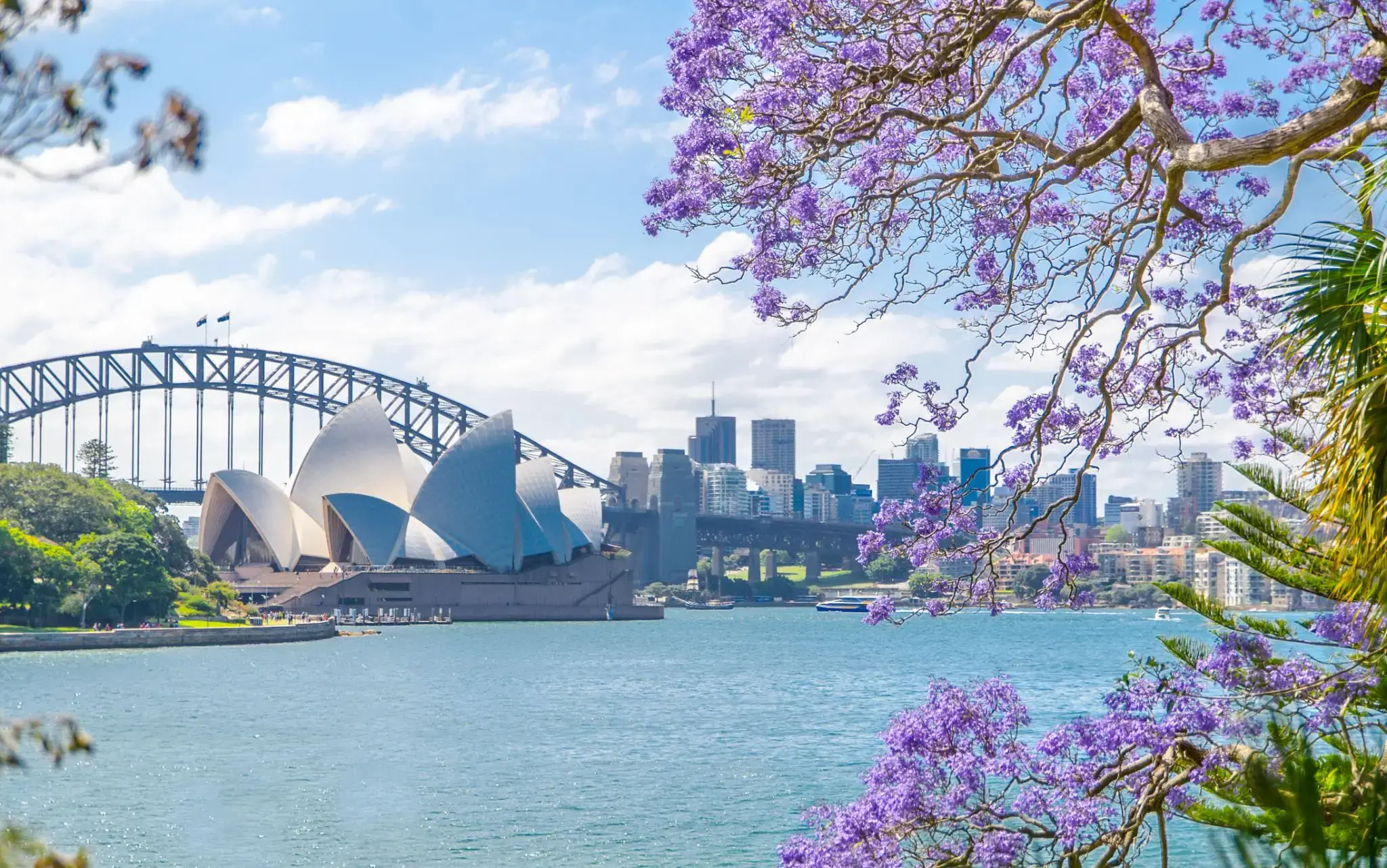
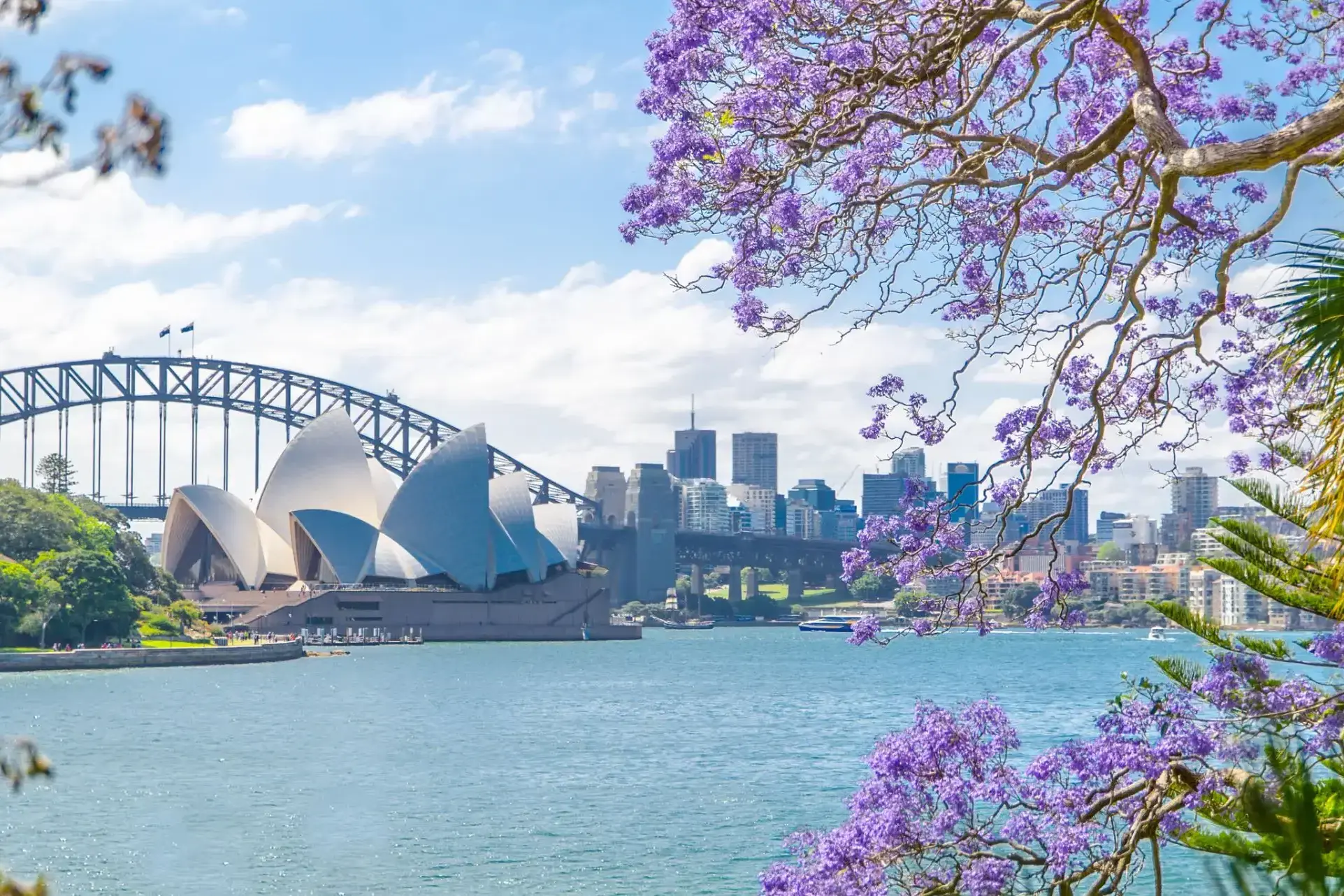
Sydney is the state capital of New South Wales and the most populous city in Australiaand Oceania. Located on Australia's east coast, the metropolis surrounds Port Jackson and extends about 70 km (43.5 mi) on its periphery towards the Blue Mountains to the west, Hawkesbury to the north, and Macarthur to the south. Sydney is made up of 658 suburbs, 40 local government areas and 15 contiguous regions. Residents of the city are known as "Sydneysiders". As of June 2017, Sydney's estimated metropolitan population was 5,131,326, and is home to approximately 65% of the state's population.

Mooloolaba is a picturesque coastal town on the Sunshine Coast in Queensland, Australia, known for its ideal conditions for beach holidays and water sports. The town boasts one of the region's most popular beaches, attracting tourists with its clean sand, calm waters, and excellent opportunities for surfing, swimming, and fishing. Mooloolaba is also famous for its beautiful promenade lined with cafes, restaurants, and shops where visitors can enjoy local cuisine and pick up souvenirs.
In addition to its beaches, Mooloolaba offers a variety of natural attractions. The surrounding area is home to the Mooloolaba National Park and a marine center where visitors can learn about the local flora and fauna, including dolphins and sea turtles. For those seeking seclusion and an opportunity to explore unique ecosystems, islands like Moreton Island are easily accessible. Mooloolaba is the perfect place for active outdoor activities and relaxing seaside moments.
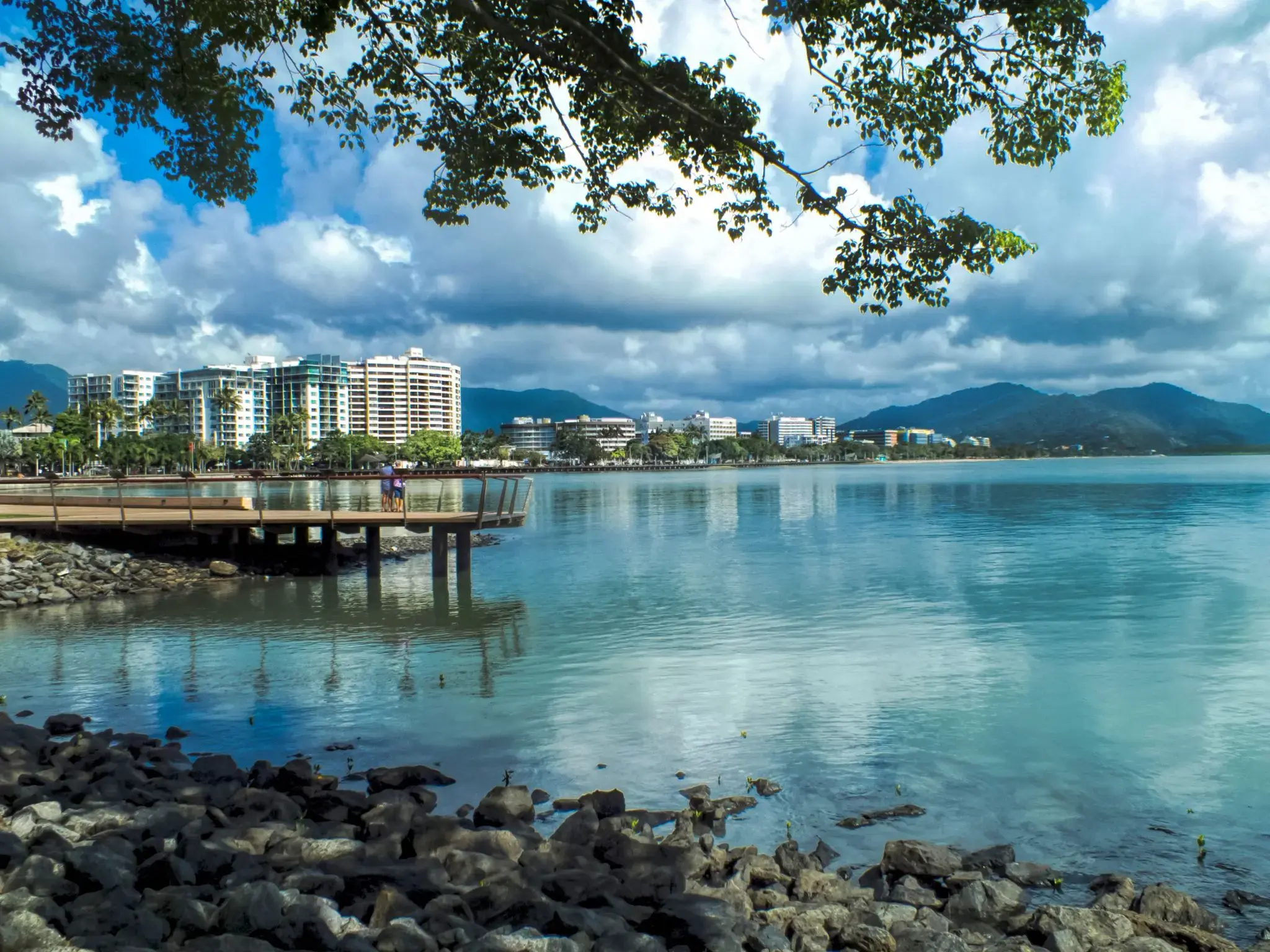
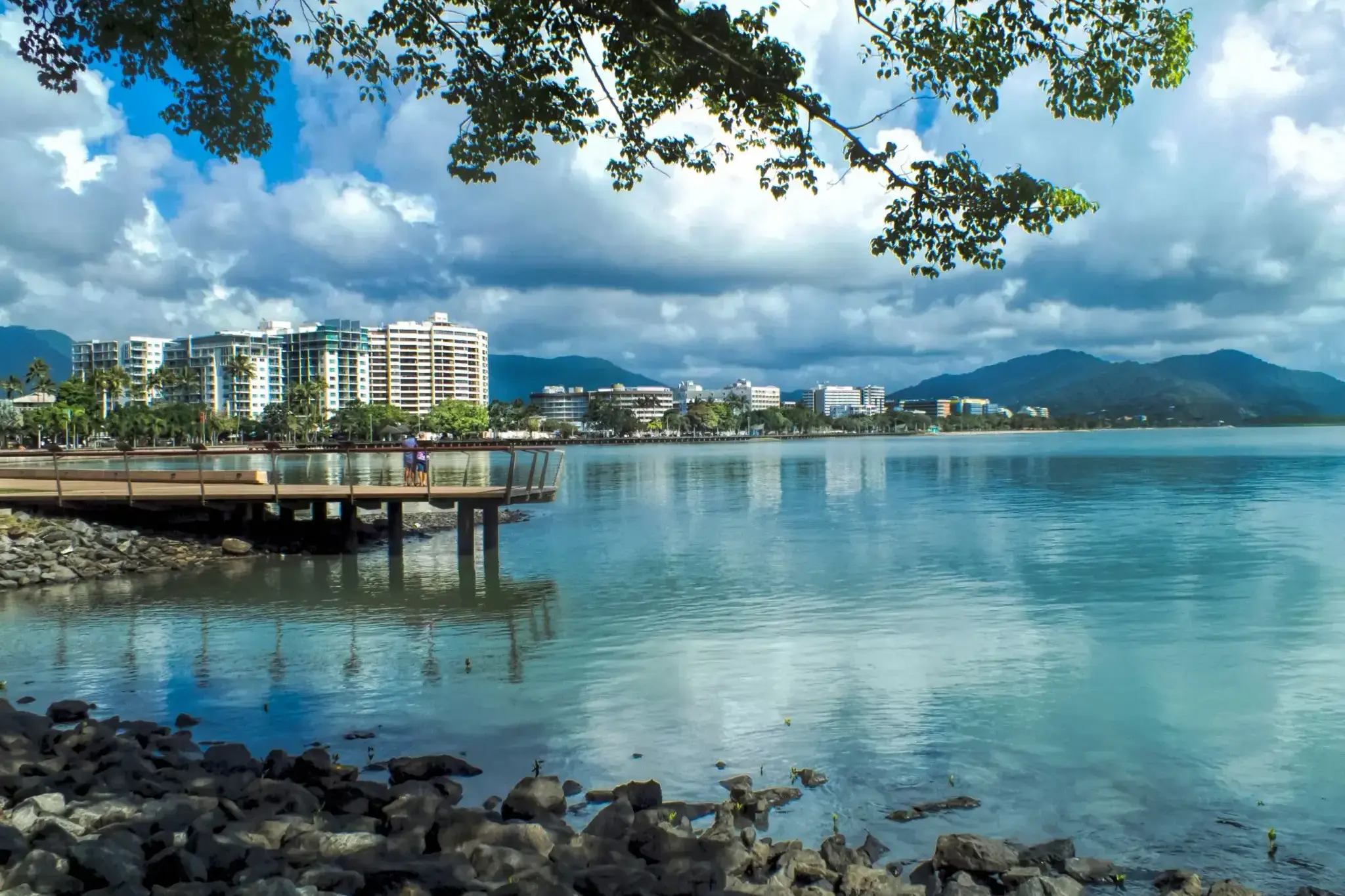
Cairns City is the suburb at the centre of Cairns in the local government area of Cairns Region, Queensland, Australia.It can also be referred to as the Cairns Central Business District (CBD). In the 2011 census, the population of Cairns City was 2,737 people.
Cairns City is the suburb at the centre of Cairns in the local government area of Cairns Region, Queensland, Australia.It can also be referred to as the Cairns Central Business District (CBD). In the 2011 census, the population of Cairns City was 2,737 people.
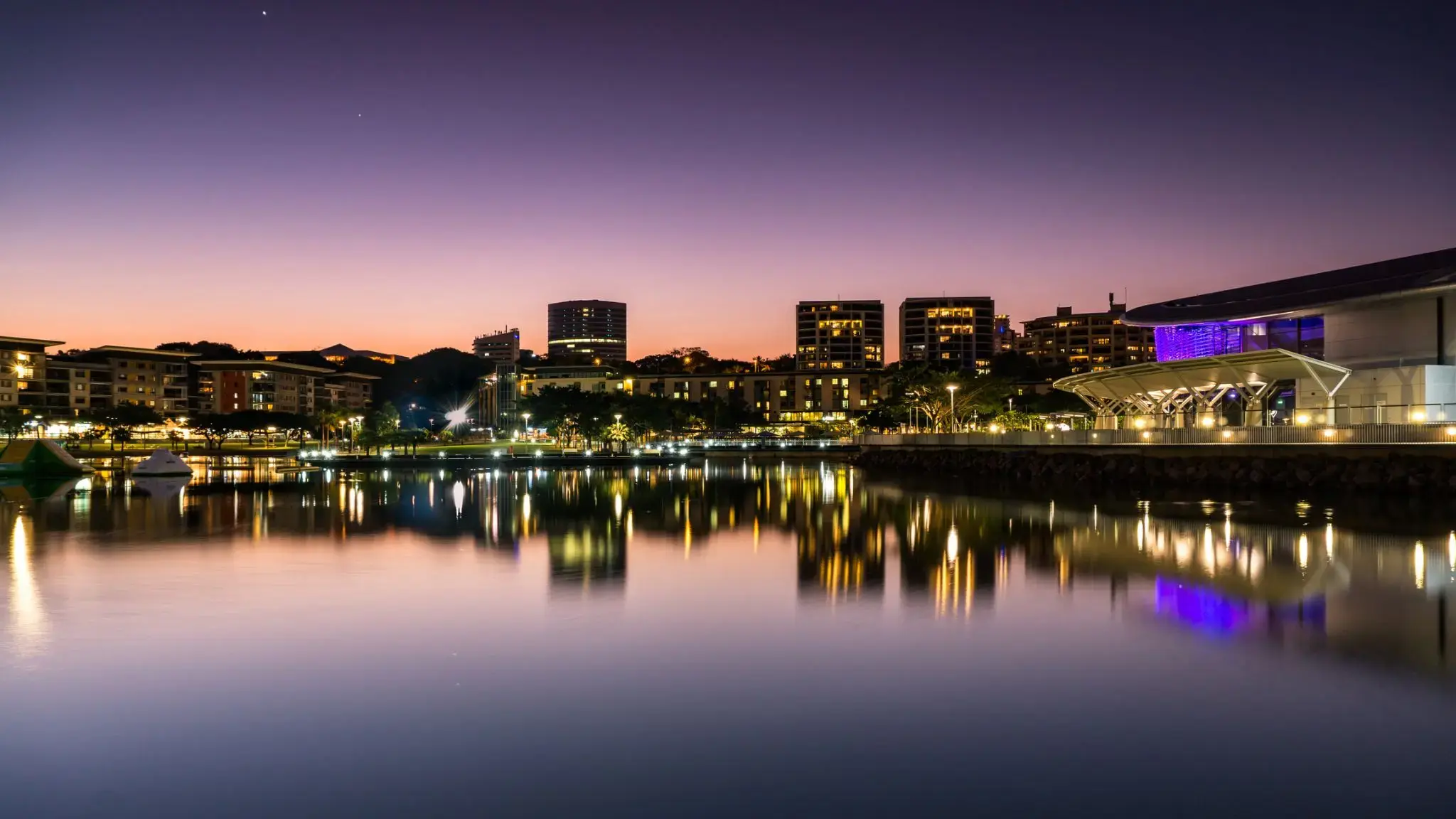
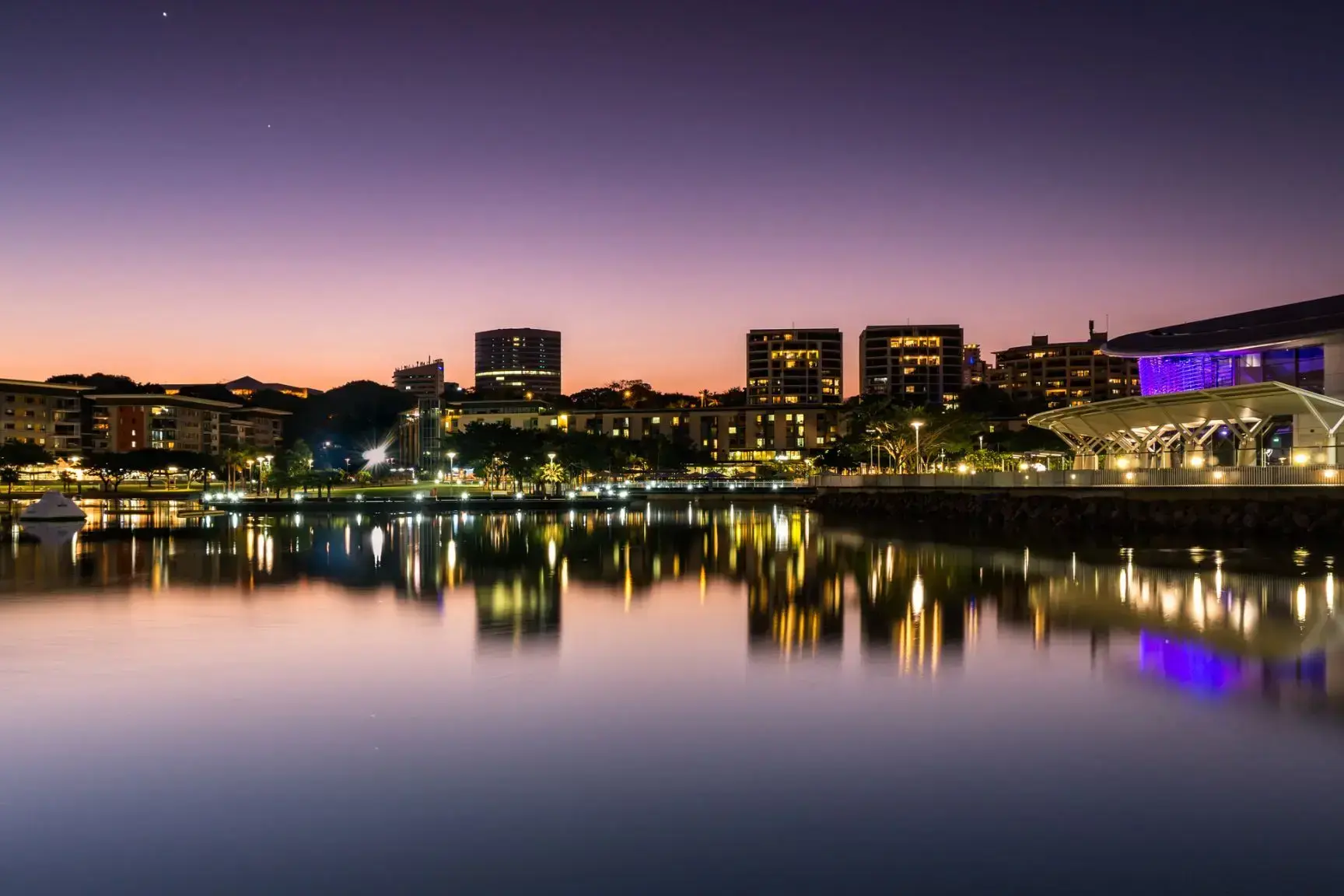
Darwin is the capital city of the Northern Territory of Australia, situated on the Timor Sea. It is the largest city in the sparsely populated Northern Territory, with a population of 145,916. It is the smallest and most northerly of the Australian capital cities, and acts as the Top End's regional centre.
Darwin is the capital city of the Northern Territory of Australia, situated on the Timor Sea. It is the largest city in the sparsely populated Northern Territory, with a population of 145,916. It is the smallest and most northerly of the Australian capital cities, and acts as the Top End's regional centre.

Komodo is one of the 17,508 islands that comprise the Republic of Indonesia. The island is particularly notable as the habitat of the Komodo dragon, the largest lizard on Earth, which is named after the island. Komodo Island has a surface area of 390 square kilometres and a human population of over two thousand. The people of the island are descendants of former convicts who were exiled to the island and who have mixed with Bugis from Sulawesi. The people are primarily adherents of Islam but there are also Christian and Hindu congregations.
Komodo is part of the Lesser Sunda chain of islands and forms part of the Komodo National Park. In addition, the island is a popular destination for diving. Administratively, it is part of the East Nusa Tenggara province.
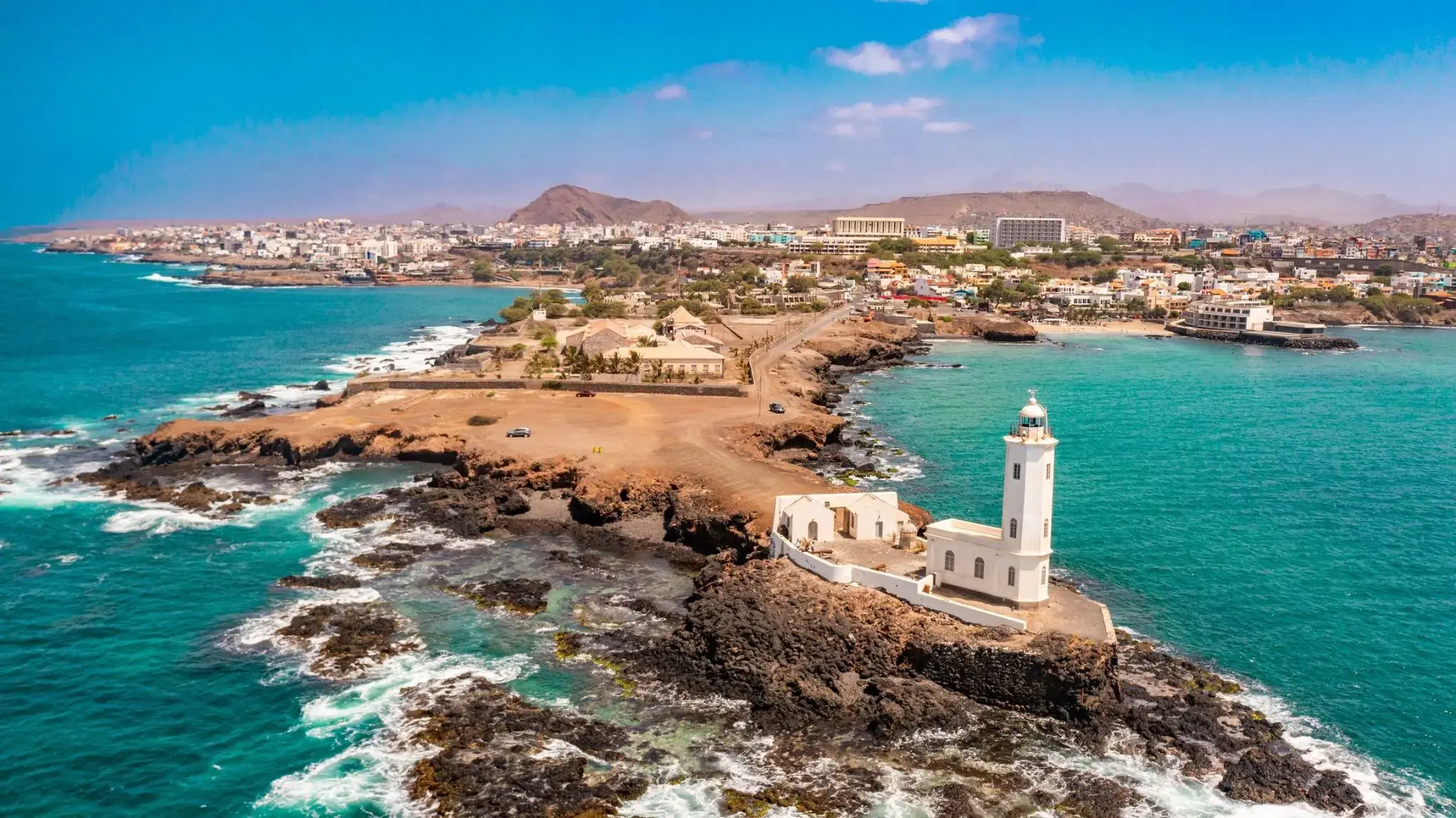
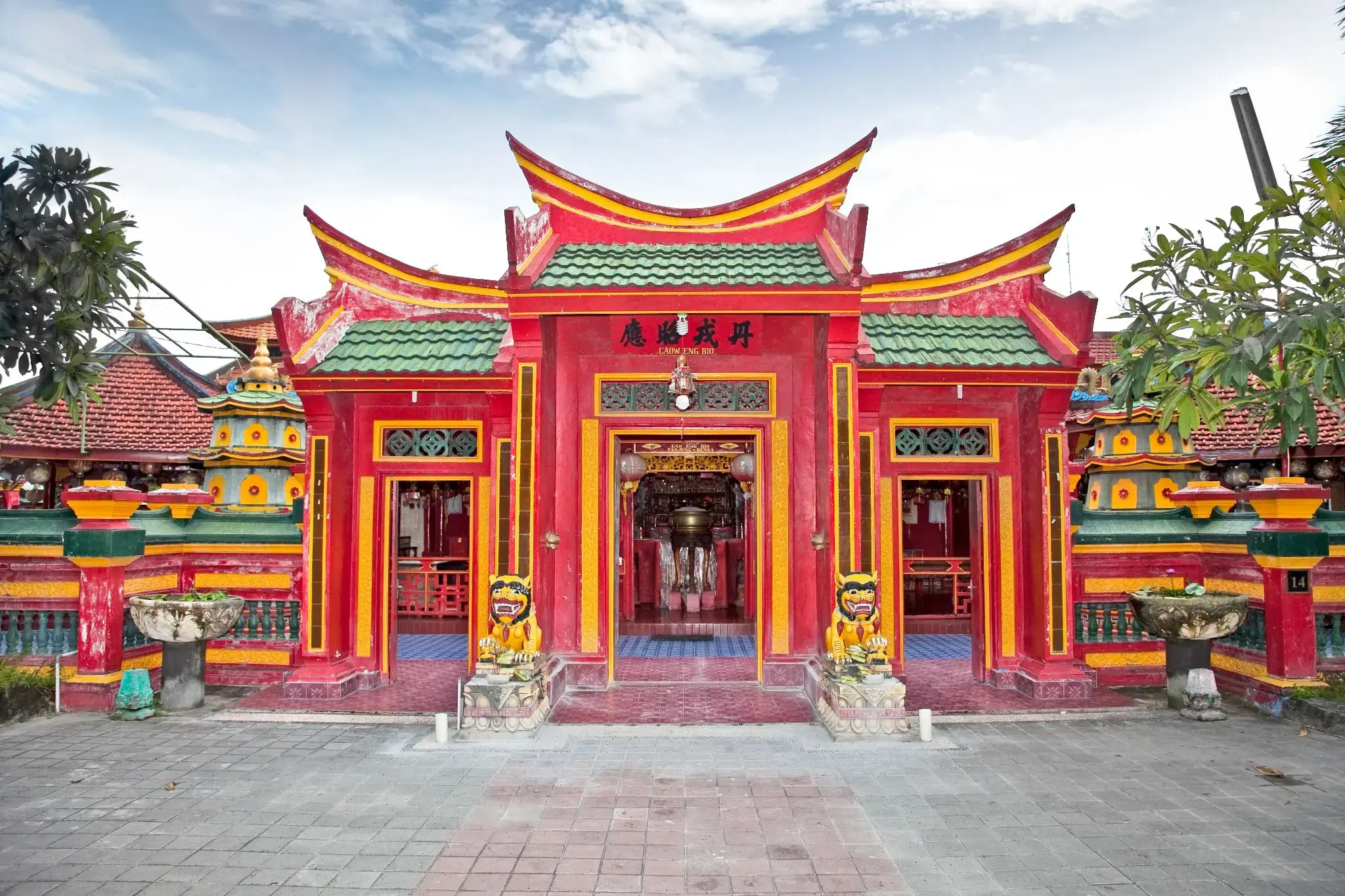
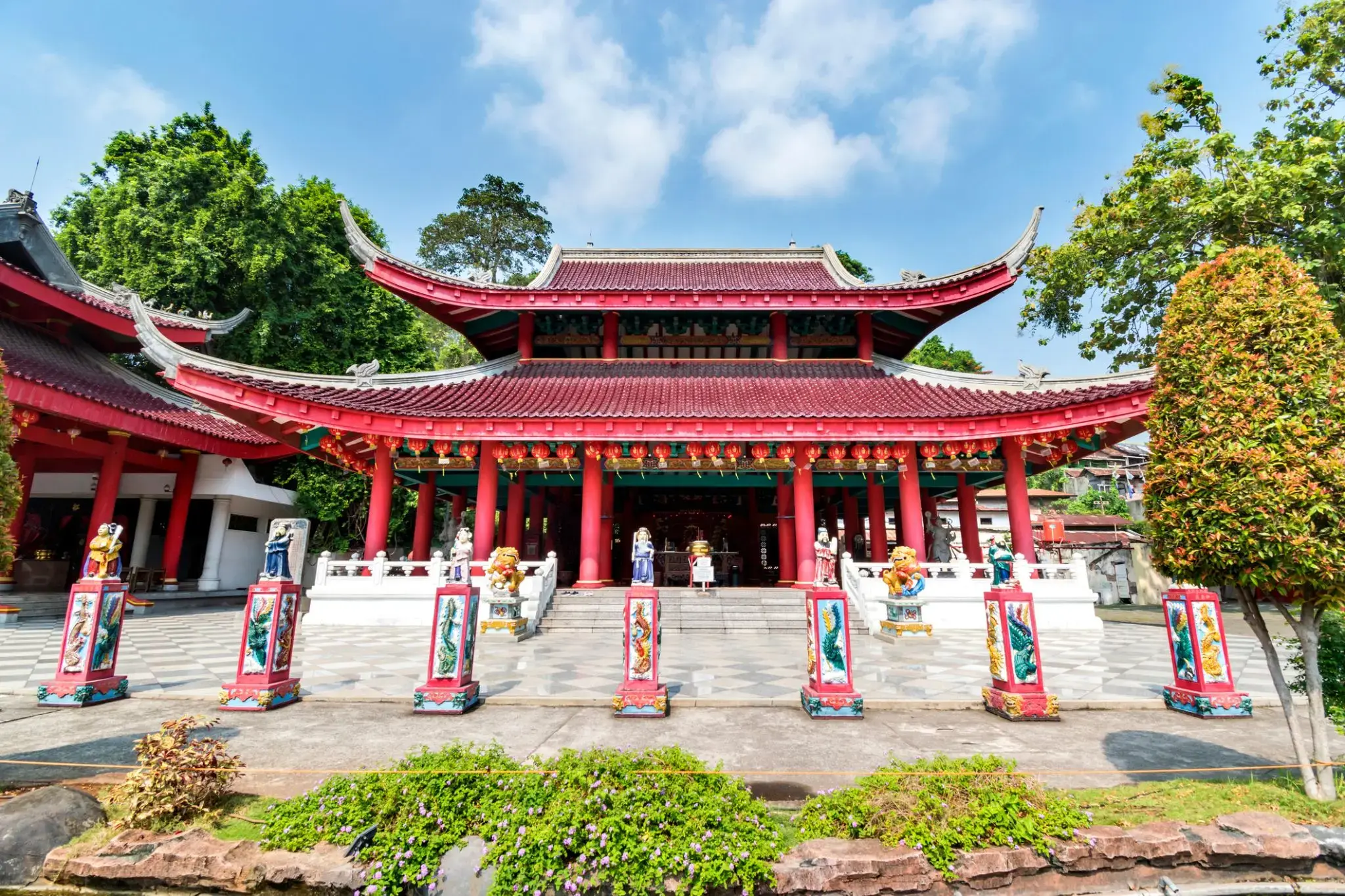
Semarang is the capital and largest city of Central Java province in Indonesia. It has an area of 373.78 square kilometres (144.32 sq mi) and a population of approximately 1.8 million people, making it Indonesia's seventh most populous city after Jakarta, Surabaya, Bandung, Bekasi, Medan, and Tangerang. The built-up (metro) area had 3,183,516 inhabitants at the 2010 census spread on 2 cities and 26 districts. Greater Semarang (a.k.a. Kedungsapur) has a population of close to 6 million (see Greater Semarang section), and is located at 6°58′S 110°25′E. A major port during the Dutch colonial era, and still an important regional center and port today, the city has a dominant Javanese population.

Amidst the endless city lights, Jakarta emerges as a true metropolis of contrasts, where modern skyscrapers stand alongside ancient temples and open-air markets. This city is a real cultural kaleidoscope: Chinese quarters, colonial architecture, and modern business centers blend here in an amazing harmony. Tourists can stroll through the old Kota Tua district, where Dutch-era buildings have been preserved, and then head to modern shopping malls offering goods from around the world.
Food lovers will be delighted by the diversity of dishes, as Jakarta is famous for its street food — aromatic satay, nasi goreng, and fresh seafood are must-tries. For those seeking cultural experiences, the city offers museums, theaters, and art galleries. This is a place where you can feel the pulse of modern Indonesia while touching its rich heritage.
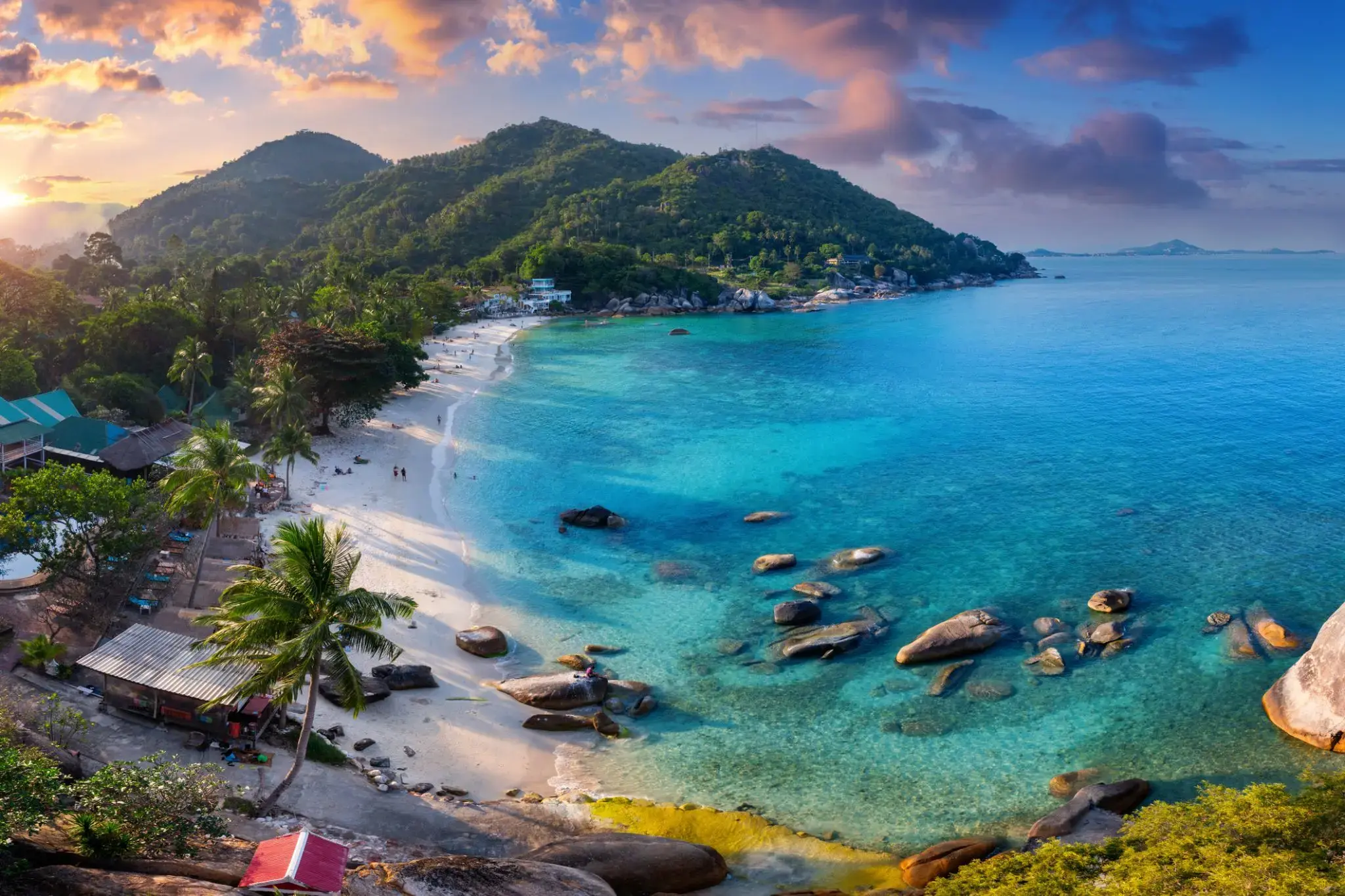
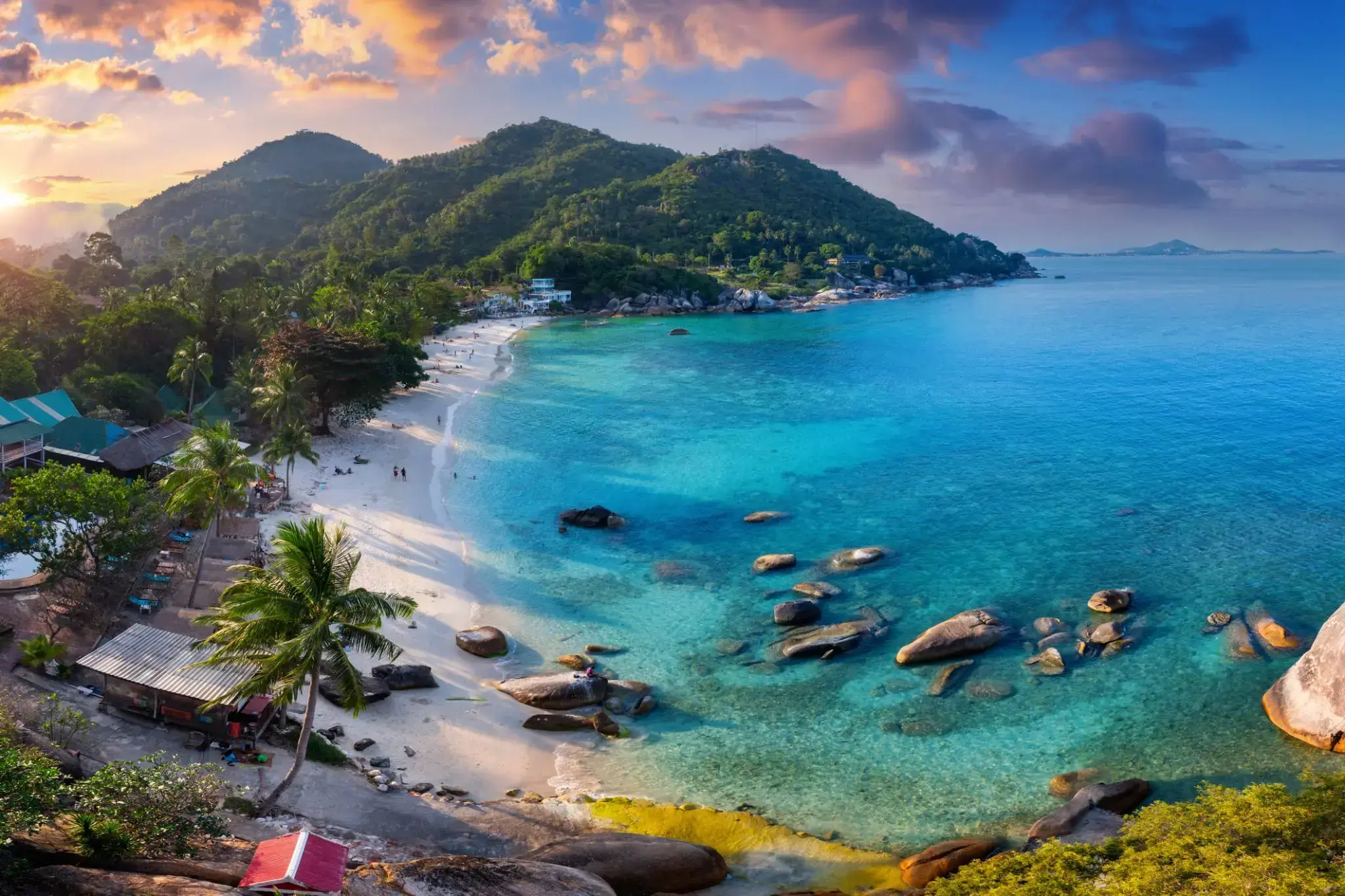
Among the tropical islands of Thailand, Koh Samui stands out with its unique nature and atmosphere. This island attracts travelers from all over the world with its white sandy beaches, picturesque waterfalls, and dense jungles. It's an ideal place for relaxation, whether it’s engaging in water sports, exploring nature, or simply enjoying peace and beauty.
Moreover, Koh Samui is known for its cultural heritage, including many Buddhist temples and sanctuaries. One of the most famous is the Big Buddha Temple, which is not only a religious center but also one of the island's main attractions. The local cuisine, featuring fresh seafood and exotic fruits, will make the trip even more exciting and delicious.

Kompong Som (Sihanoukville)
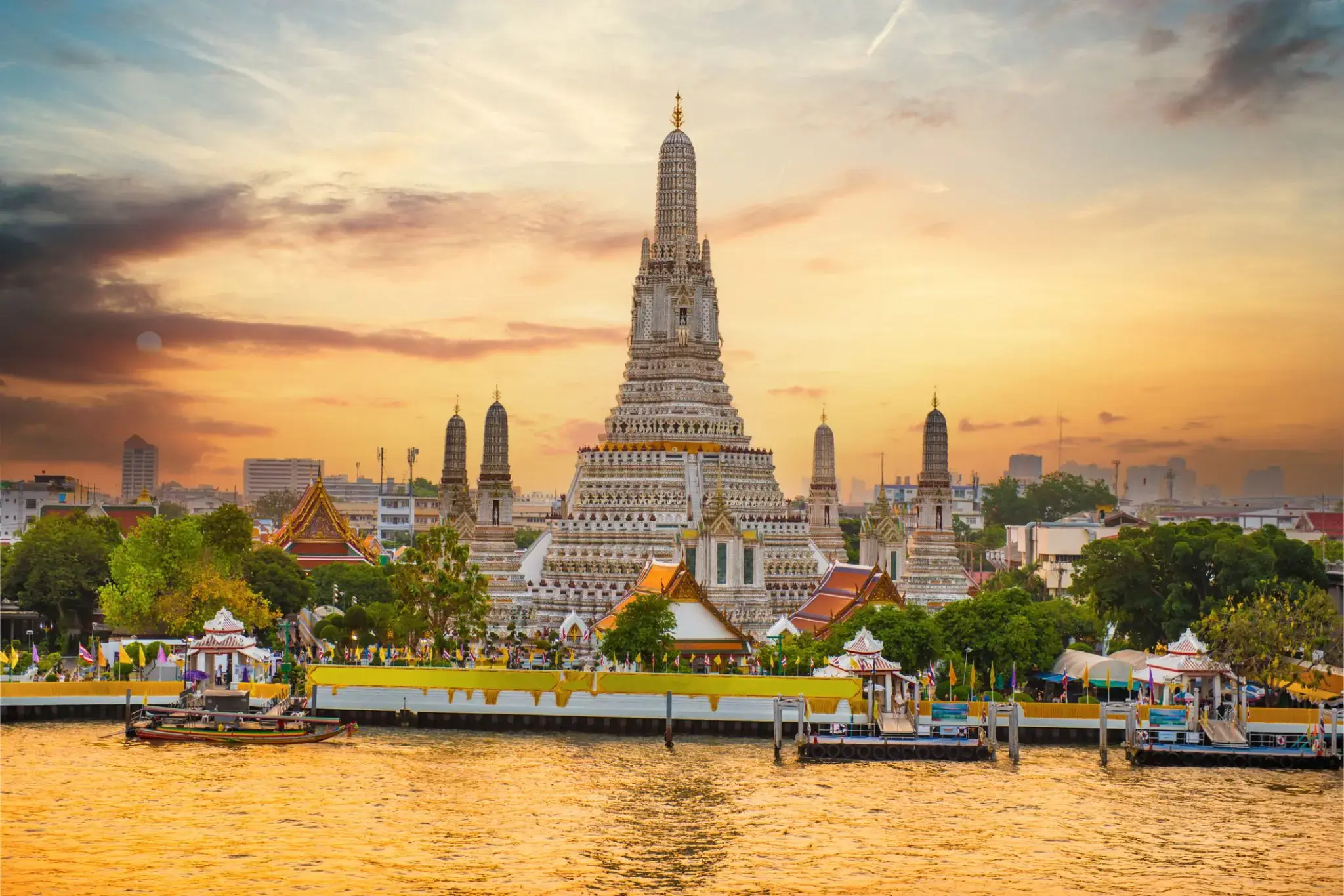
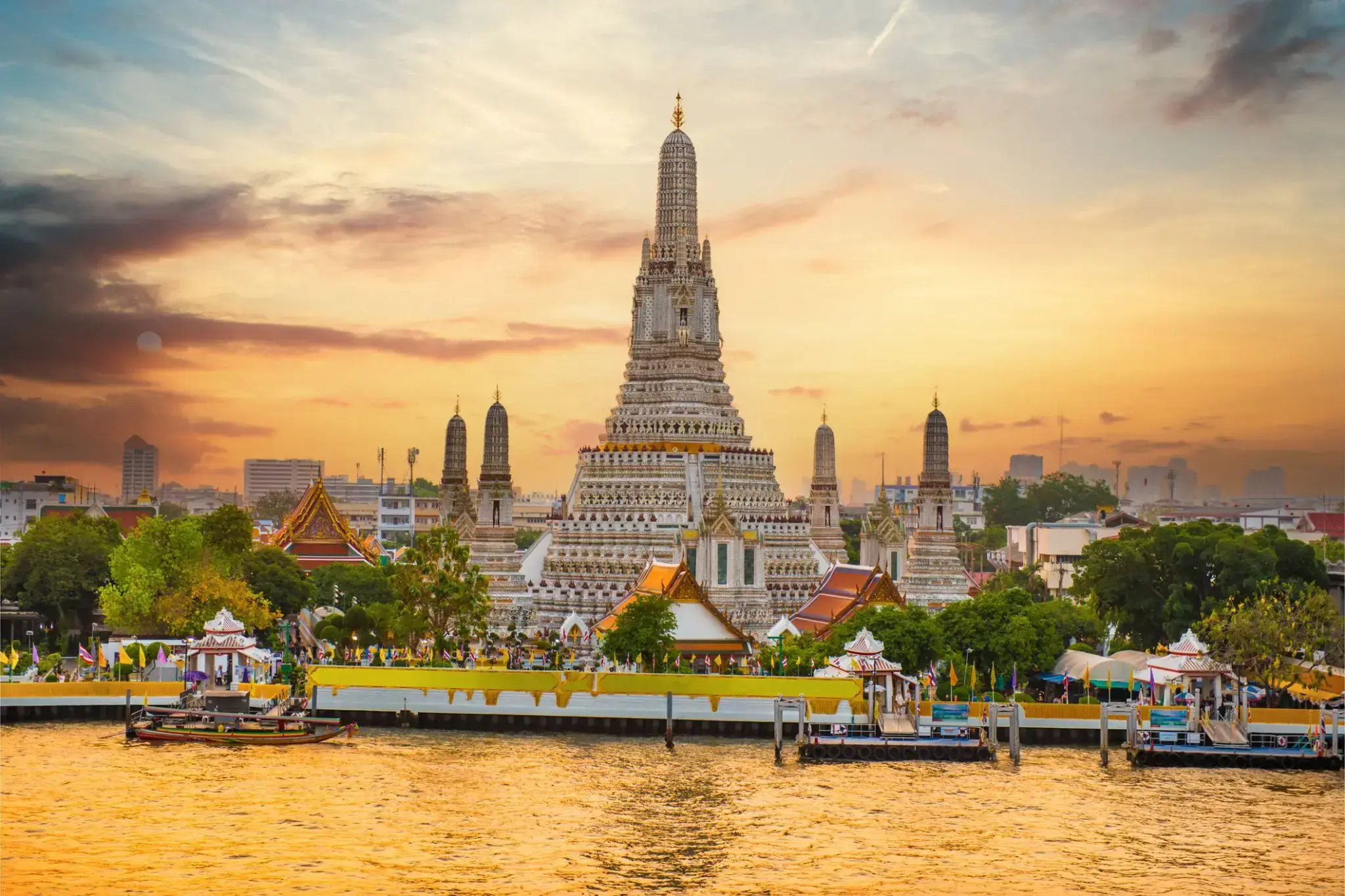
Bangkok is the capital and most populous city of Thailand. It is known in Thai as Krung Thep Maha Nakhon or simply Krung Thep. The city occupies 1,568.7 square kilometres (605.7 sq mi) in the Chao Phraya River delta in central Thailand, and has a population of over eight million, or 12.6 percent of the country's population. Over fourteen million people (22.2 percent) lived within the surrounding Bangkok Metropolitan Region at the 2010 census, making Bangkok the nation's primate city, significantly dwarfing Thailand's other urban centres in terms of importance.
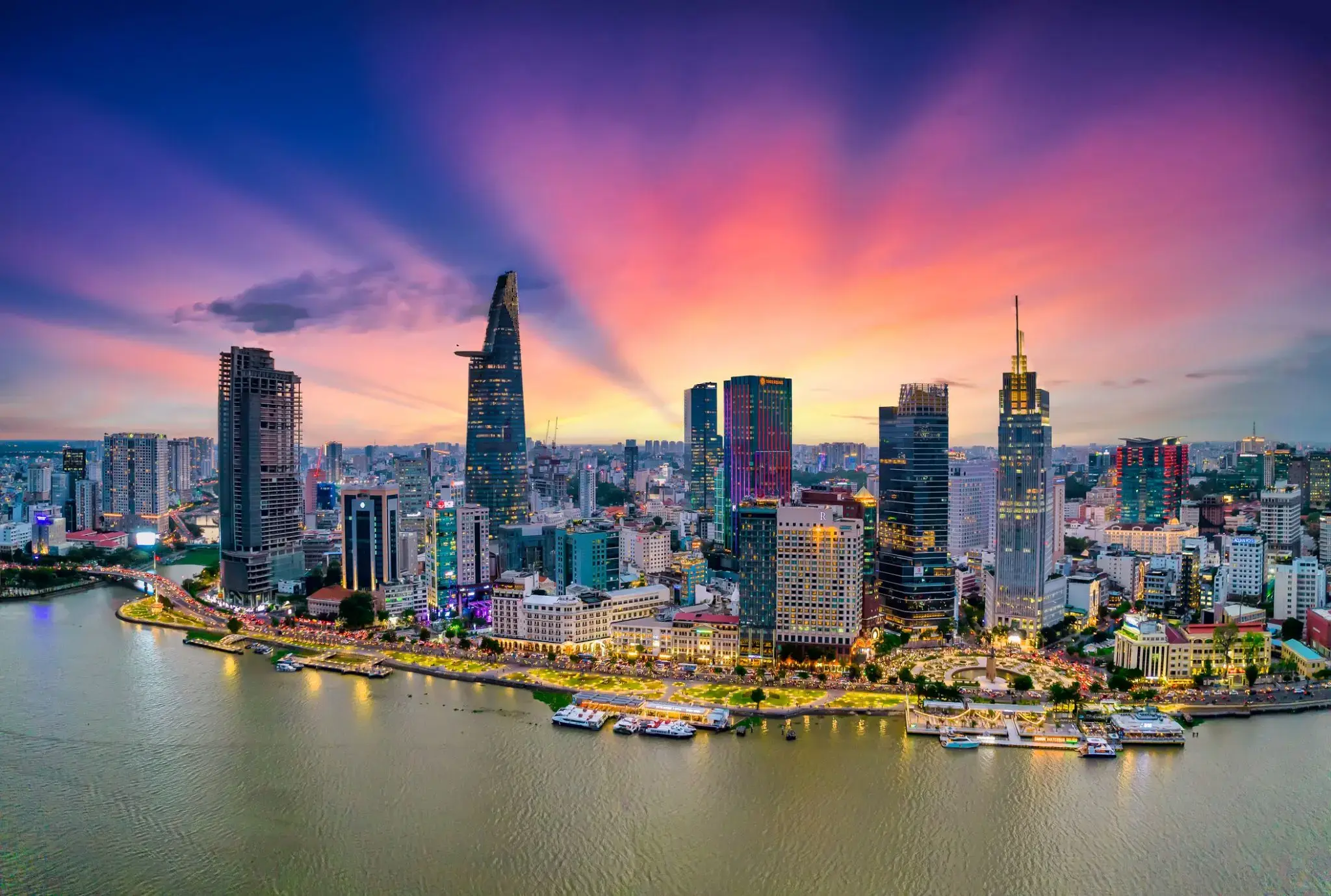
Ho Chi Minh City, also known by its former name of Saigon is the most populous city in Vietnam with a population of 8.4 million (13 million in the metropolitan area) as of 2017. Located in southeast Vietnam, the metropolis surrounds the Saigon River and covers about 2,061 square kilometres (796 square miles).
Under the name Saigon, it was the capital of French Indochina from 1887 to 1902 and again from 1945 to 1954. Saigon would later become the capital of South Vietnam from 1955 until its fall in 1975. On 2 July 1976, Saigon merged with the surrounding Gia Định Province and was officially renamed Ho Chi Minh City after revolutionary leader Hồ Chí Minh (although the name Sài Gòn is still widely used).
Ho Chi Minh City is the financial centre of Vietnam and is classifed as a Beta+ World City by Globalization and World Cities Research Network. It is home to the Ho Chi Minh City Stock Exchange, the largest stock exchange by total market capitalization in Vietnam and the headquarters of many national and international banks and companies.
Ho Chi Minh City is the most visited city in Vietnam, with 6.3 million visitors in 2017. Many of the city's landmarks which are well known to international visitors include the Bến Thành Market, Ho Chi Minh City Hall, Notre-Dame Cathedral Basilica of Saigon, Independence Palace and the Municipal Theatre. The main passenger airport serving the metropolitan area is Tan Son Nhat International Airport, it is the busiest airport in Vietnam handling 36 million passengers in 2017.

A warm sea breeze and soft sand make Da Nang the perfect place for those seeking seaside relaxation and lightness in every step. Here, modern cafés sit next to traditional markets, while the evening promenade fills with lights and the aroma of fresh seafood. You can enjoy long walks along My Khe and Non Nuoc beaches, ranked among Asia’s best, and discover cozy corners with Vietnamese coffee and the smiles of locals.
For lovers of history and nature, Da Nang offers unique routes to the Marble Mountains with caves and pagodas, providing breathtaking views of the coastline. From here, it is easy to reach the ancient town of Hoi An, preserving the atmosphere of the past, or to take a trip along the Hai Van Pass, where each turn reveals new panoramas of mountains and sea. The city combines a relaxing beach holiday with the chance to discover Vietnam’s beauty and breathe in the fresh sea air that fills you with energy and lightness.

Hanoi is the capital of Vietnam, a city with a thousand-year history, formerly known as Thang Long, which translates as “City of the Soaring Dragon.” Despite the abundance of pagodas, architectural landmarks, and bustling marketplaces, the city is not overcrowded with tourists, allowing visitors to enjoy its charm without haste or crowds.
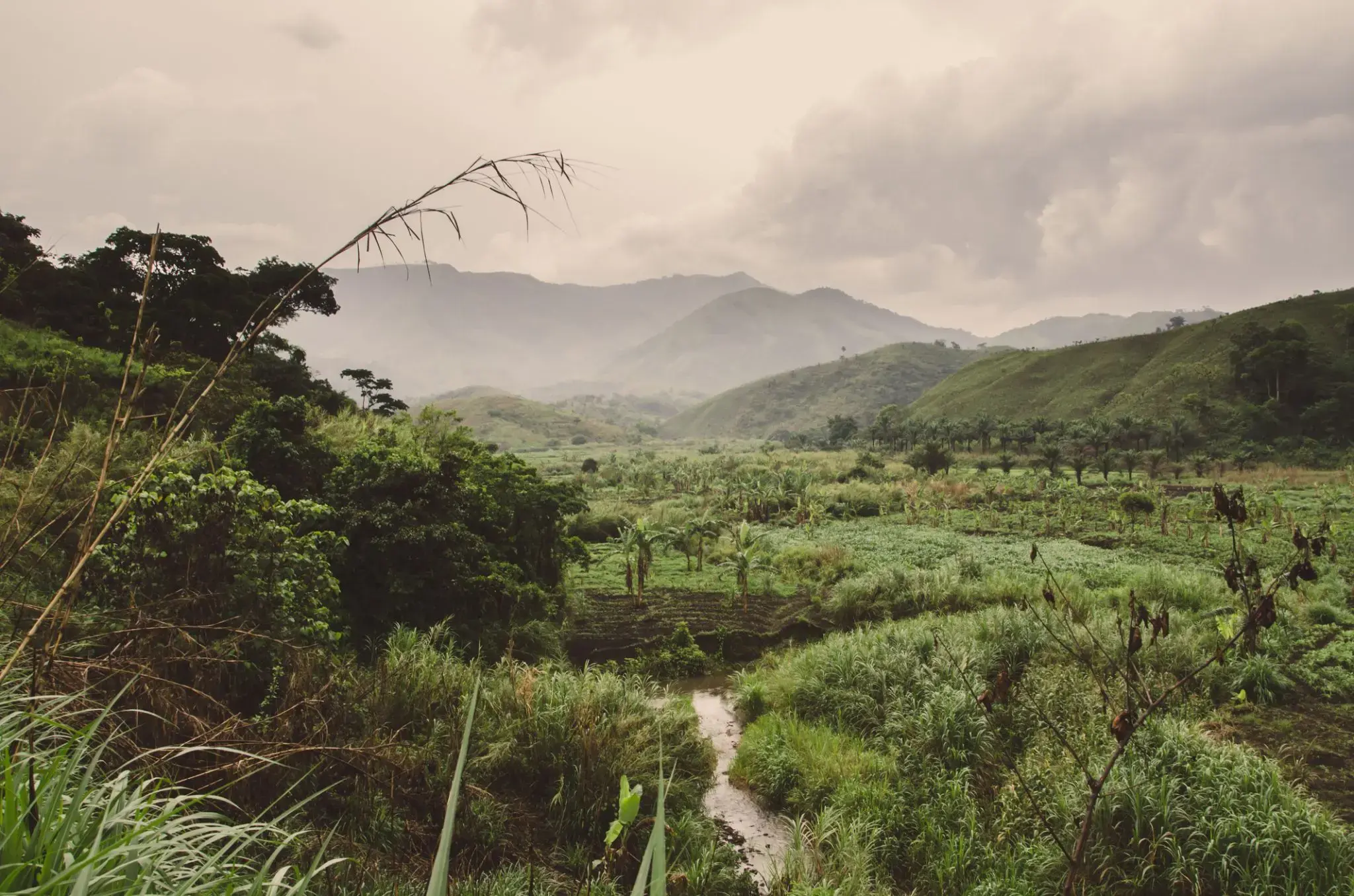
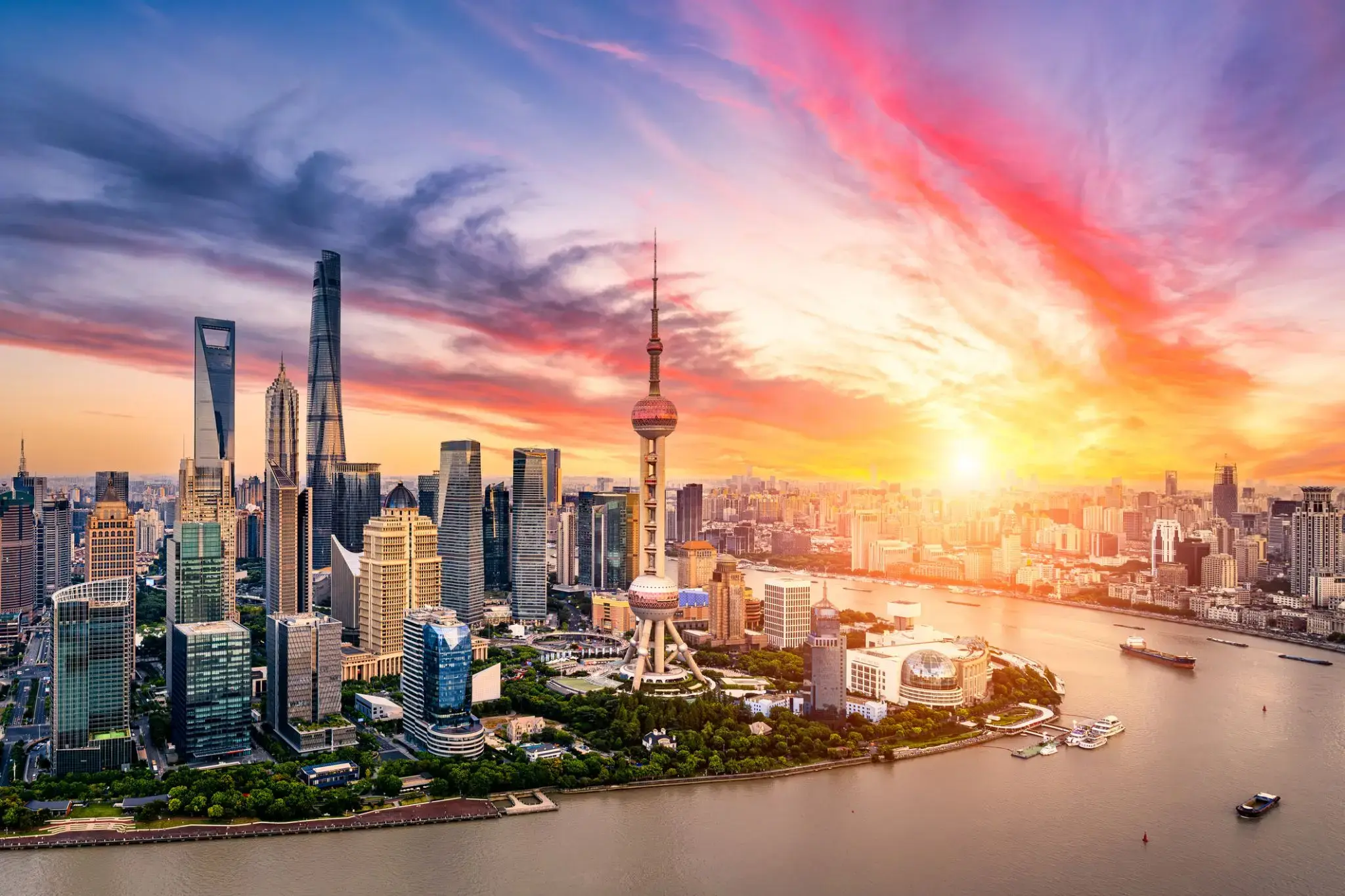
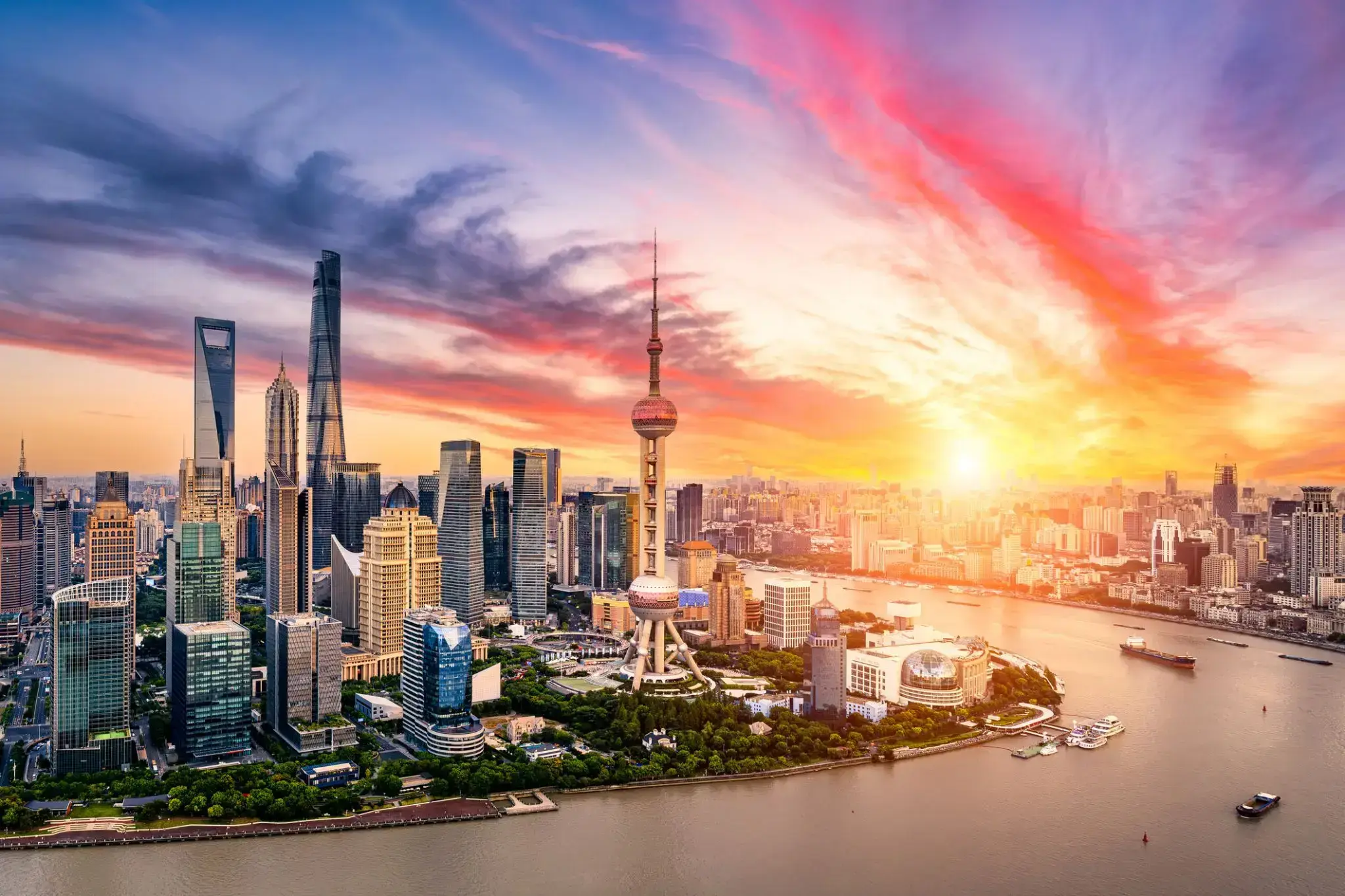
Shanghai is one of the four municipalities under the direct administration of the central government of the Republic of China, the largest city in China by population, and the second most populous city proper in the world, with a population of 24.18 million as of 2017. It is a global financial centre and transport hub, with the world's busiest container port. Located in the Yangtze River Delta, it sits on the south edge of the estuary of the Yangtze in the middle portion of the East Chinacoast. The municipality borders the provinces of Jiangsu and Zhejiang to the north, south and west, and is bounded to the east by the East China Sea.
As a major administrative, shipping and trading city, Shanghai grew in importance in the 19th century due to trade and recognition of its favourable port location and economic potential. The city was one of five treaty ports forced open to foreign trade following the British victory over China in the First Opium War. The subsequent 1842 Treaty of Nankingand 1844 Treaty of Whampoa allowed the establishment of the Shanghai International Settlement and the French Concession. The city then flourished as a centre of commerce between China and other parts of the world (predominantly the Occident), and became the primary financial hub of the Asia-Pacific region in the 1930s. However, with the Communist Party takeover of the mainland in 1949, trade was limited to other socialist countries, and the city's global influence declined. In the 1990s, the economic reforms introduced by Deng Xiaoping resulted in an intense re-development of the city, aiding the return of finance and foreign investment to the city. It has since re-emerged as a hub for international trade and finance; it is the home of the Shanghai Stock Exchange, one of the world's largest by market capitalization.
Shanghai has been described as the "showpiece" of the booming economy of mainland China; renowned for its Lujiazui skyline, and museums and historic buildings, such as those along The Bund, as well as the City God Templeand the Yu Garden.

Seoul, officially the Seoul Special City, is the capital and largest metropolis of South Korea. With surrounding Incheon metropolis and Gyeonggi province, Seoul forms the heart of the Seoul Capital Area, home to roughly half of the country's population. Seoul is ranked as the fourth largest metropolitan economy in the world and is larger than London and Paris.
Strategically situated on the Han River, Seoul's history stretches back over two thousand years, when it was founded in 18 BCE by the people of Baekje, one of the Three Kingdoms of Korea. The city was later designated the capital of Korea under the Joseon dynasty. Seoul is surrounded by a mountainous and hilly landscape, with Bukhan Mountainlocated on the northern edge of the city. As with its long history, the Seoul Capital Area contains five UNESCO World Heritage Sites: Changdeok Palace, Hwaseong Fortress, Jongmyo Shrine, Namhansanseong and the Royal Tombs of the Joseon Dynasty. More recently, Seoul has been a major site of modern architectural construction – major modern landmarks include the N Seoul Tower, the 63 Building, the Lotte World Tower, the Dongdaemun Design Plaza, Lotte World, Trade Tower, COEX, and the Parc1 Tower. Seoul was named the 2010 World Design Capital. As the birthplace of K-pop and the Korean Wave, Seoul received over 10 million international visitors in 2014, making it the world's 9th most visited city and 4th largest earner in tourism.
Today, Seoul is considered a leading and rising global city, resulting from the South Korean economic boom - commonly referred to as the Miracle on the Han River - which transformed it into the world's 7th largest metropolitan economy with a GDP of US$635.4 billion in 2014 after Tokyo, New York City and Los Angeles. International visitors generally reach Seoul via AREX from the Incheon International Airport, notable for having been rated the best airport for nine consecutive years (2005–2013) by the Airports Council International. In 2015, it was rated Asia's most livable city with the second highest quality of life globally by Arcadis, with the GDP per capita (PPP) in Seoul being $39,786. Inhabitants of Seoul are faced with a high cost of living, for which the city was ranked 6th globally in 2017. Seoul is also an extremely expensive real estate market, ranked 5th in the world for the price of apartments in the downtown center. With major technology hubs centered in Gangnam and Digital Media City, the Seoul Capital Area is home to the headquarters of 15 Fortune Global 500 companies, including Samsung, LG, and Hyundai. Ranked sixth in the Global Power City Index and Global Financial Centres Index, the metropolis exerts a major influence in global affairs as one of the five leading hosts of global conferences. Seoul has hosted the 1986 Asian Games, 1988 Summer Olympics, 2002 FIFA World Cup, and more recently the 2010 G-20 Seoul summit.
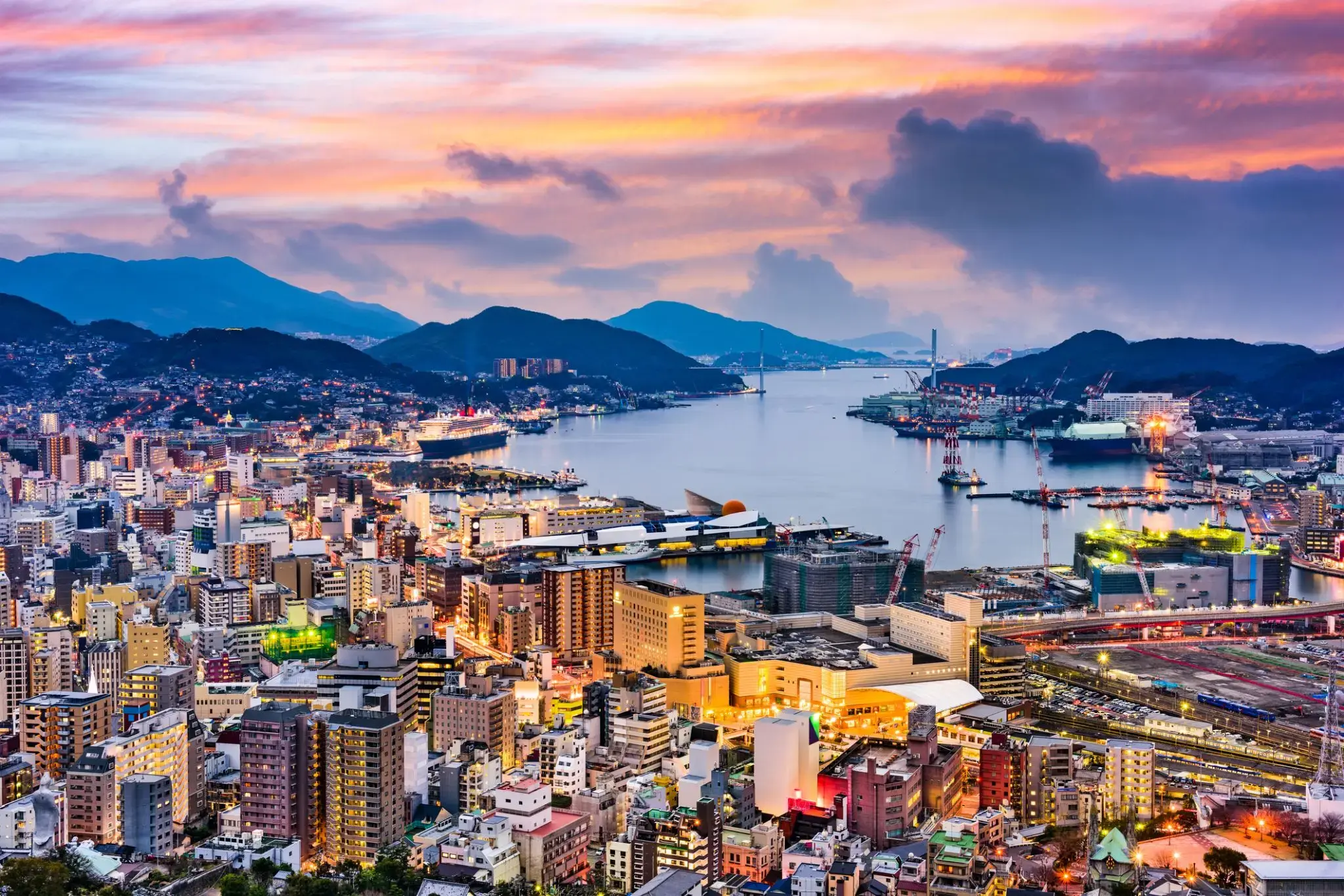
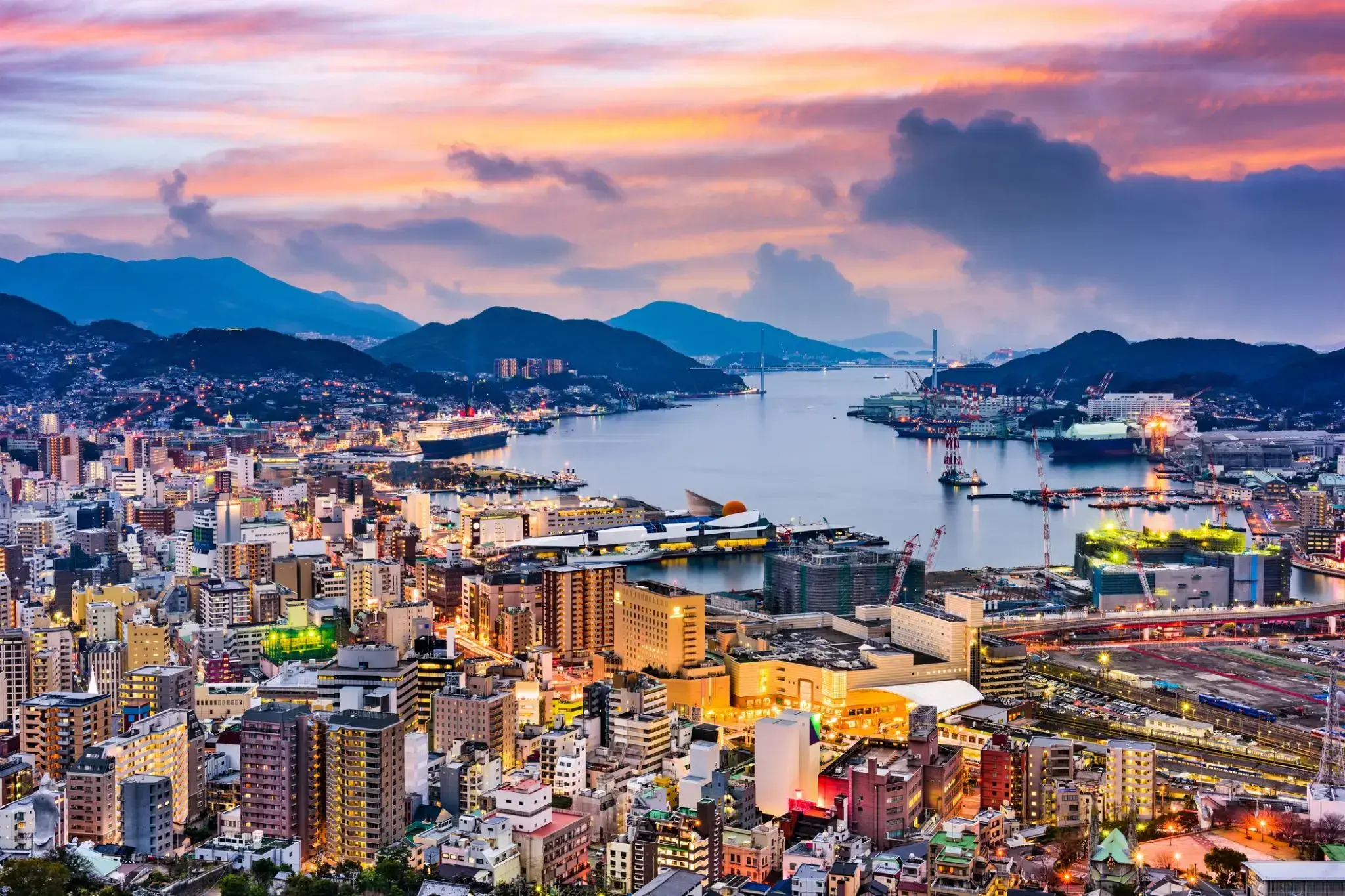
Nagasaki is the capital and the largest city of Nagasaki Prefecture on the island of Kyushu in Japan. The city's name means "long cape" in Japanese. Nagasaki became a centre of colonial Portuguese and Dutch influence in the 16th through 19th centuries, and the Hidden Christian Sites in the Nagasaki Region have been recognized and included in the UNESCO World Heritage List. Part of Nagasaki was home to a major Imperial Japanese Navy base during the First Sino-Japanese War and Russo-Japanese War.
During World War II, the American atomic bombings of Hiroshima and Nagasaki made Nagasaki the second and, to date, last city in the world to experience a nuclear attack (at 11:02 a.m., August 9, 1945 'Japan Standard Time (UTC+9)').
As of 1 March 2017, the city has an estimated population of 425,723 and a population density of 1,000 people per km2. The total area is 406.35 km2 (156.89 sq mi).
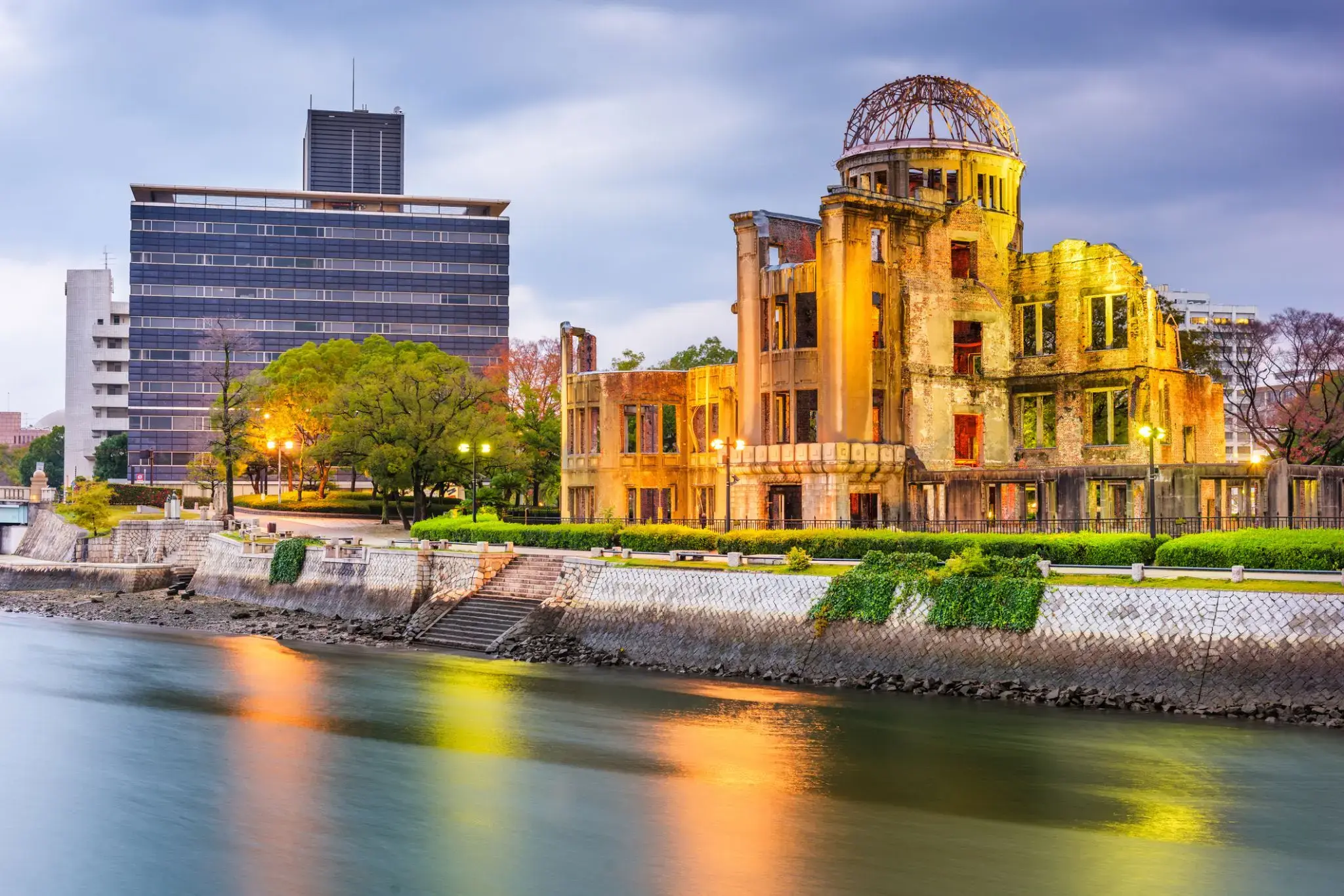
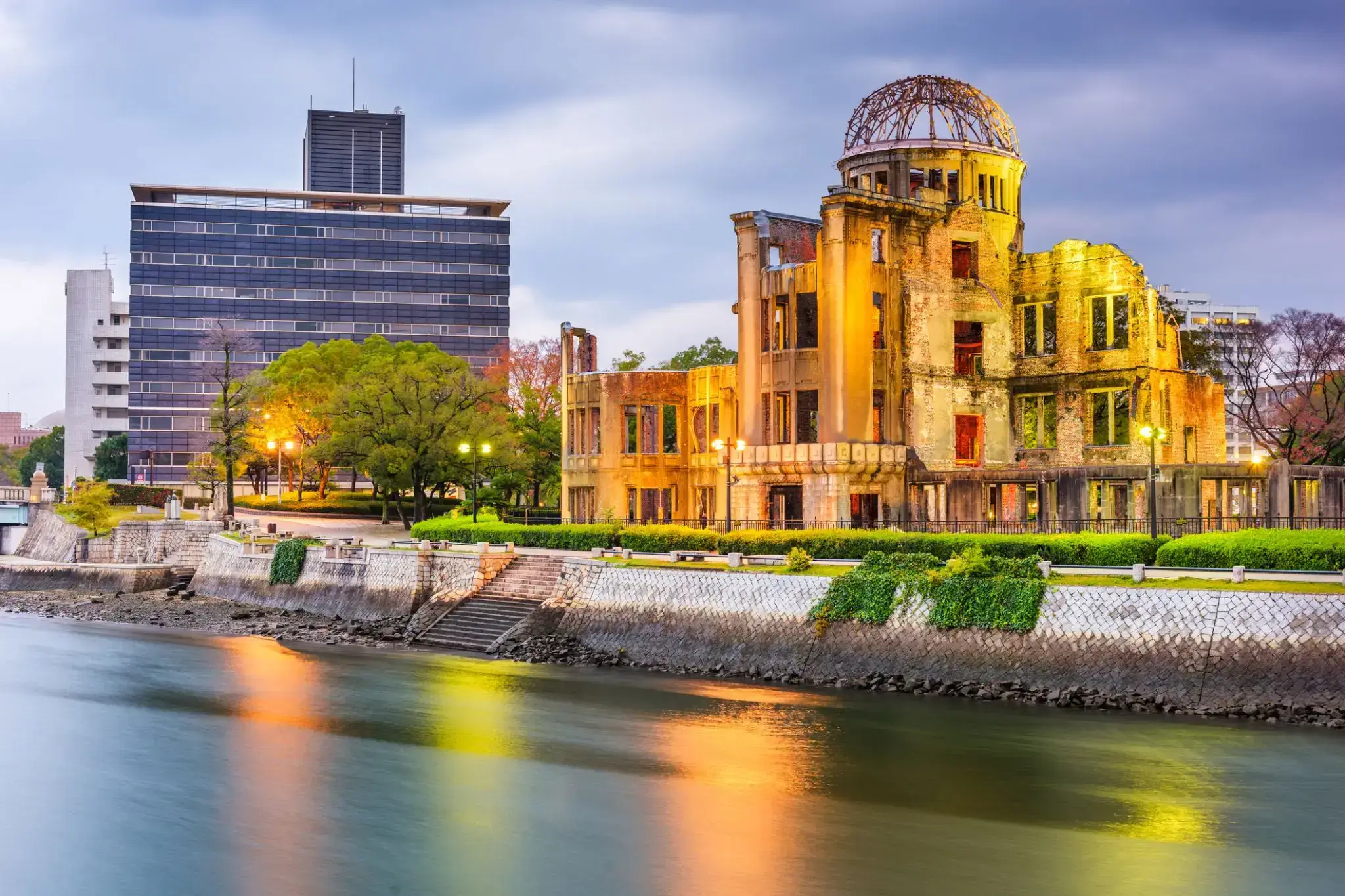
a city in southwestern Japan, on the southern coast of the island of Honshu; population 1,144,572 (2007). It was the target of the first atom bomb, which was dropped by the US on August 6, 1945, and resulted in the deaths of about one third of the city's population of 300,000. This, with a second attack on Nagasaki three days later, led to Japan's surrender and to the end of World War II.
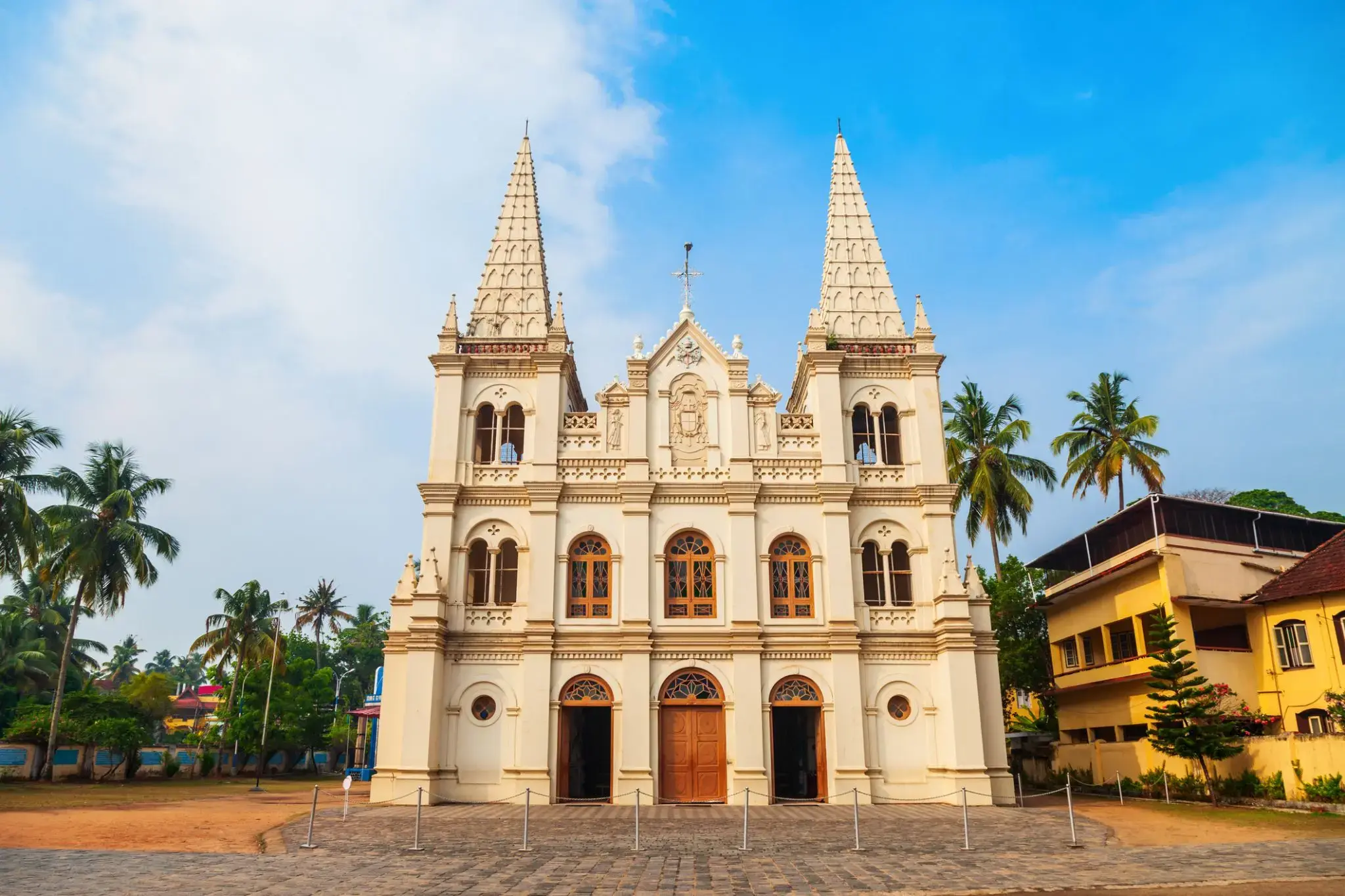
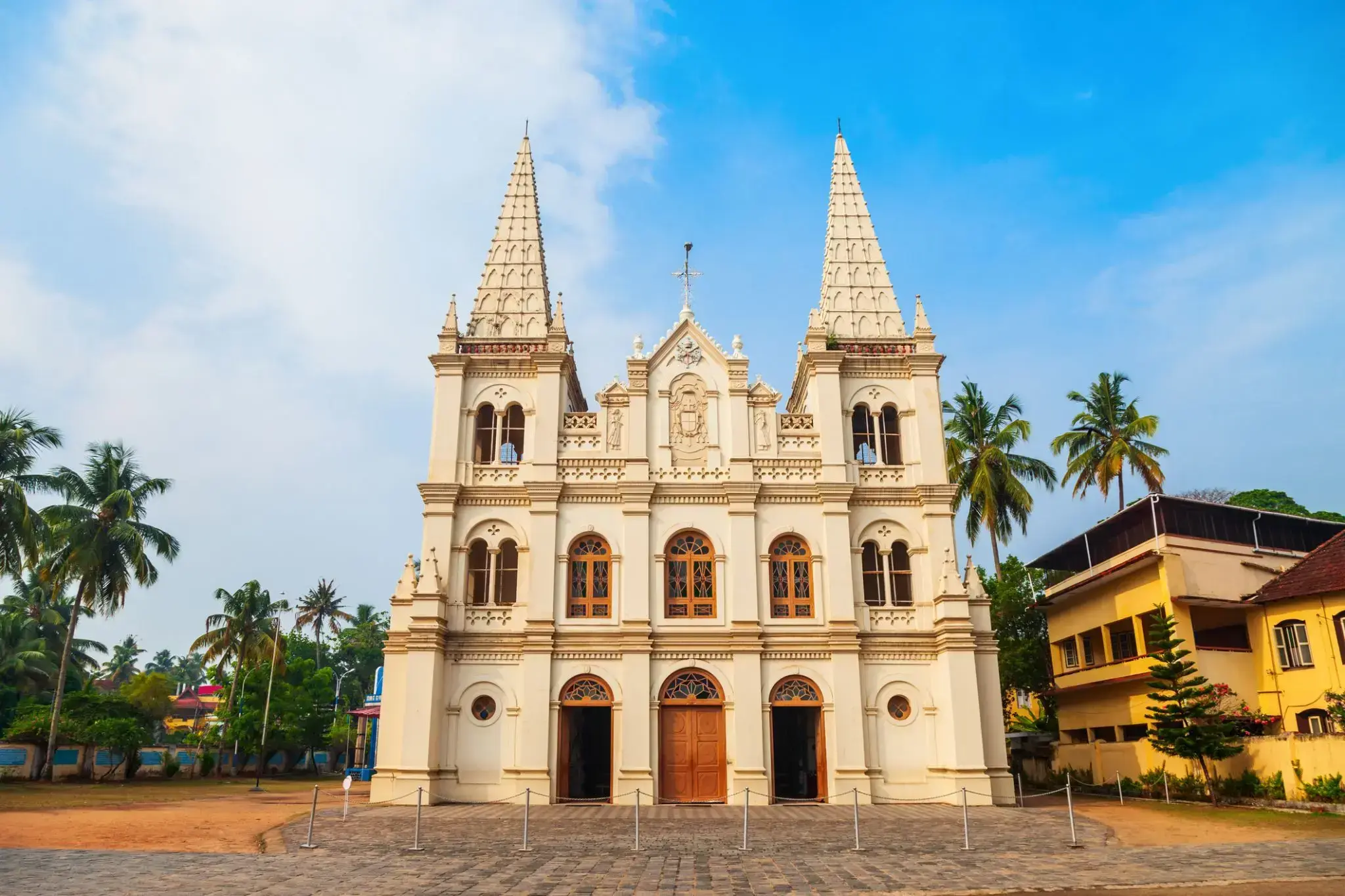
a seaport and naval base on the Malabar Coast of southwestern India, in the state of Kerala; population 254,500 (est. 2009).
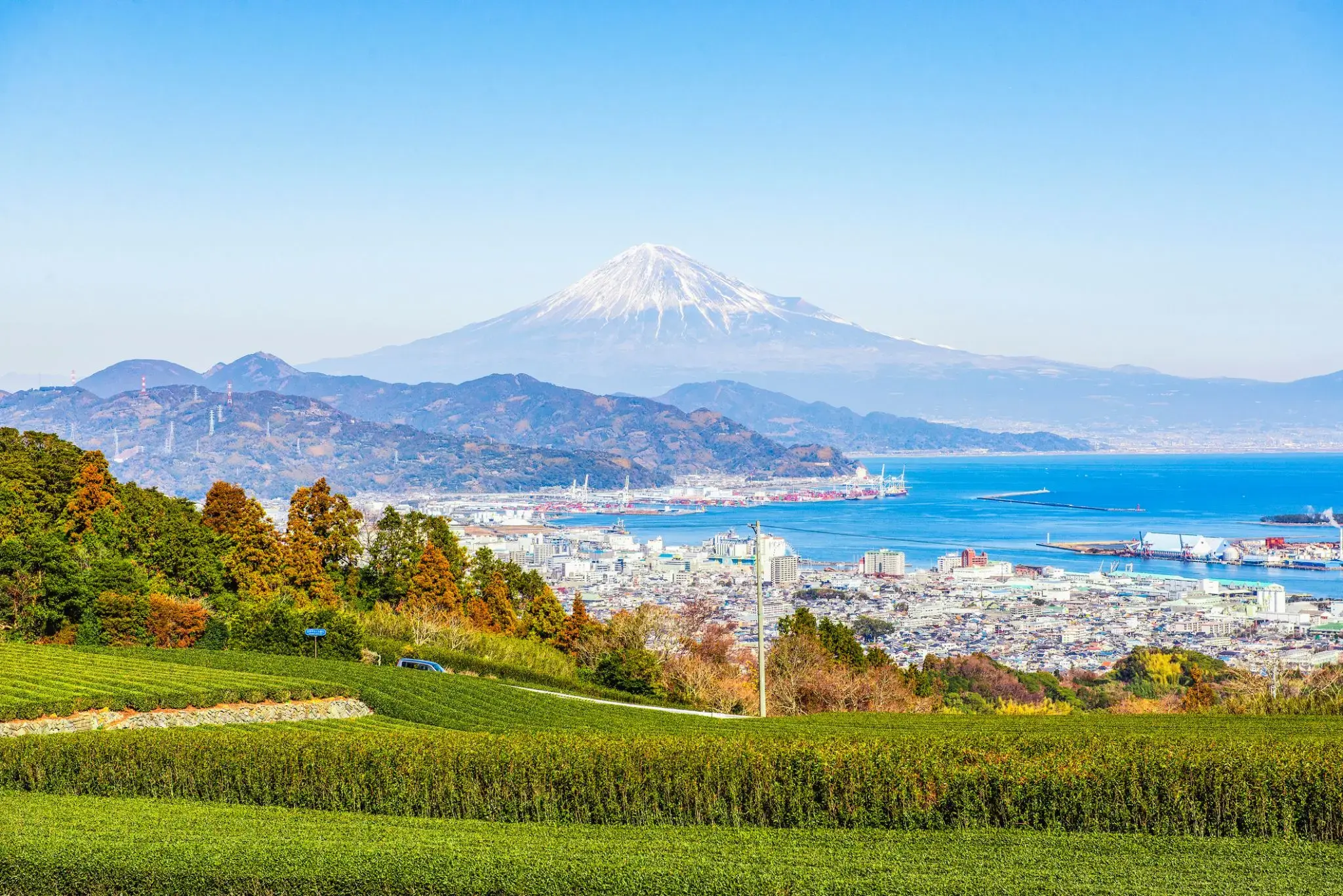
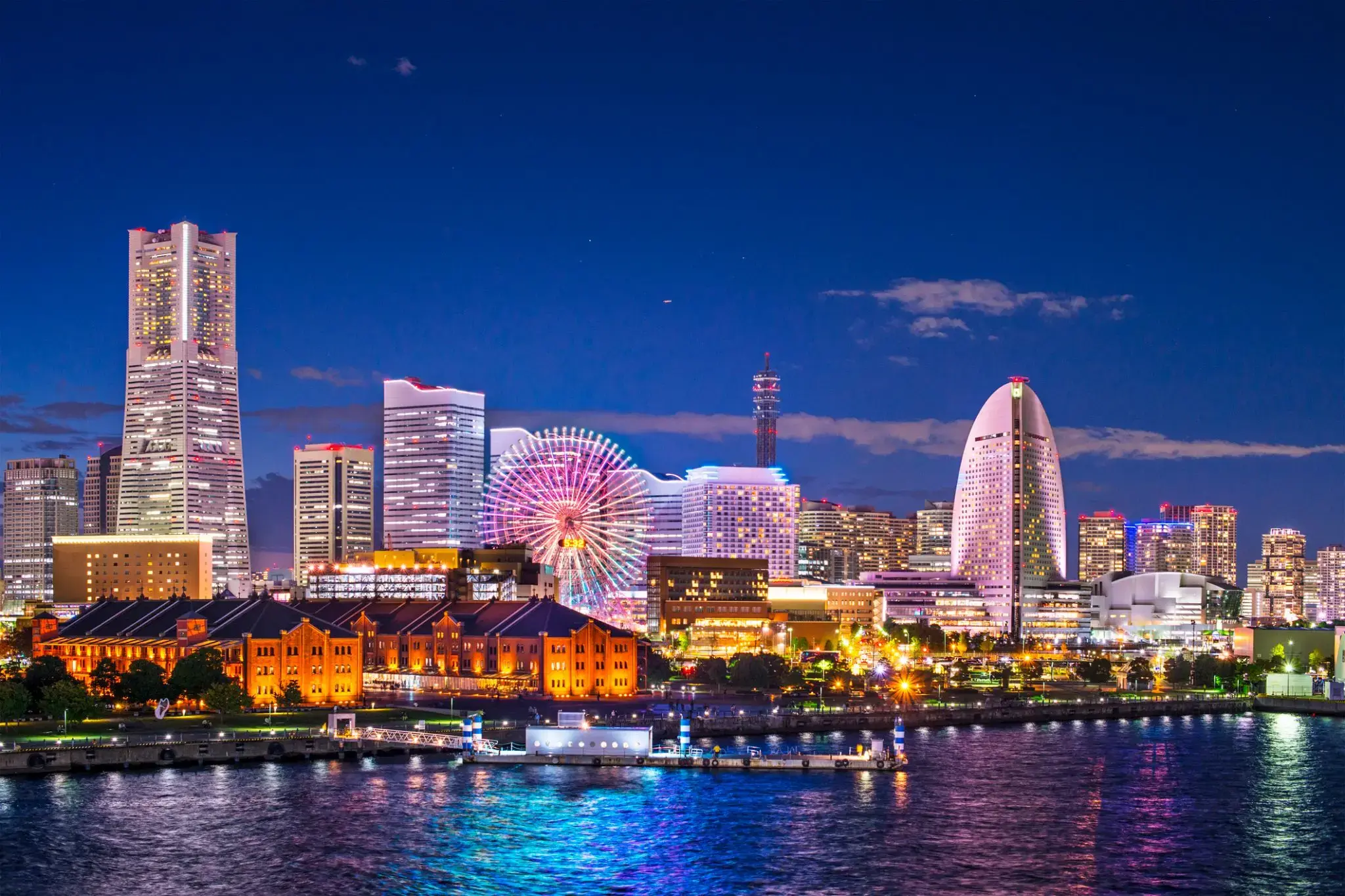
Tokyo, officially Tokyo Metropolis, one of the 47 prefectures of Japan, has served as the Japanese capital since 1869. As of 2014, the Greater Tokyo Arearanked as the most populous metropolitan area in the world. The urban area houses the seat of the Emperor of Japan, of the Japanese government and of the National Diet. Tokyo forms part of the Kantō region on the southeastern side of Japan's main island, Honshu, and includes the Izu Islands and Ogasawara Islands. Tokyo was formerly named Edo when Shōgun Tokugawa Ieyasu made the city his headquarters in 1603. It became the capital after Emperor Meiji moved his seat to the city from Kyoto in 1868; at that time Edo was renamed Tokyo. Tokyo Metropolis formed in 1943 from the merger of the former Tokyo Prefecture and the city of Tokyo. Tokyo is often referred to as a city but is officially known and governed as a "metropolitan prefecture", which differs from and combines elements of a city and a prefecture, a characteristic unique to Tokyo.
The 23 Special Wards of Tokyo were formerly Tokyo City. On July 1, 1943, it merged with Tokyo Prefecture and became Tokyo Metropolis with an additional 26 municipalities in the western part of the prefecture, and the Izu islandsand Ogasawara islands south of Tokyo. The population of the special wards is over 9 million people, with the total population of Tokyo Metropolis exceeding 13.8 million. The prefecture is part of the world's most populous metropolitan area called the Greater Tokyo Area with over 38 million people and the world's largest urban agglomeration economy. As of 2011, Tokyo hosted 51 of the Fortune Global 500 companies, the highest number of any city in the world at that time. Tokyo ranked third (twice) in the International Financial Centres Development Index. The city is home to various television networks such as Fuji TV, Tokyo MX, TV Tokyo, TV Asahi, Nippon Television, NHK and the Tokyo Broadcasting System.

Taiwan it is a state in East Asia. It includes the neighbors of the Republic of China and the Philippines to the south. It is not a member of the United Nations.
The island of Taiwan was formerly known as the island of mass migration. The island was annexed in 1683 by the Qing dynasty, the last dynasty. The Qing ceded Taiwan to Japan in 1895 after the Sino-Japanese War. The Republic of China (ROC) was established after the fall of the Qing dynasty. The following is the Japanese surrender to the Allies in 1945; However, it’s not a problem, but it’s not a problem. It has been up to 99% of its de facto territory. The United States of America is the United States of America in the United States of America until 1971, when it’s lost.

Kaohsiung — The Maritime Gateway to Taiwan with the Heart of a Megacity and the Soul of the Tropics
Welcome to Kaohsiung — a vibrant city on Taiwan's southern coast, where the energy of the port blends seamlessly with the peaceful atmosphere of the ocean. Not just an industrial hub, but a cultural center that impresses with its mild climate, abundant nature, and lively atmosphere. In 2009, Kaohsiung hosted the World Games, solidifying its status as an important international hub. Here, the sun shines almost every day, and the horizon, where mountain ridges, bays, and modern buildings meet, never fails to captivate.
Travelers will find a wealth of experiences: from tranquil walks along the Love River to breathtaking views from the summit of Mount Shoushan. The city also offers immense cultural diversity, from the ancient streets of the Zuoyin district to the village of Meinong, where traditional crafts can be admired. Kaohsiung is not just a place on the map; it's a journey into an atmosphere where nature, history, and modernity blend into a unique experience.

Manila, the capital of the Philippines, is located on the shores of Luzon Island and bordered by Manila Bay. Within the old city of Intramuros, built by the Spanish in 1571, you can find preserved Spanish architectural monuments and churches. The city is also home to the country's main port, which plays a vital role in the Philippine economy. Manila is famous for industries such as chemical, electronics, textiles, food production, and tobacco manufacturing.
For tourists, the Chinatown district is particularly interesting, where pearl and gold products can be purchased. Visitors can also explore various museums and basilicas and enjoy the beauty of Rizal Park. Moreover, Manila is a shopping paradise, offering all the world-famous brands at prices significantly lower than those in Europe.


Puerto Princesa is a city on the island of Palawan in the Philippines, widely known for one of the natural wonders of the world — the Puerto Princesa Underground River, a UNESCO World Heritage Site. This subterranean system of caves and rivers, passing through limestone formations, attracts travelers from around the globe with the opportunity to ride a boat along the river and see stalactites, stalagmites, and a unique ecosystem. The city also serves as a starting point for exploring the breathtaking nature of Palawan: tropical forests, coastlines, and nature reserves.
In addition to its natural attractions, Puerto Princesa is known for its clean streets, friendly atmosphere, and well-developed tourist infrastructure. Here you can taste fresh seafood, visit night markets, or go on island-hopping tours in Honda Bay. The city actively promotes ecotourism, maintaining a balance between development and environmental preservation. For travelers seeking a combination of adventure, relaxation, and immersion in Filipino culture, Puerto Princesa is becoming an increasingly attractive destination.

Kota Kinabalu, formerly known as Jesselton, is the capital of Sabah state and the Kota Kinabalu District in Malaysia. Located on the northwest coast of Borneo facing the South China Sea, the city is near the Tunku Abdul Rahman National Park and Mount Kinabalu, which inspired its name. The metropolitan area has a population of over 600,000.
In the 15th century, the area was influenced by the Bruneian Empire. In the 19th century, the British North Borneo Company established a settlement called Jesselton, which was heavily damaged during World War II. After the war, it became the capital of North Borneo and was renamed Kota Kinabalu in 1967. The city gained official city status in 2000.
Today, Kota Kinabalu is a major industrial and tourist hub in East Malaysia and a popular gateway for travelers visiting Sabah and Borneo. Its rapid growth is driven by tourism and economic development.

Georgetown is the capital of the Cayman Islands, located on Grand Cayman Island in the Caribbean Sea. This picturesque city is known for its beautiful beaches, crystal-clear waters, and cozy atmosphere. The heart of Georgetown features a vibrant waterfront with shops, restaurants, and cafes, where visitors can enjoy local delicacies and buy products from local artisans. The city is also famous for its colonial architecture and historic buildings, with notable landmarks like the old Catholic Church of St. Theresa and the Cayman Islands Museum, where visitors can learn more about the culture and history of the region.
For those seeking adventure, Georgetown does not disappoint. The local waters hide coral gardens, where visitors can encounter not only fish but also majestic sea turtles with whom they can swim. Snorkeling and diving in these areas are not just activities but a chance to witness the pristine ecosystem of the Caribbean Sea. History and nature enthusiasts can explore routes across the island, passing through its green corners, ancient reefs, and waterfalls, offering the perfect blend of natural exploration and cultural discovery.
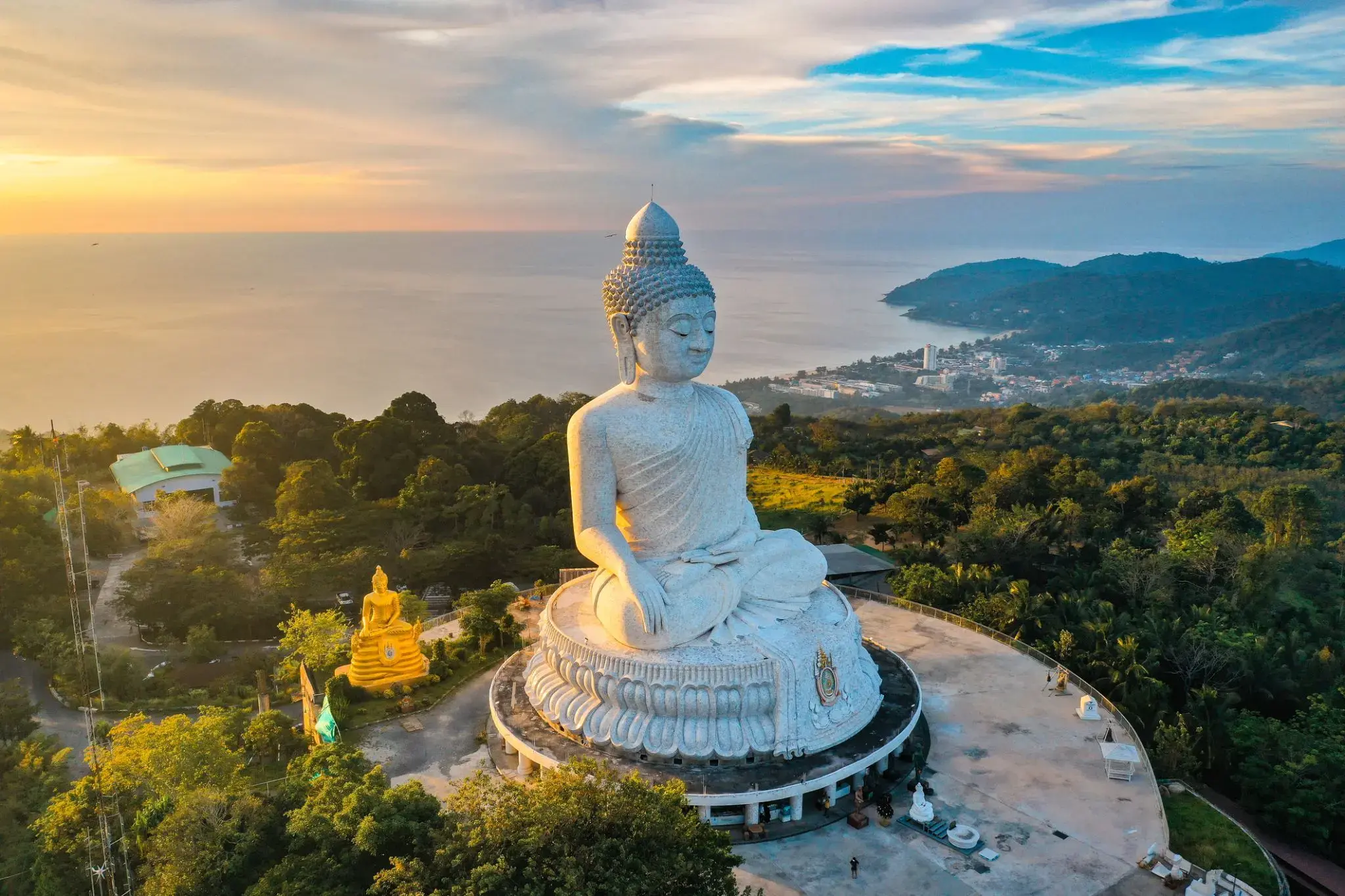
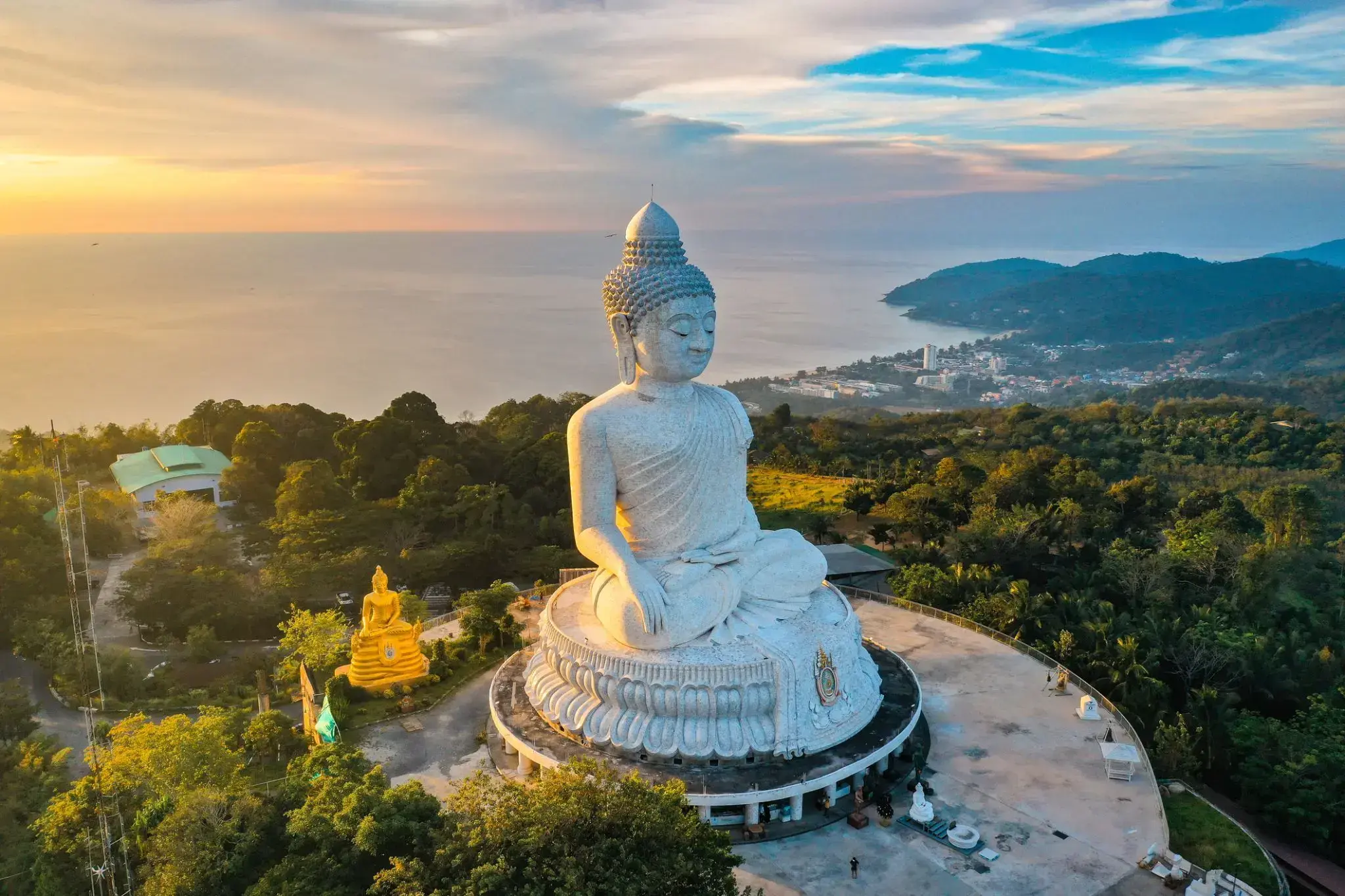
Phuket is one of the southern provinces (changwat) of Thailand. It consists of the island of Phuket, the country's largest island, and another 32 smaller islands off its coast. It lies off the west coast of Thailand in the Andaman Sea. Phuket Island is connected by the Sarasin Bridge to Phang Nga Province to the north. The next nearest province is Krabi, to the east across Phang Nga Bay.
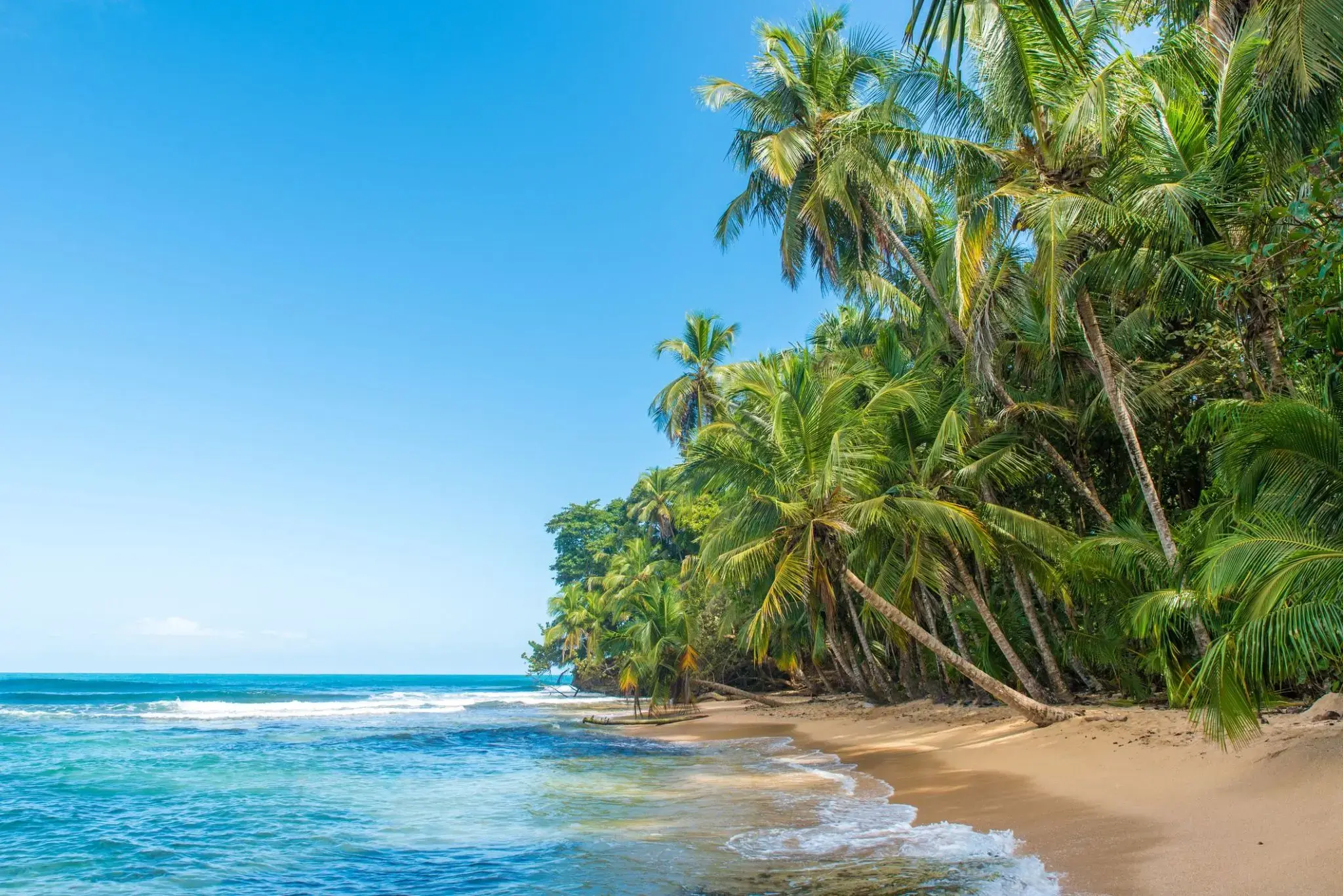
Hidden on the southern coast of Sri Lanka, Hambantota serves as a gateway to a region where exotic nature meets the country's modern ambitions. Deserted beaches give way to green hills, and cozy fishing villages sit alongside major infrastructure projects, including a modern port and airport, making the city a key strategic hub.
Hambantota is perfect for travelers seeking off-the-beaten-path adventures: safaris in nearby Yala National Park, birdwatching in the Bundala sanctuary, or exploring local Buddhist temples offer unforgettable experiences. The local cuisine, based on the freshest seafood and fragrant spices, completes the picture of an ideal retreat away from the tourist crowds.
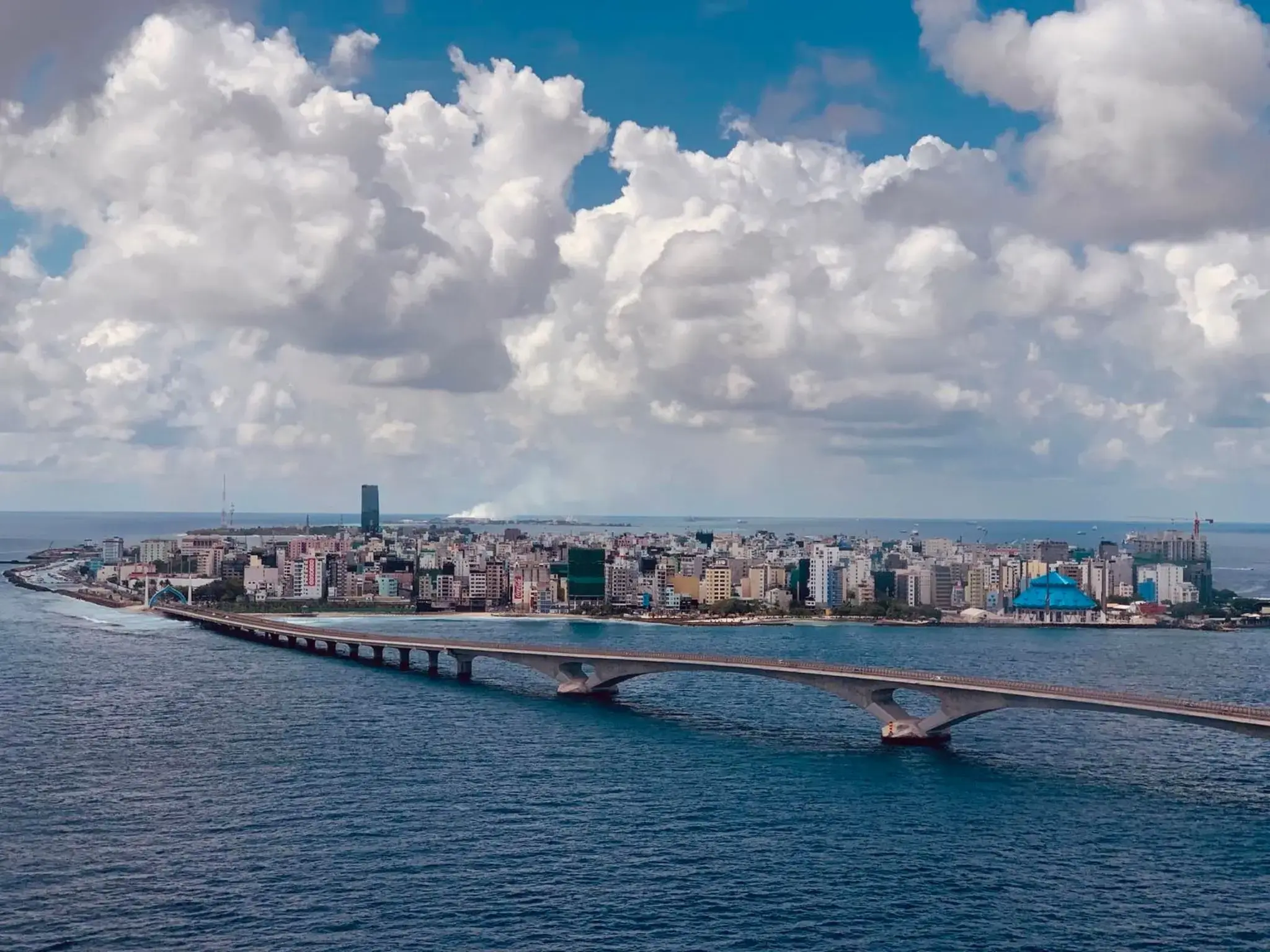
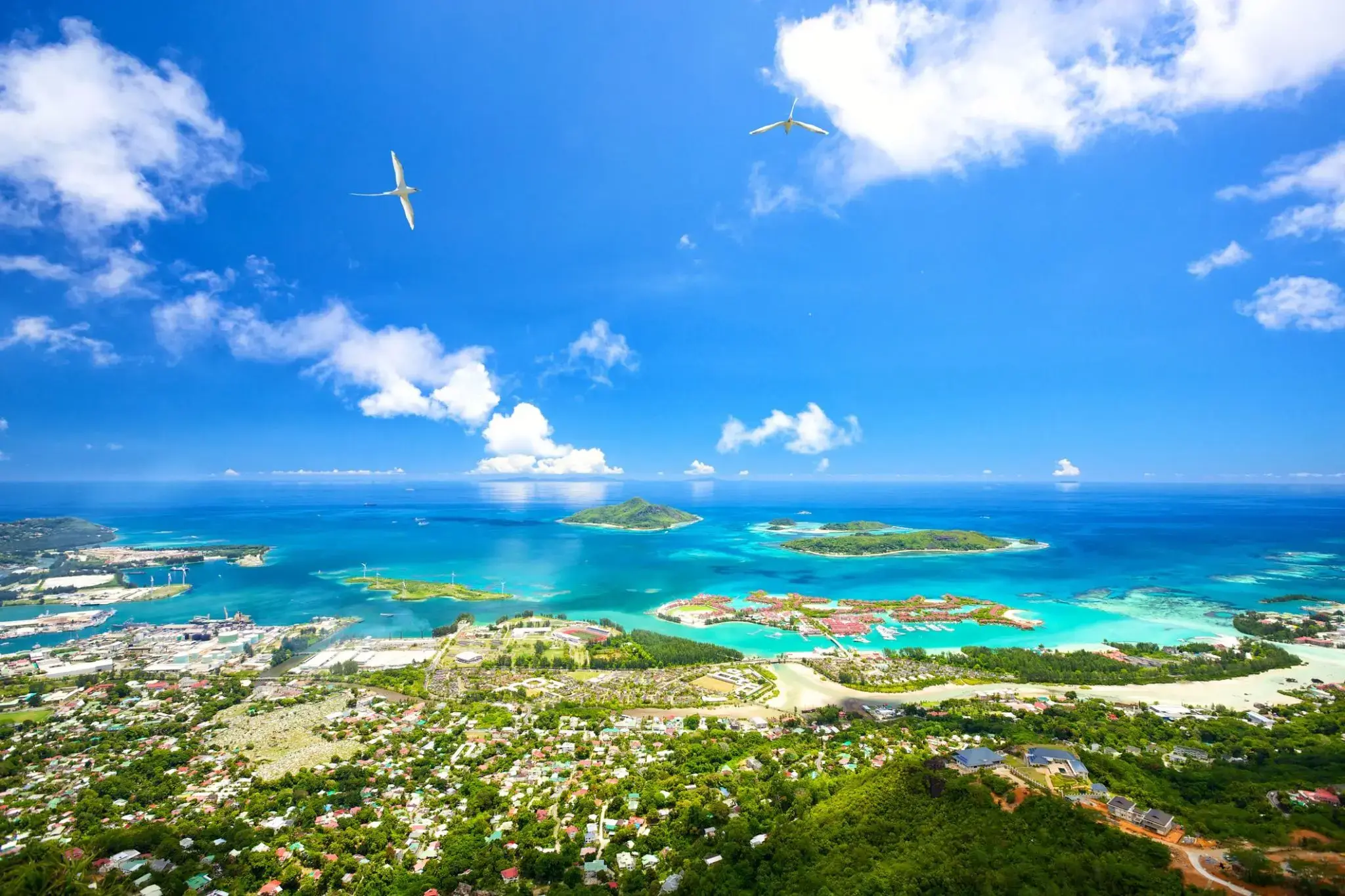
Turquoise waters and lush jungles frame Victoria on Mahé Island, the capital of Seychelles and one of the smallest capitals in the world. Here, colorful markets with exotic fruits and spices blend with colonial-era architecture, and in the city center, you will find a miniature replica of London’s Big Ben — one of Victoria’s symbols. Nearby, visitors can explore the Botanical Garden, home to rare palm and orchid species, and see giant tortoises living in their natural environment.
A journey to Victoria is an opportunity to feel the slow rhythm of Seychellois life and enjoy a truly tropical atmosphere. Strolling along the waterfront, visiting the National Art Gallery, or tasting freshly caught fish in local cafés will bring you closer to the islanders’ culture and everyday life. Just a few minutes from the city center, white sandy beaches and turquoise waters invite you to underwater adventures among Mahé’s coral reefs.

Nosy Be is a tropical island off the coast of Madagascar, known for its pristine beaches and vibrant marine life. The island attracts tourists with its stunning nature: white sandy beaches, emerald waters, coral reefs, and lush greenery. Nosy Be is an excellent destination for those seeking to relax away from the hustle and bustle of the city and immerse themselves in tranquility. Visitors can enjoy activities like diving, snorkeling, or simply relaxing on the beach while watching sunsets.
The island is also famous for its unique natural reserves, such as the Lemur Park, where rare animals, including lemurs and other endemic species of Madagascar, can be seen. Nosy Be is not only a place for beach relaxation but also a cultural destination: the island hosts vibrant holidays and festivals, and the local cuisine offers unique dishes blending African, Arab, and French traditions.

Turquoise lagoons, mangrove forests, and the scent of spices in the air — all of this instantly transports you into the atmosphere of Mamoudzou, the administrative center of the island of Mayotte. This town is a vibrant reflection of cultural fusion: French infrastructure blends with Comorian traditions, and mosques stand alongside Creole markets where you can hear Shimaore spoken and buy fresh lobsters.
Mamoudzou attracts travelers looking for an off-the-beaten-path exotic experience: you can go on a marine safari to spot whales and dolphins in a lagoon protected by the world's third-largest coral reef, or simply enjoy the sunset overlooking the neighboring island of Petite-Terre. It’s a place for those seeking a new facet of French overseas romance — wild, authentic, and remarkably warm.

Maputo is the capital and largest city of Mozambique, stretching along the coast of the Indian Ocean. The city is known for its eclectic architecture, where Portuguese colonial buildings stand side by side with modern structures. One of its main landmarks is the central railway station, designed by students of Gustave Eiffel, according to some sources. Tourists are also drawn to the city’s palm-lined waterfront, markets offering local fruits and handmade crafts, and museums that tell the rich story of the country.
Despite its capital status, Maputo retains a warm and relaxed atmosphere. Visitors can enjoy traditional cuisine rich in seafood and spices, and listen to live marrabenta music in street cafés. Thanks to its proximity to natural reserves like Maputo National Park, the city is also ideal for travelers seeking a blend of cultural experiences and encounters with nature.
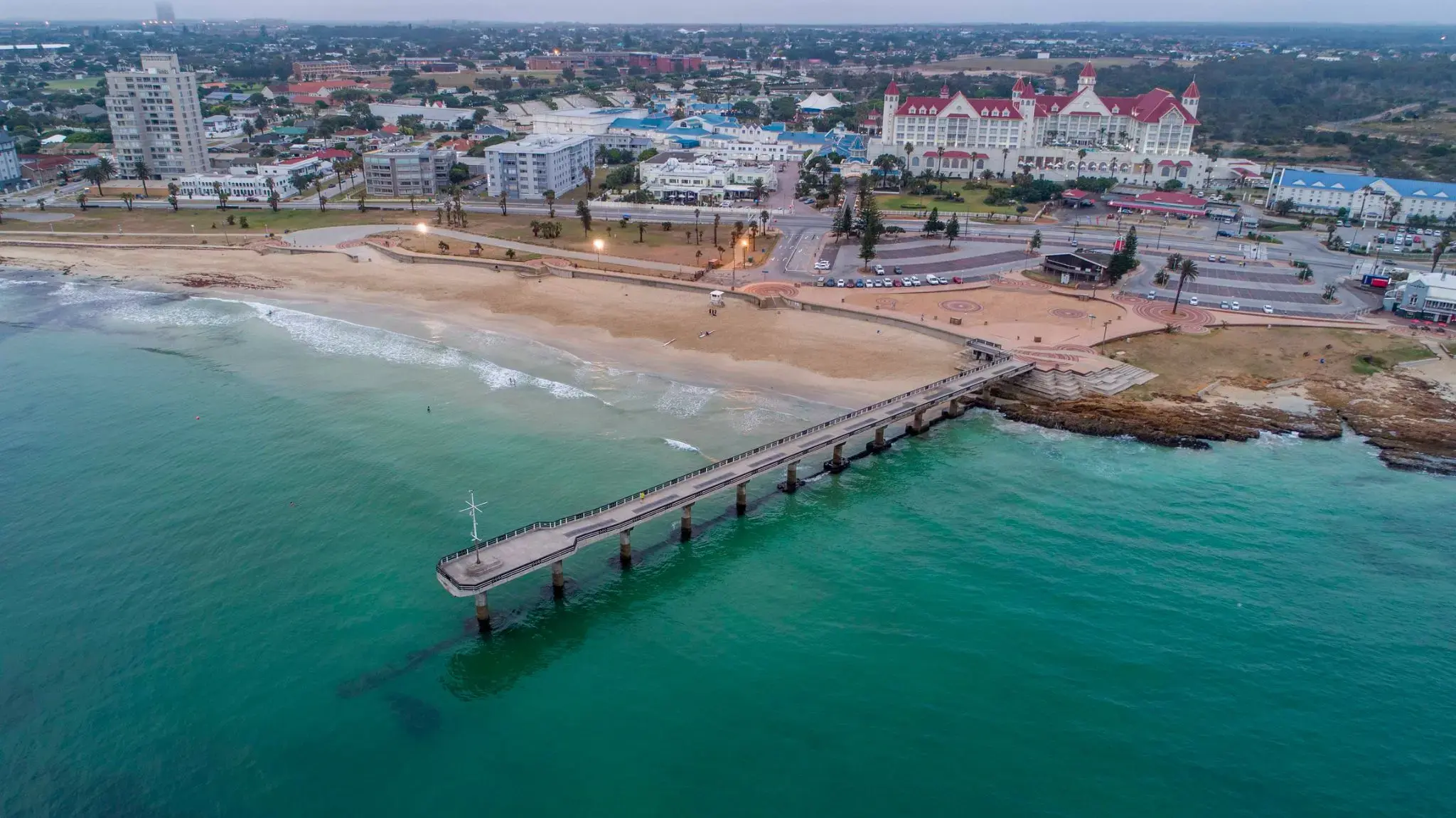
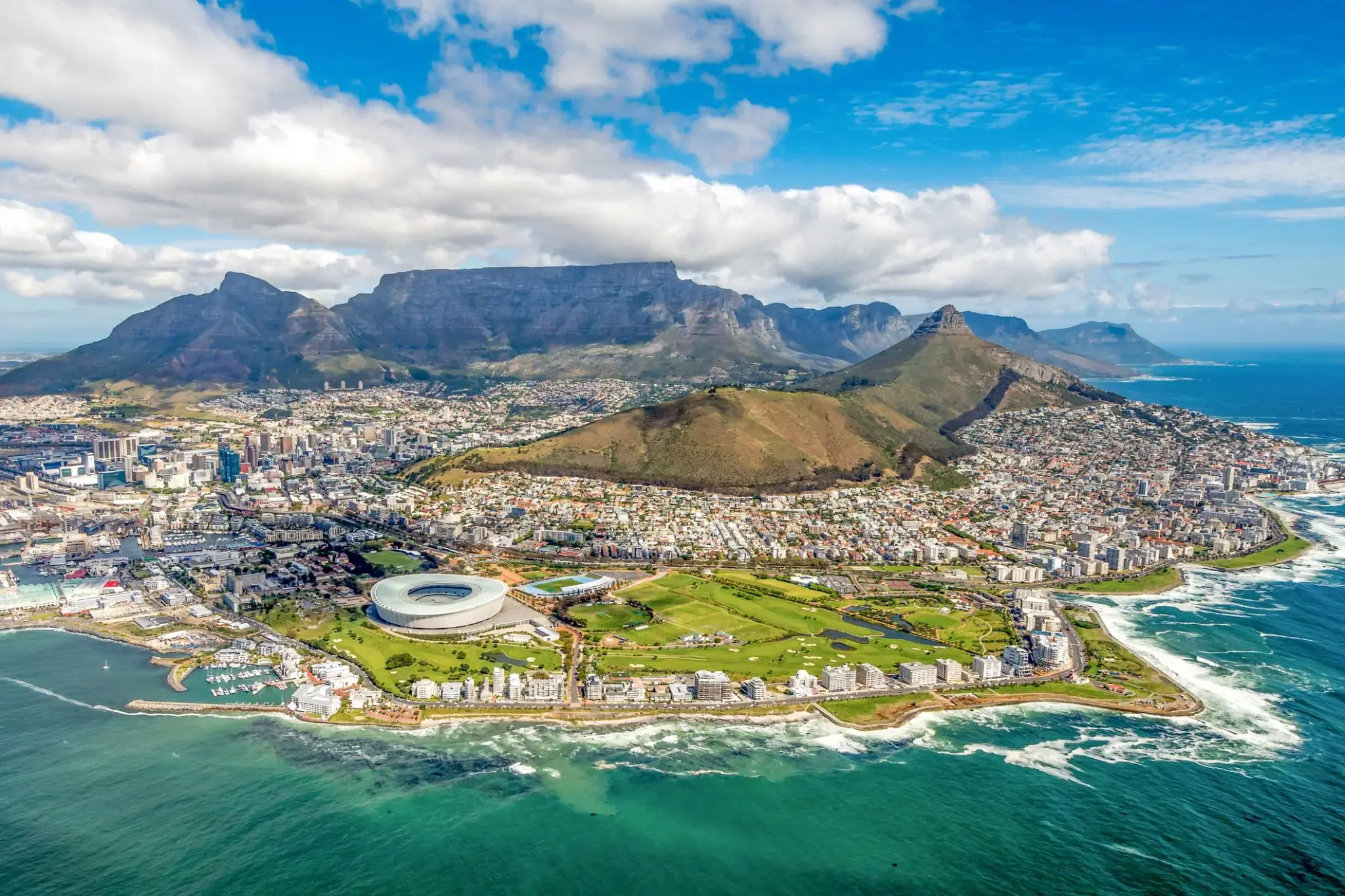
Cape Town is the oldest city in South Africa, colloquially named the Mother City. It is the legislative capital of South Africa and primate city of the Western Cape province. It forms part of the City of Cape Town metropolitan municipality.
The Parliament of South Africa sits in Cape Town. The other two capitals are located in Pretoria (the administrative capital where the Presidency is based) and Bloemfontein (the judicial capital where the Supreme Court of Appeal is located). The city is known for its harbour, for its natural setting in the Cape Floristic Region, and for landmarks such as Table Mountain and Cape Point. As of 2014, it is the 10th most populous city in Africa and home to 64% of the Western Cape's population. It is one of the most multicultural cities in the world, reflecting its role as a major destination for immigrants and expatriates to South Africa. The city was named the World Design Capital for 2014 by the International Council of Societies of Industrial Design. In 2014, Cape Town was named the best place in the world to visit by both The New York Times and The Daily Telegraph.
Located on the shore of Table Bay, Cape Town, as the oldest urban area in South Africa, was developed by the Dutch East India Company (VOC) as a supply station for Dutch ships sailing to East Africa, India, and the Far East. Jan van Riebeeck's arrival on 6 April 1652 established Dutch Cape Colony, the first permanent European settlement in South Africa. Cape Town outgrew its original purpose as the first European outpost at the Castle of Good Hope, becoming the economic and cultural hub of the Cape Colony. Until the Witwatersrand Gold Rush and the development of Johannesburg, Cape Town was the largest city in South Africa.
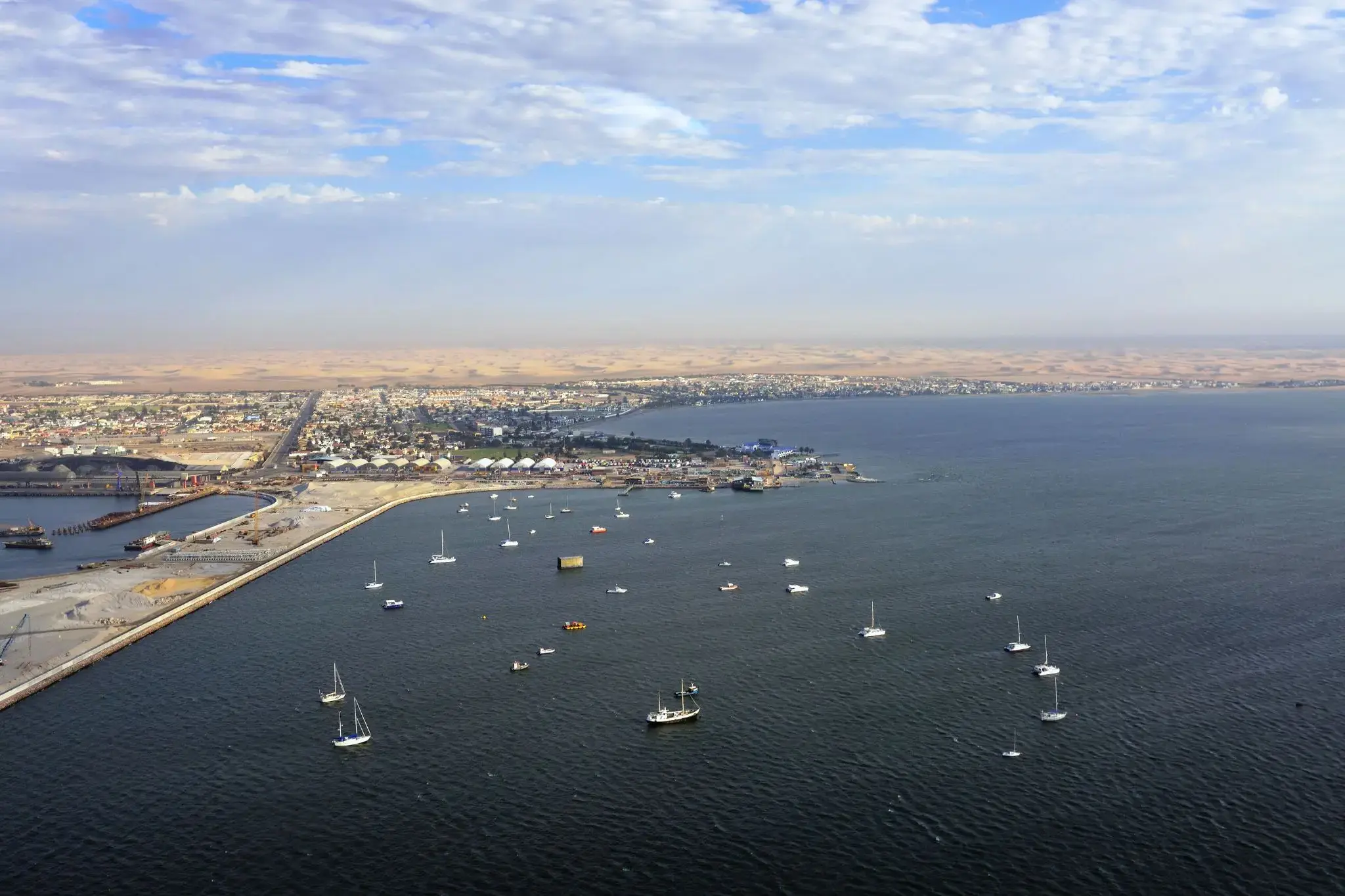
Walvis Bay — Namibia’s Maritime Gateway
Walvis Bay, located on the Atlantic coast of Namibia, offers a rare blend of an industrial port and a natural haven. The town is famous for its vast lagoon—one of the largest in Africa—where flamingos, pelicans, and other water birds can be observed year-round. It's also one of the top places on the continent to witness marine life: visitors often take boat trips to spot seals, dolphins, and sometimes even whales. The lagoon is also popular among kite surfers and windsurfers, thanks to steady winds and wide open waters.
The city plays a key economic role as Namibia’s main port and a hub for the fishing industry. Yet, Walvis Bay attracts not only through its utility, but also through the stunning desert landscapes of the Namib, which begin just outside the town. The famous dunes and lunar scenery create a unique contrast with the ocean. This rare meeting of sea and desert makes Walvis Bay an unforgettable stop on any journey through southwestern Africa.


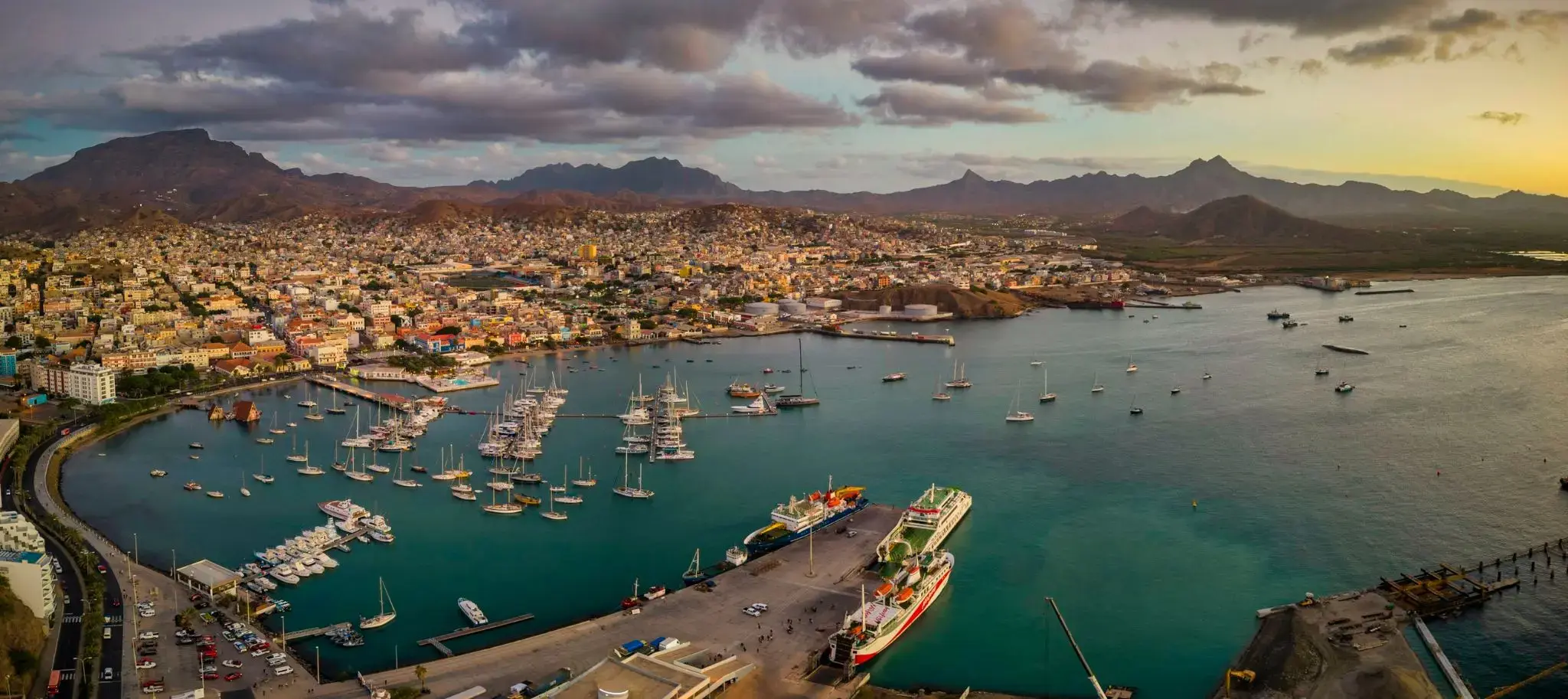
The turquoise waves of the Atlantic embrace the bay of Mindelo on the island of São Vicente, inviting travelers to dive into the rhythms of Cape Verdean music and its warm atmosphere. Known as the cultural capital of Cape Verde, this city enchants with its colorful colonial buildings, the live sounds of morna and coladeira, and street cafés where you can taste fresh seafood to the sound of guitars.
In Mindelo, visitors can stroll along the waterfront with views of the mountains and port, discover cozy shops with local crafts, and relax on sandy beaches where the soft breeze carries the scent of the ocean. This city offers a chance to feel the slow pace of island life, immerse yourself in music that plays on every corner, and take home memories of true Cape Verde, full of smiles and warm sunshine.
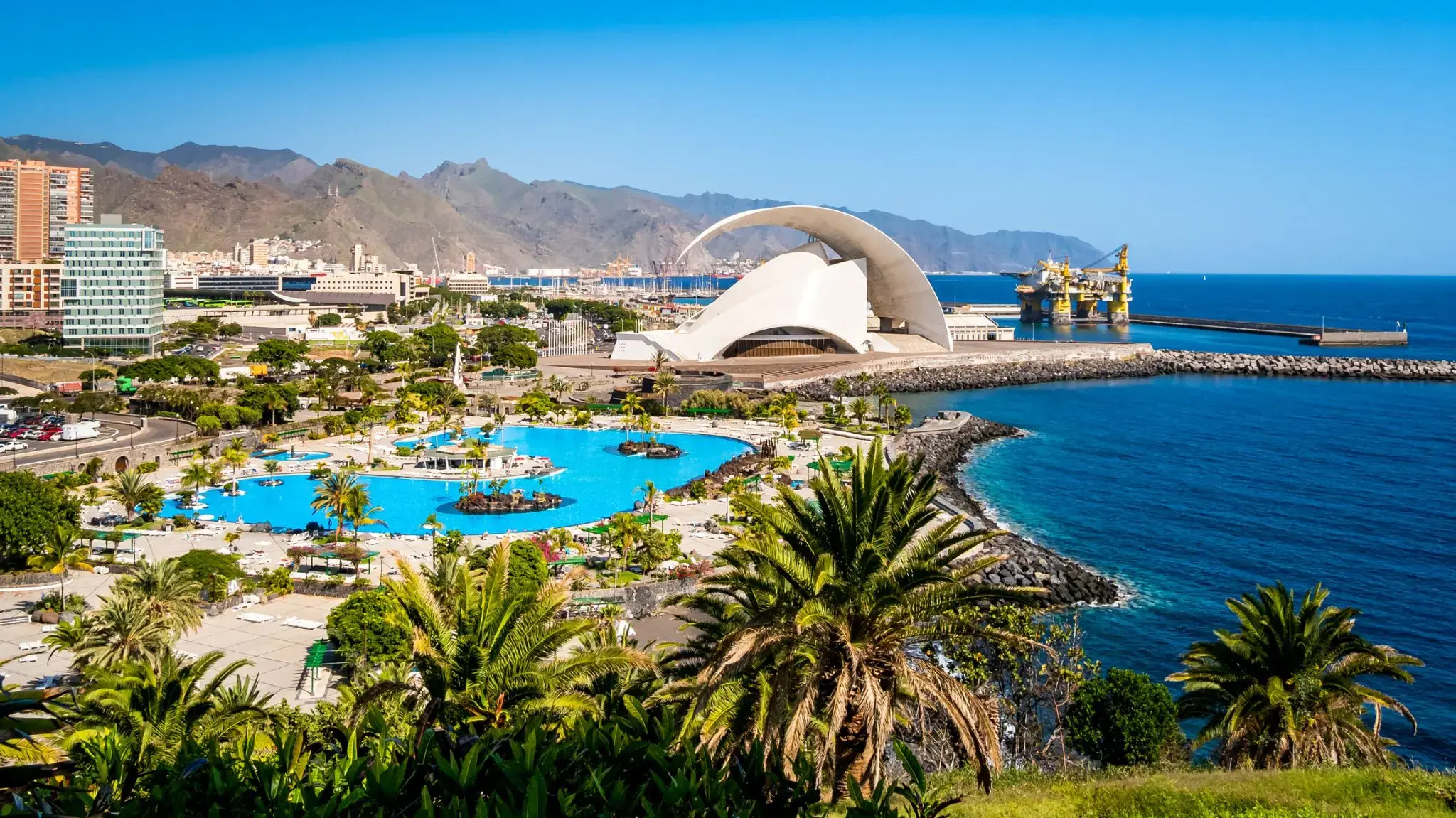
The resort of Almeria is located in the southeast of Spain. It is the main city of the province of the same name on the Costa de Almería, in the autonomous region of Andalusia. Although relatively young, this resort is developing promisingly and flourishing, attracting more and more tourists every year. Visitors come here for excellent vacations, ensured by beautiful beaches, a mild climate, stunning nature, well-developed tourist infrastructure, and the unique history of the region. Almeria is favored by tourists who enjoy active recreation, as well as lovers of various entertainment and excursions to local attractions.

Alicante, or Alacant , both the Spanish and Valencian being official names, is a city and port in Spain on the Costa Blanca, the capital of the province of Alicante and of the comarca of Alacantí, in the south of the Valencian Community. It is also a historic Mediterranean port. The population of the city of Alicante proper was 330,525, estimated as of 2016, ranking as the second-largest Valencian city. Including nearby municipalities, the Alicante conurbation had 452,462 residents. The population of the metropolitan area (including Elche and satellite towns) was 757,085 as of 2014 estimates, ranking as the eighth-largest metropolitan area of Spain.
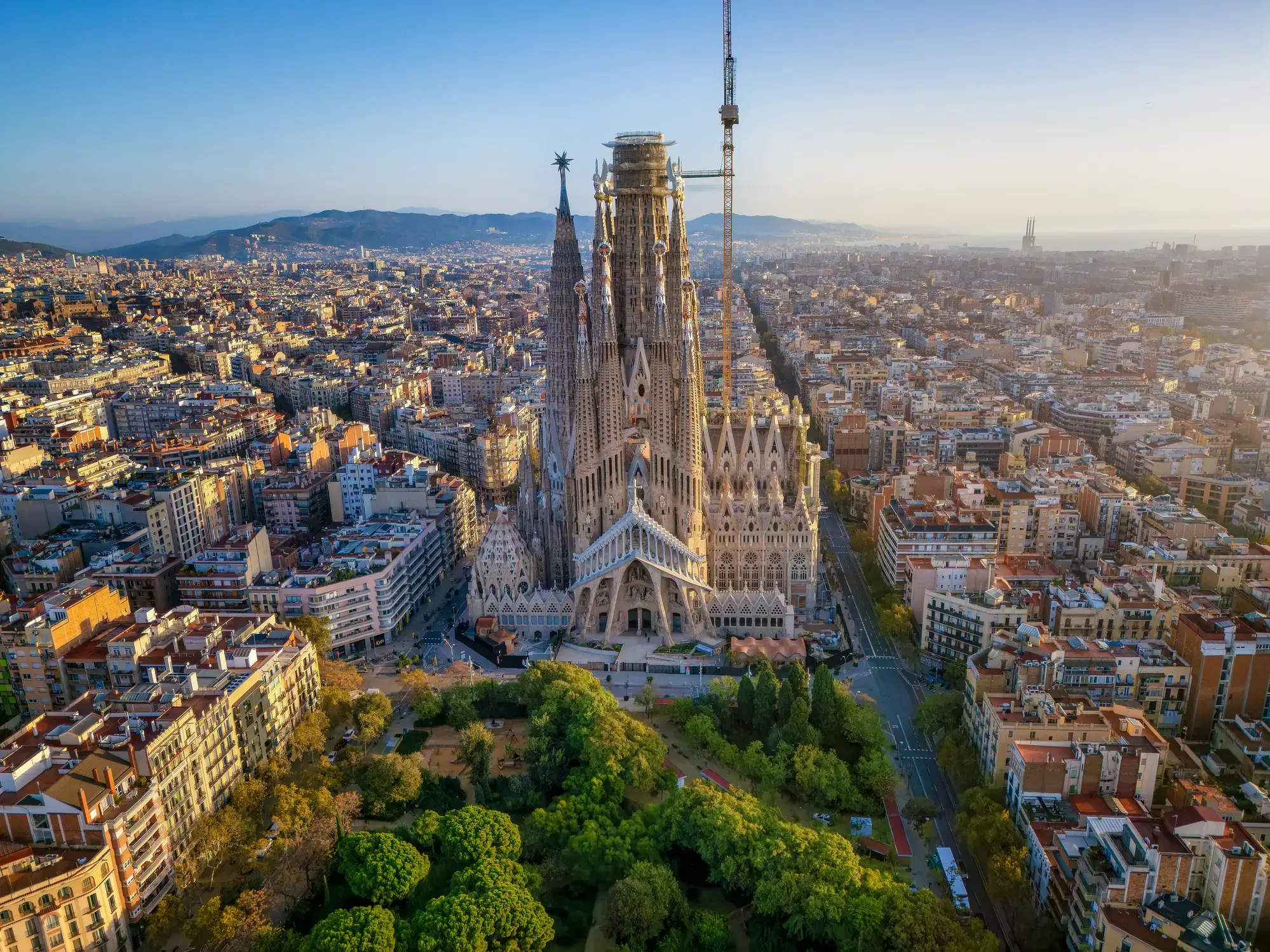
Barcelona is a city in Spain. It is the capital and largest city of Catalonia, as well as the second most populous municipality of Spain. With a population of 1.6 million within city limits, its urban area extends to numerous neighbouring municipalities within the Province of Barcelona and is home to around 4.8 million people, making it the sixth most populous urban area in the European Union after Paris, London, Madrid, the Ruhr area and Milan. It is one of the largest metropolises on the Mediterranean Sea, located on the coast between the mouths of the rivers Llobregat and Besòs, and bounded to the west by the Serra de Collserola mountain range, the tallest peak of which is 512 metres (1,680 feet) high.
Founded as a Roman city, in the Middle Ages Barcelona became the capital of the County of Barcelona. After merging with the Kingdom of Aragon, Barcelona continued to be an important city in the Crown of Aragon as an economic and administrative centre of this Crown and the capital of the Principality of Catalonia. Barcelona has a rich cultural heritage and is today an important cultural centre and a major tourist destination. Particularly renowned are the architectural works of Antoni Gaudí and Lluís Domènech i Montaner, which have been designated UNESCO World Heritage Sites. The headquarters of the Union for the Mediterranean are located in Barcelona. The city is known for hosting the 1992 Summer Olympics as well as world-class conferences and expositions and also many international sport tournaments.
Barcelona is one of the world's leading tourist, economic, trade fair and cultural centres, and its influence in commerce, education, entertainment, media, fashion, science, and the arts all contribute to its status as one of the world's major global cities. It is a major cultural and economic centre in southwestern Europe, 24th in the world (before Zürich, after Frankfurt) and a financial centre. In 2008 it was the fourth most economically powerful city by GDP in the European Union and 35th in the world with GDP amounting to €177 billion. In 2012 Barcelona had a GDP of $170 billion; and it was leading Spain in employment rate in that moment.
In 2009 the city was ranked Europe's third and one of the world's most successful as a city brand. In the same year the city was ranked Europe's fourth best city for business and fastest improving European city, with growth improved by 17% per year, and the city has been experiencing strong and renewed growth for the past three years. Since 2011 Barcelona has been a leading smart city in Europe. Barcelona is a transport hub, with the Port of Barcelona being one of Europe's principal seaports and busiest European passenger port, an international airport, Barcelona–El Prat Airport, which handles over 50 million passengers per year, an extensive motorway network, and a high-speed rail line with a link to France and the rest of Europe.
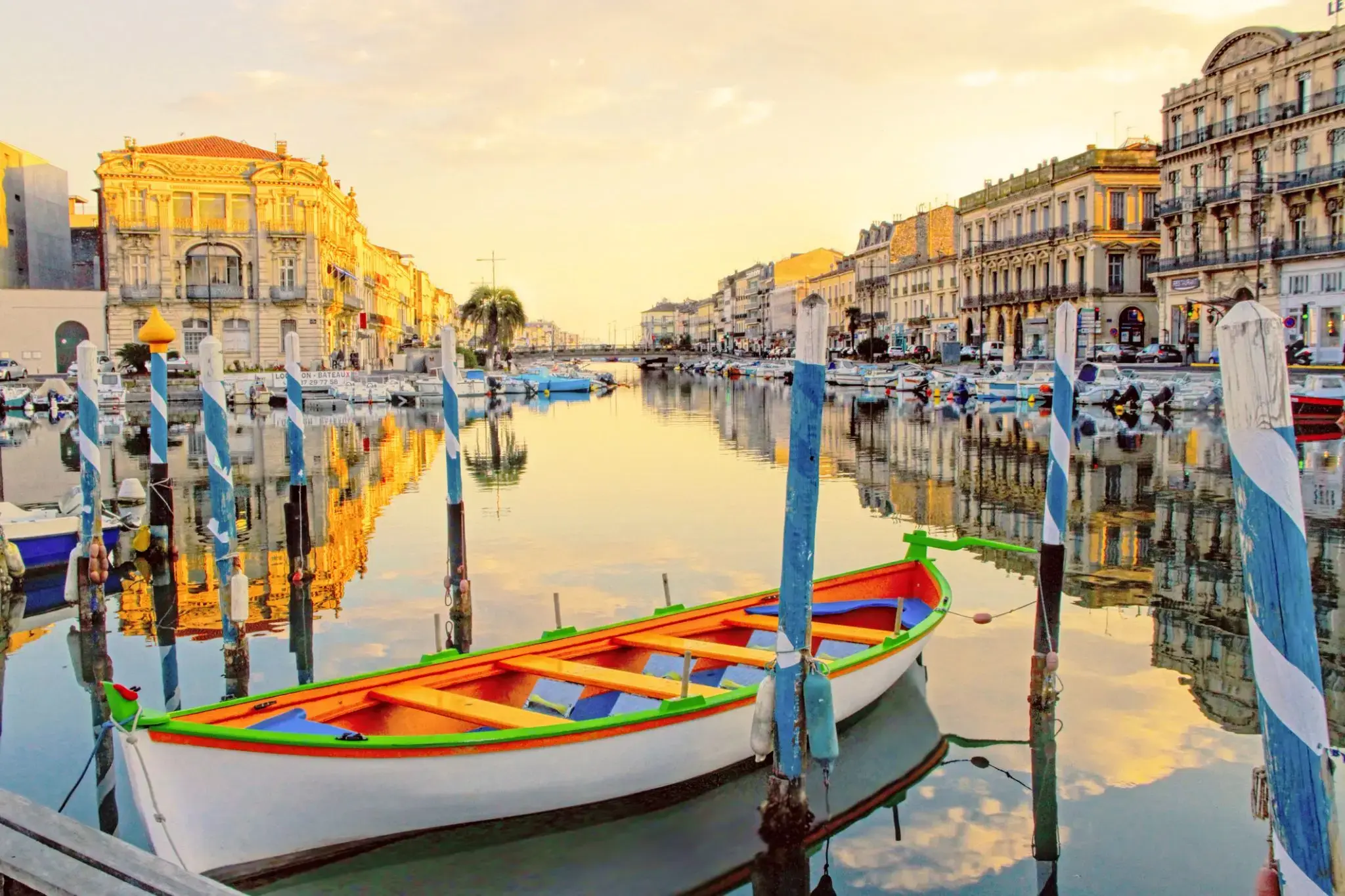
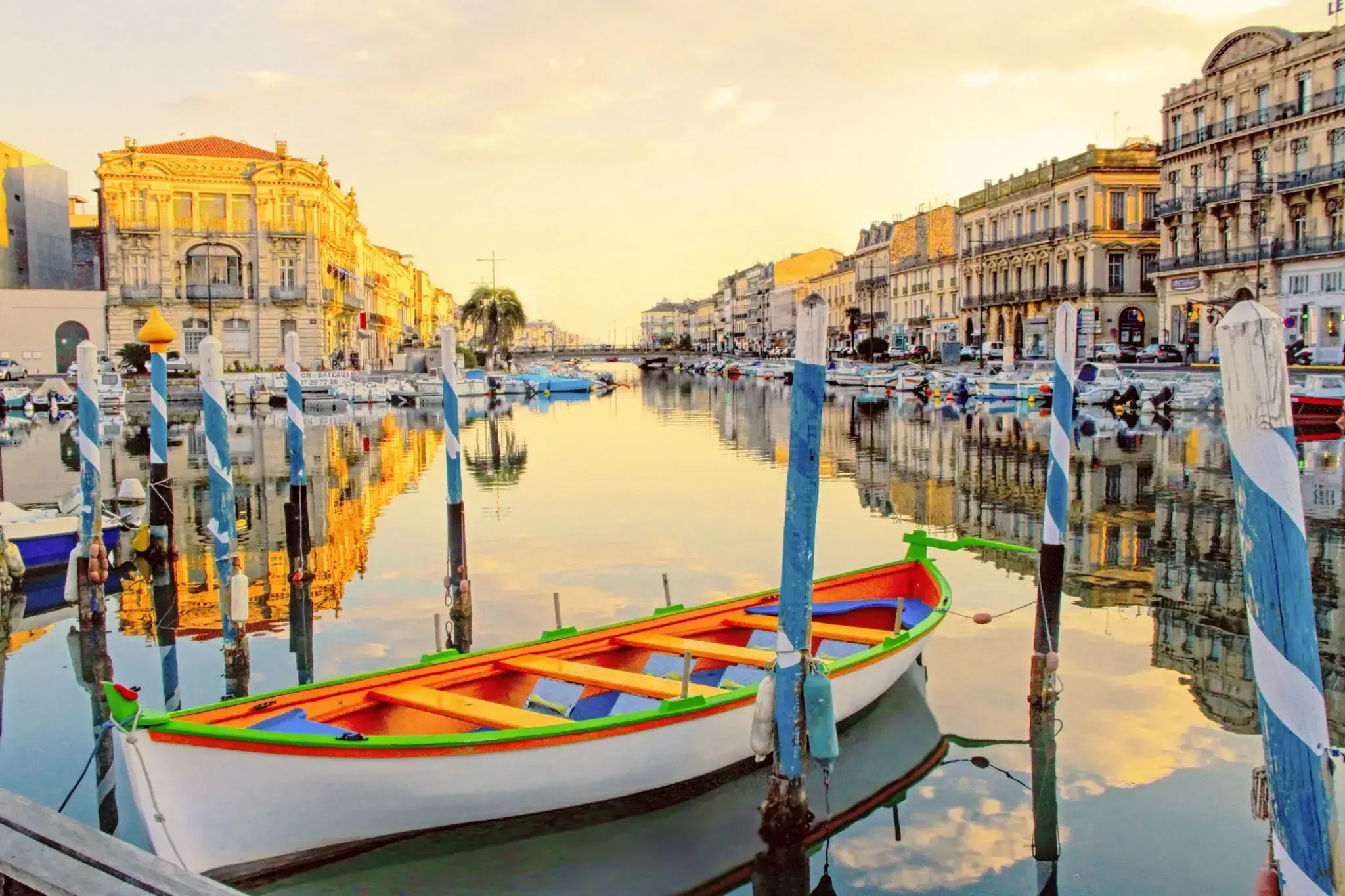
The town of Sete, located in the south of France between the Thau Lagoon and the Mediterranean Sea, is often called the "Venice of Languedoc" thanks to its picturesque canals, where fishing boats and tour boats bustle about. Founded in the 17th century as a port for the Canal du Midi, Sète remains an important fishing and commercial hub. The city is overlooked by Mount Saint-Clair, which offers panoramic views of the surrounding area, including endless salt flats and the azure waters of the gulf.
Sète is known not only for its maritime charm but also for its rich cultural life. It is the birthplace of poet Paul Valéry, who is commemorated by a museum and a marine cemetery where he is buried. In summer, the city hosts a unique celebration — water jousting tournaments (joutes nautiques), a tradition dating back to the Middle Ages. The local cuisine is renowned for its fresh seafood, especially oysters and mussels from the lagoon. Sète is a place where Mediterranean spirit, history, gastronomy, and poetry come together.
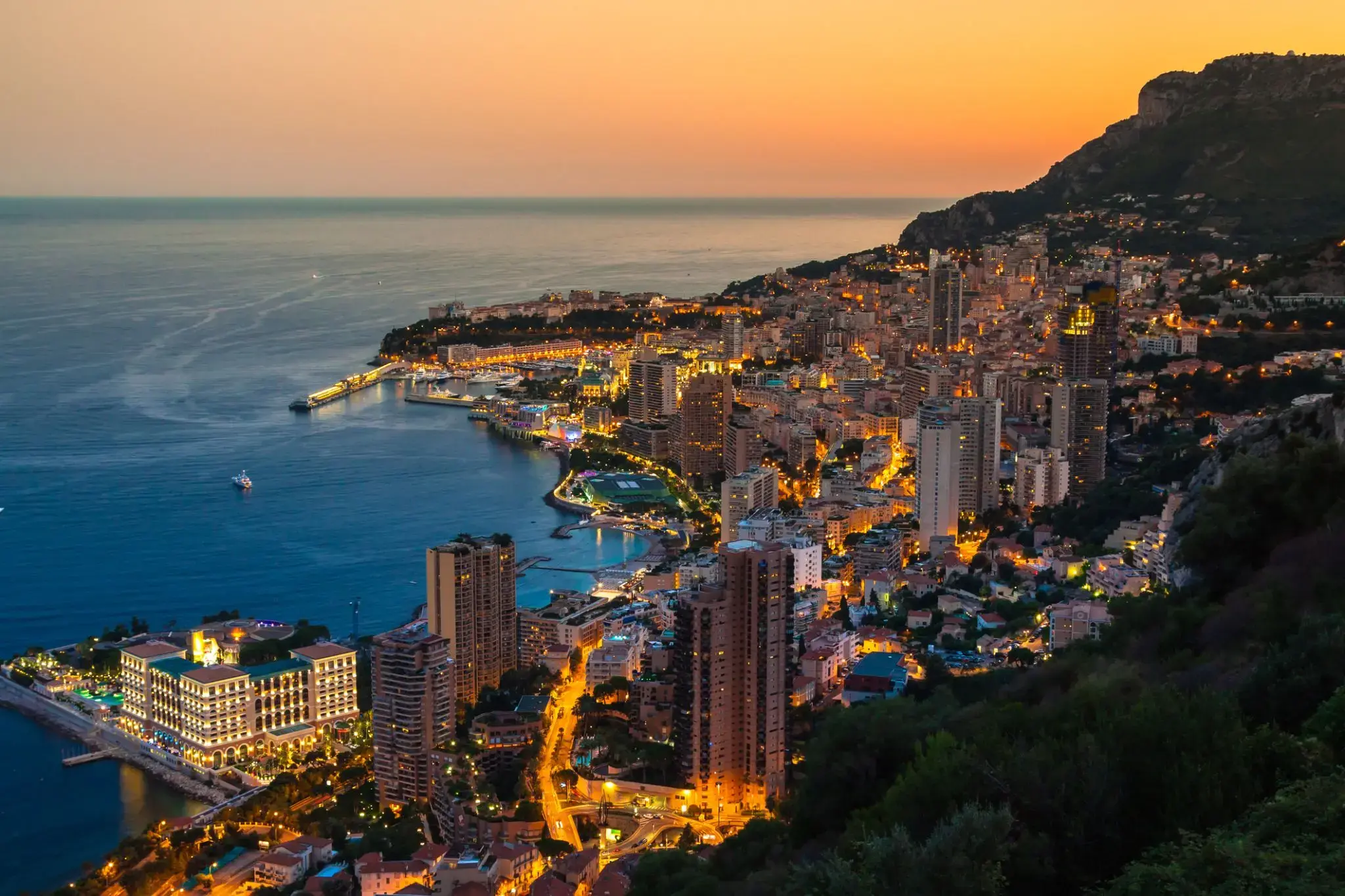
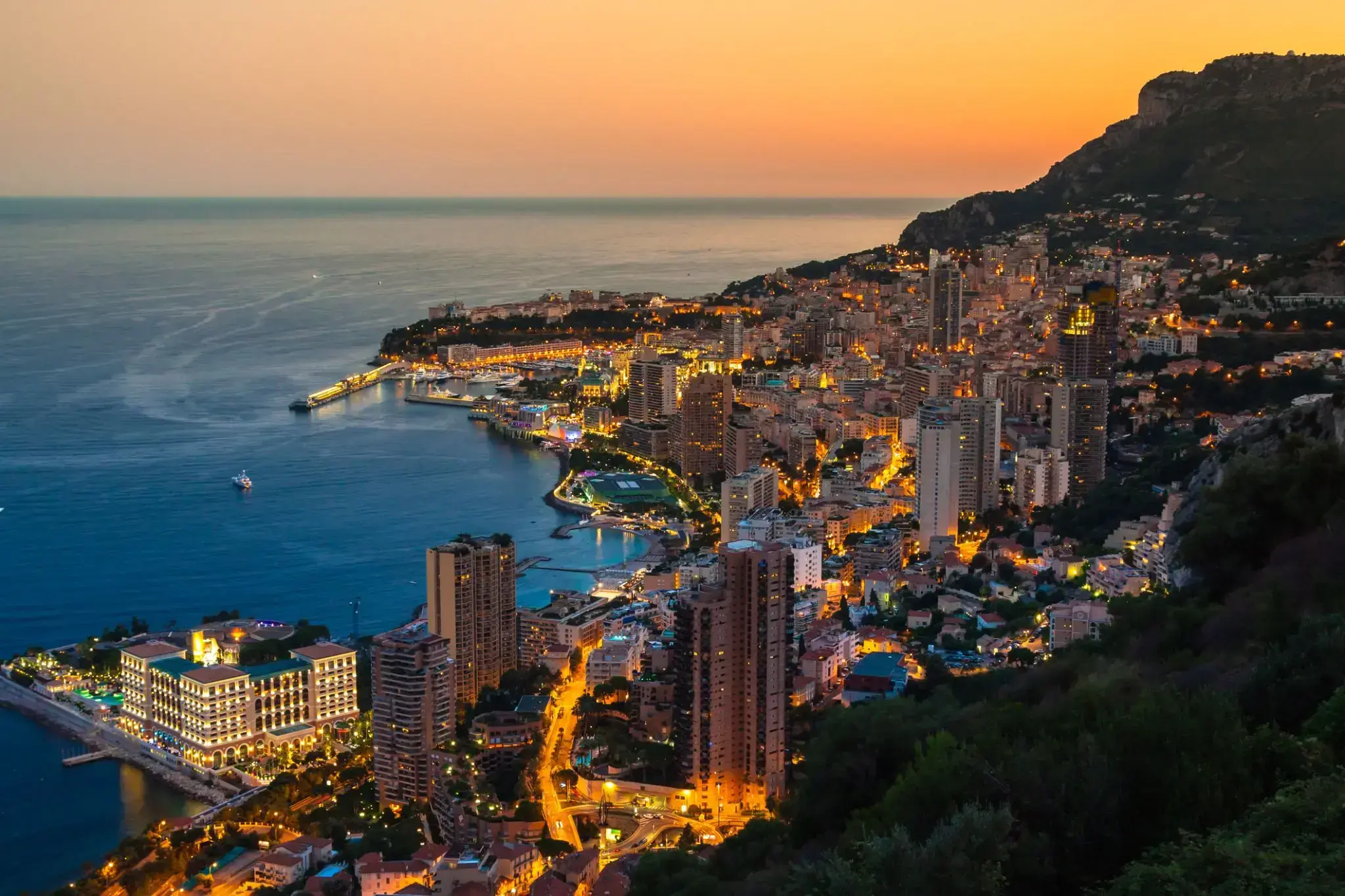
Monte Carlo officially refers to an administrative area of the Principality of Monaco, specifically the ward of Monte Carlo/Spélugues, where the Monte Carlo Casino is located. Informally the name also refers to a larger district, the Monte Carlo Quarter (corresponding to the former municipality of Monte Carlo), which besides Monte Carlo/Spélugues also includes the wards of La Rousse/Saint Roman, Larvotto/Bas Moulins, and Saint Michel. The permanent population of the ward of Monte Carlo is about 3,500, while that of the quarter is about 15,000. Monaco has four traditional quarters. From west to east they are: Fontvieille (the newest), Monaco-Ville (the oldest), La Condamine, and Monte Carlo.
Monte Carlo (literally "Mount Charles") is situated on a prominent escarpment at the base of the Maritime Alpsalong the French Riviera. Near the quarter's western end is the world-famous Place du Casino, the gamblingcenter which has made Monte Carlo "an international byword for the extravagant display and reckless dispersal of wealth". It is also the location of the Hôtel de Paris, the Café de Paris, and the Salle Garnier (the casino theatre which is the home of the Opéra de Monte-Carlo).
The quarter's eastern part includes the community of Larvotto with Monaco's only public beach, as well as its new convention center (the Grimaldi Forum), and the Monte-Carlo Bay Hotel & Resort. At the quarter's eastern border, one crosses into the French town of Beausoleil (sometimes referred to as Monte-Carlo-Supérieur), and just 8 kilometres (5 mi) to its east is the western border of Italy.
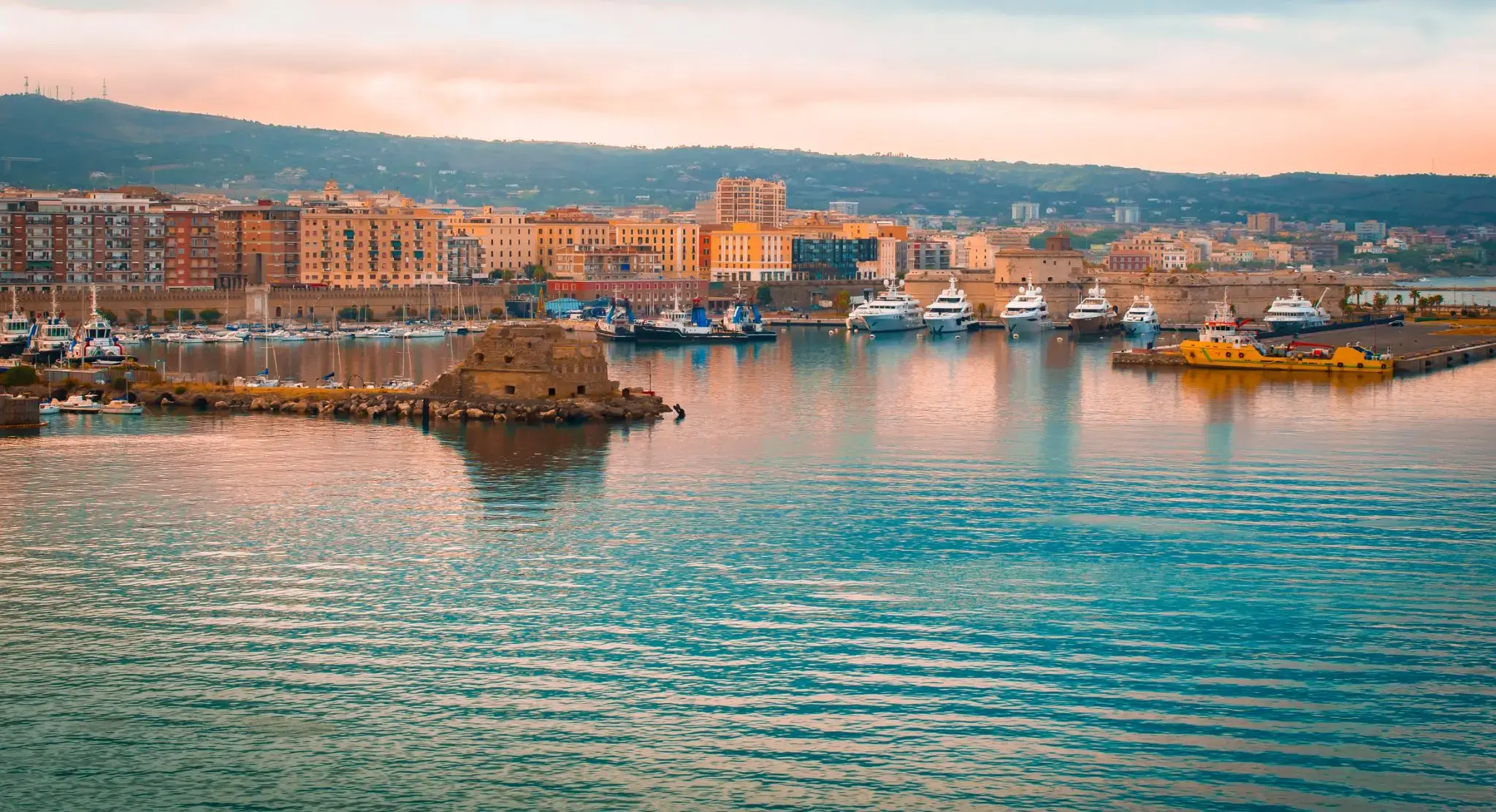
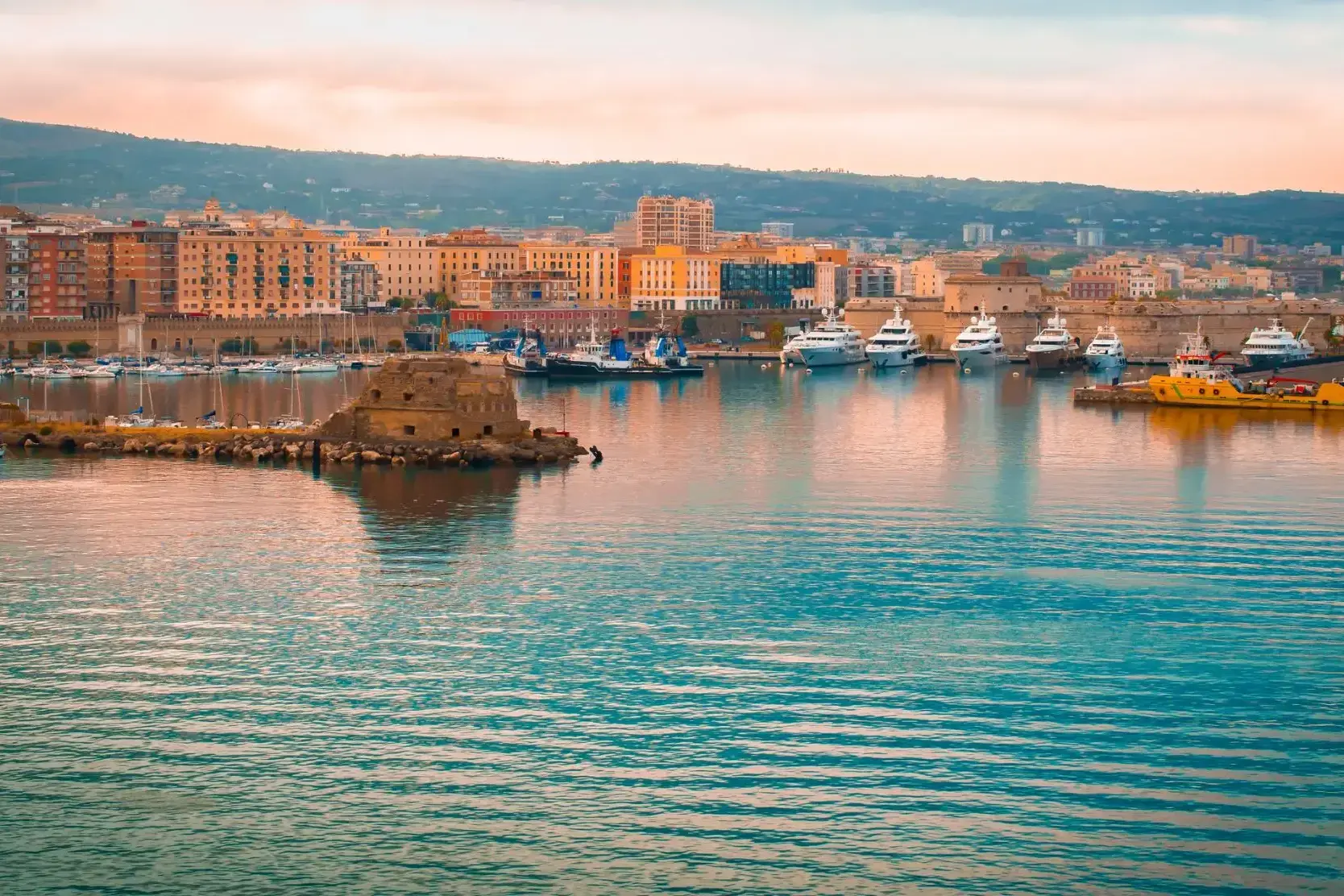
Rome is the capital city and a special comune of Italy (named Comune di Roma Capitale). Rome also serves as the capital of the Lazio region. With 2,872,800 residents in 1,285 km2(496.1 sq mi), it is also the country's most populated comune. It is the fourth-most populous city in the European Union by population within city limits. It is the centre of the Metropolitan City of Rome, which has a population of 4,355,725 residents, thus making it the most populous metropolitan city in Italy. Rome is located in the central-western portion of the Italian Peninsula, within Lazio (Latium), along the shores of the Tiber. The Vatican City (the smallest country in the world) is an independent country inside the city boundaries of Rome, the only existing example of a country within a city: for this reason Rome has been often defined as capital of two states.
Rome's history spans 28 centuries. While Roman mythology dates the founding of Rome at around 753 BC, the site has been inhabited for much longer, making it one of the oldest continuously occupied sites in Europe. The city's early population originated from a mix of Latins, Etruscans, and Sabines. Eventually, the city successively became the capital of the Roman Kingdom, the Roman Republic and the Roman Empire, and is regarded as the birthplace of Western civilization and by some as the first ever metropolis. It was first called The Eternal City (Latin: Urbs Aeterna; Italian: La Città Eterna) by the Roman poet Tibullus in the 1st century BC, and the expression was also taken up by Ovid, Virgil, and Livy. Rome is also called the "Caput Mundi" (Capital of the World). After the fall of the Western Empire, which marked the beginning of the Middle Ages, Rome slowly fell under the political control of the Papacy, which had settled in the city since the 1st century AD, until in the 8th century it became the capital of the Papal States, which lasted until 1870. Beginning with the Renaissance, almost all the popes since Nicholas V (1447–1455) pursued over four hundred years a coherent architectural and urban programme aimed at making the city the artistic and cultural centre of the world. In this way, Rome became first one of the major centres of the Italian Renaissance, and then the birthplace of both the Baroque style and Neoclassicism. Famous artists, painters, sculptors and architects made Rome the centre of their activity, creating masterpieces throughout the city. In 1871, Rome became the capital of the Kingdom of Italy, which, in 1946, became the Italian Republic.
Rome has the status of a global city. In 2016, Rome ranked as the 14th-most-visited city in the world, 3rd most visited in the European Union, and the most popular tourist attraction in Italy. Its historic centre is listed by UNESCO as a World Heritage Site. The famous Vatican Museums are among the world's most visited museums while the Colosseum was the most popular tourist attraction in world with 7.4 million visitors in 2018. Host city for the 1960 Summer Olympics, Rome is the seat of several specialized agencies of the United Nations, such as the Food and Agriculture Organization (FAO), the World Food Programme (WFP) and the International Fund for Agricultural Development (IFAD). The city also hosts the Secretariat of the Parliamentary Assembly of the Union for the Mediterranean (UfM) as well as the headquarters of many international business companies such as Eni, Enel, TIM, Leonardo S.p.A., and national and international banks such as Unicredit and BNL. Its business district, called EUR, is the base of many companies involved in the oil industry, the pharmaceutical industry, and financial services. Rome is also an important fashion and design centre thanks to renowned international brands centered in the city. Rome's Cinecittà Studios have been the set of many Academy Award–winning movies.
Monte Carlo officially refers to an administrative area of the Principality of Monaco, specifically the ward of Monte Carlo/Spélugues, where the Monte Carlo Casino is located. Informally the name also refers to a larger district, the Monte Carlo Quarter (corresponding to the former municipality of Monte Carlo), which besides Monte Carlo/Spélugues also includes the wards of La Rousse/Saint Roman, Larvotto/Bas Moulins, and Saint Michel. The permanent population of the ward of Monte Carlo is about 3,500, while that of the quarter is about 15,000. Monaco has four traditional quarters. From west to east they are: Fontvieille (the newest), Monaco-Ville (the oldest), La Condamine, and Monte Carlo.
Monte Carlo (literally "Mount Charles") is situated on a prominent escarpment at the base of the Maritime Alpsalong the French Riviera. Near the quarter's western end is the world-famous Place du Casino, the gamblingcenter which has made Monte Carlo "an international byword for the extravagant display and reckless dispersal of wealth". It is also the location of the Hôtel de Paris, the Café de Paris, and the Salle Garnier (the casino theatre which is the home of the Opéra de Monte-Carlo).
The quarter's eastern part includes the community of Larvotto with Monaco's only public beach, as well as its new convention center (the Grimaldi Forum), and the Monte-Carlo Bay Hotel & Resort. At the quarter's eastern border, one crosses into the French town of Beausoleil (sometimes referred to as Monte-Carlo-Supérieur), and just 8 kilometres (5 mi) to its east is the western border of Italy.
Barcelona is a city in Spain. It is the capital and largest city of Catalonia, as well as the second most populous municipality of Spain. With a population of 1.6 million within city limits, its urban area extends to numerous neighbouring municipalities within the Province of Barcelona and is home to around 4.8 million people, making it the sixth most populous urban area in the European Union after Paris, London, Madrid, the Ruhr area and Milan. It is one of the largest metropolises on the Mediterranean Sea, located on the coast between the mouths of the rivers Llobregat and Besòs, and bounded to the west by the Serra de Collserola mountain range, the tallest peak of which is 512 metres (1,680 feet) high.
Founded as a Roman city, in the Middle Ages Barcelona became the capital of the County of Barcelona. After merging with the Kingdom of Aragon, Barcelona continued to be an important city in the Crown of Aragon as an economic and administrative centre of this Crown and the capital of the Principality of Catalonia. Barcelona has a rich cultural heritage and is today an important cultural centre and a major tourist destination. Particularly renowned are the architectural works of Antoni Gaudí and Lluís Domènech i Montaner, which have been designated UNESCO World Heritage Sites. The headquarters of the Union for the Mediterranean are located in Barcelona. The city is known for hosting the 1992 Summer Olympics as well as world-class conferences and expositions and also many international sport tournaments.
Barcelona is one of the world's leading tourist, economic, trade fair and cultural centres, and its influence in commerce, education, entertainment, media, fashion, science, and the arts all contribute to its status as one of the world's major global cities. It is a major cultural and economic centre in southwestern Europe, 24th in the world (before Zürich, after Frankfurt) and a financial centre. In 2008 it was the fourth most economically powerful city by GDP in the European Union and 35th in the world with GDP amounting to €177 billion. In 2012 Barcelona had a GDP of $170 billion; and it was leading Spain in employment rate in that moment.
In 2009 the city was ranked Europe's third and one of the world's most successful as a city brand. In the same year the city was ranked Europe's fourth best city for business and fastest improving European city, with growth improved by 17% per year, and the city has been experiencing strong and renewed growth for the past three years. Since 2011 Barcelona has been a leading smart city in Europe. Barcelona is a transport hub, with the Port of Barcelona being one of Europe's principal seaports and busiest European passenger port, an international airport, Barcelona–El Prat Airport, which handles over 50 million passengers per year, an extensive motorway network, and a high-speed rail line with a link to France and the rest of Europe.
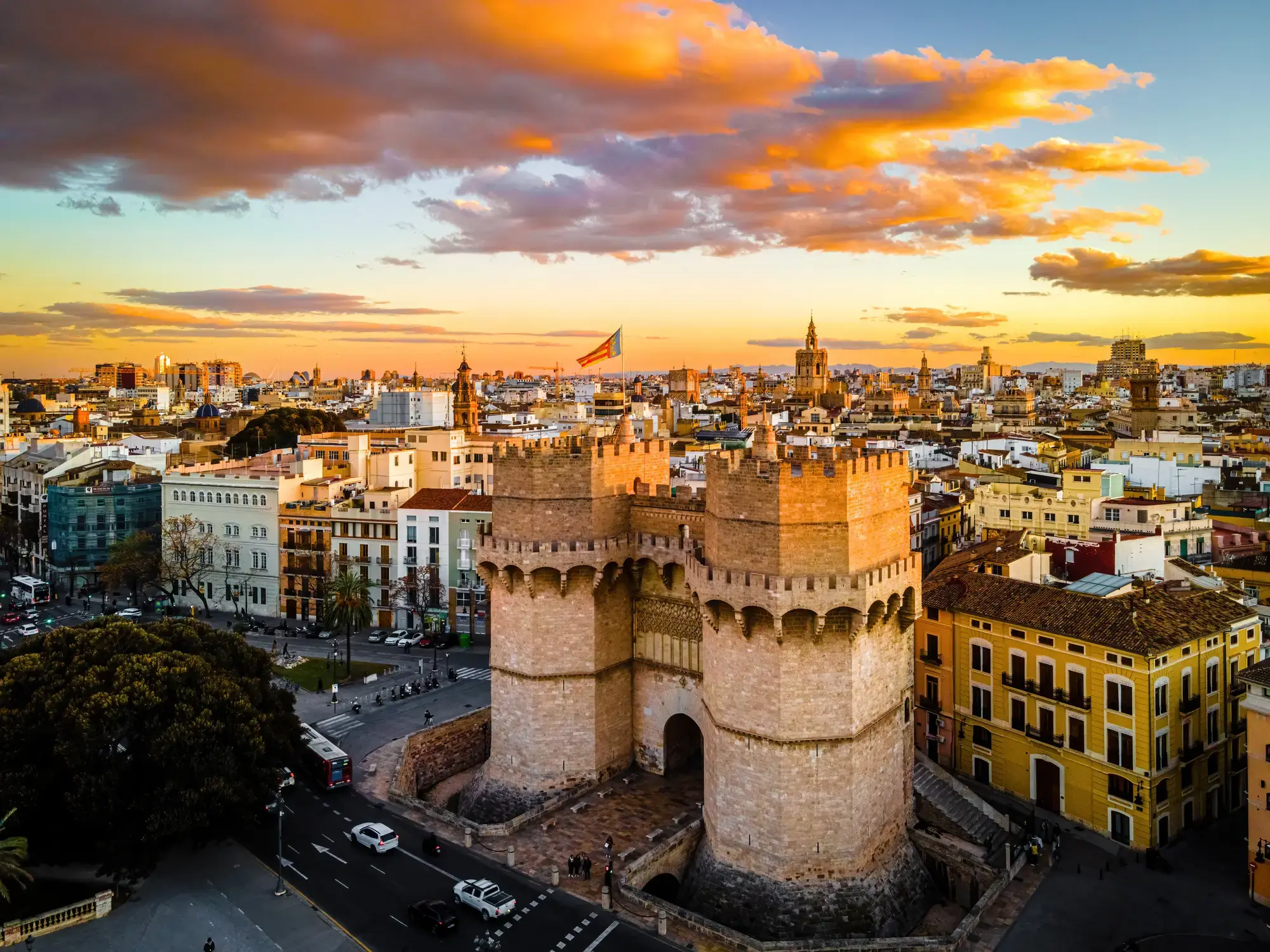
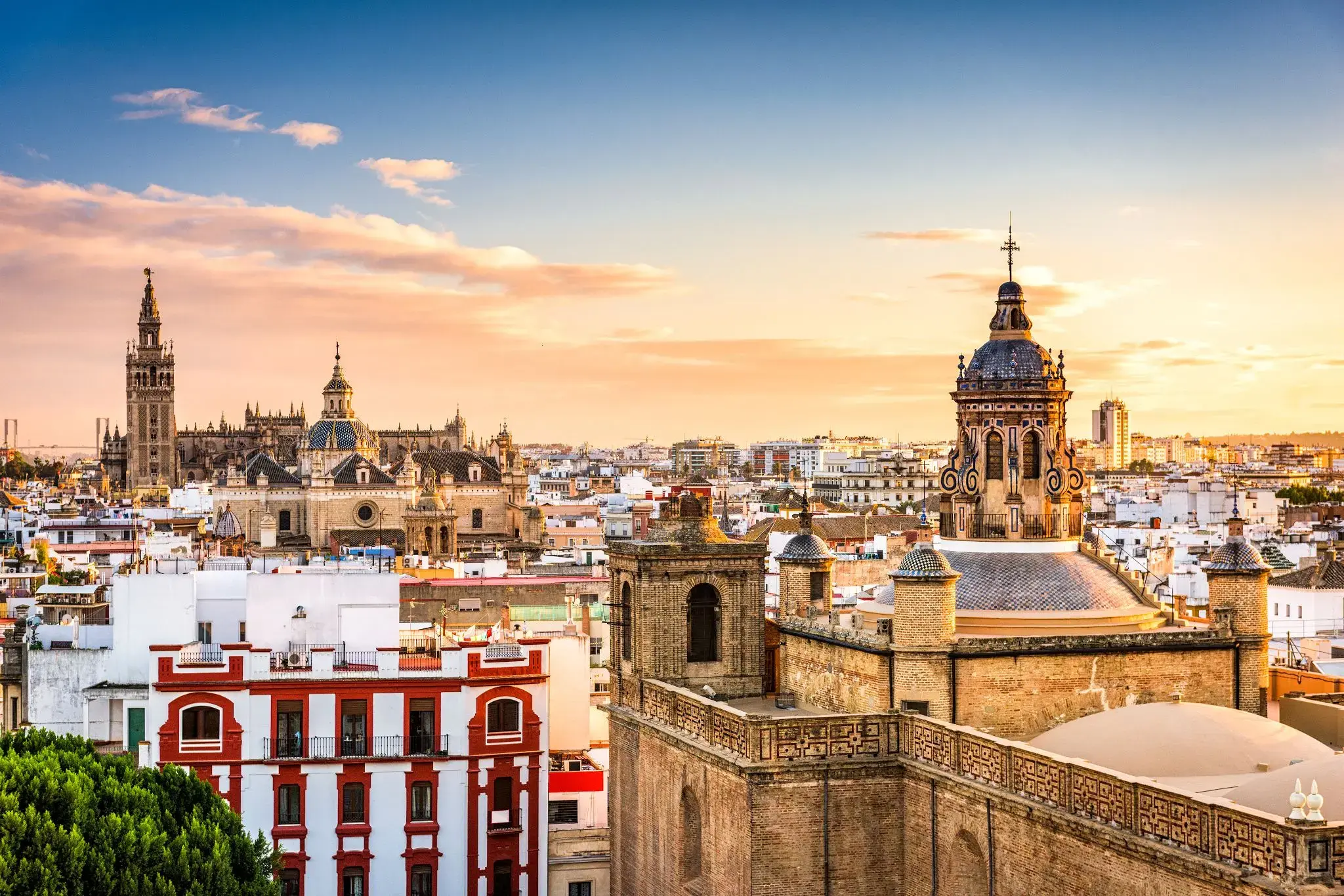
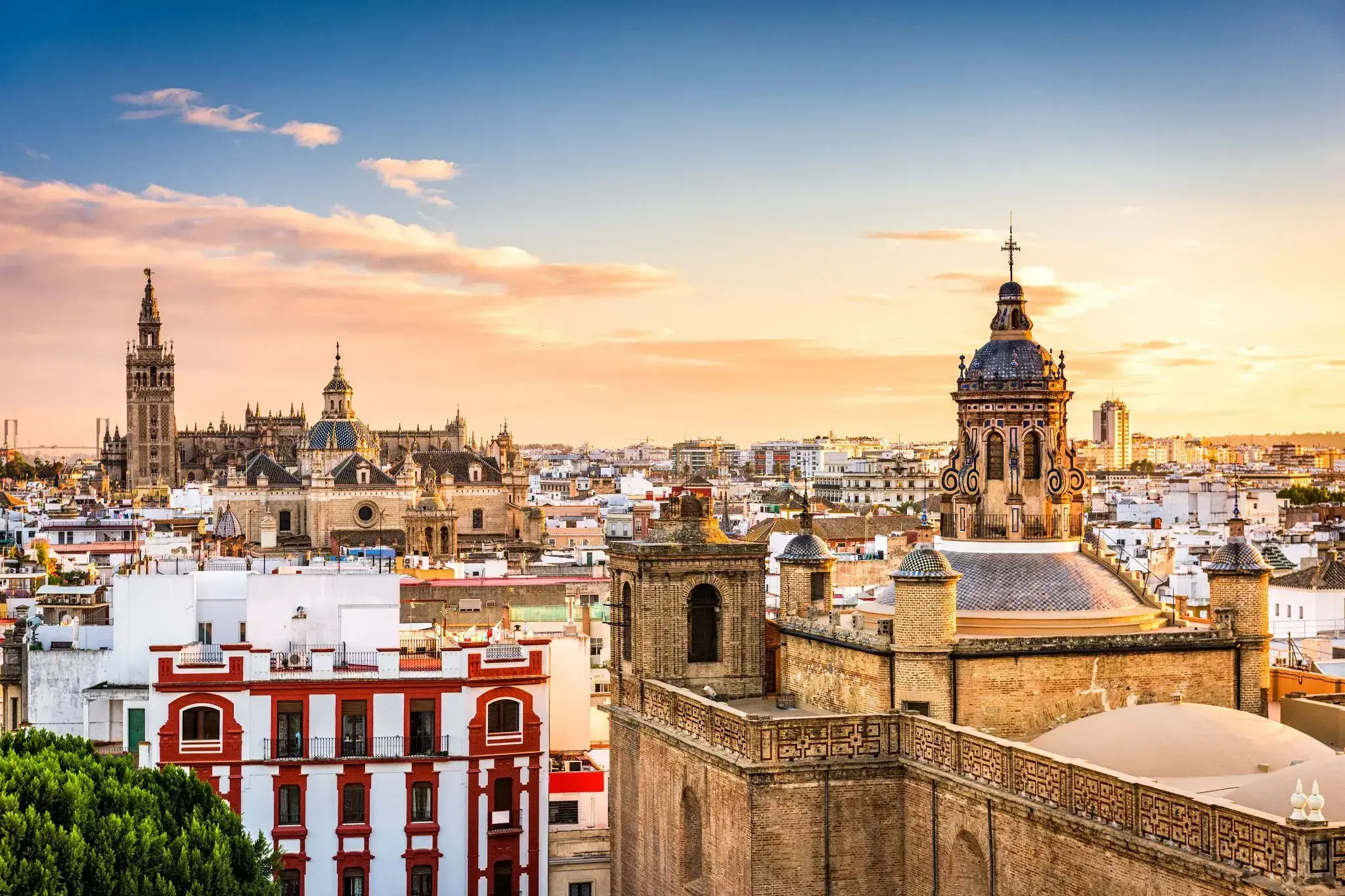
Seville is the capital and largest city of the autonomous community of Andalusia and the province of Seville, Spain. It is situated on the plain of the river Guadalquivir. The inhabitants of the city are known as sevillanos (feminine form: sevillanas) or hispalenses, after the Roman name of the city, Hispalis. Seville has a municipal population of about 690,000 as of 2016, and a metropolitan population of about 1.5 million, making it the fourth-largest city in Spain and the 30th most populous municipality in the European Union. Its Old Town, with an area of 4 square kilometres (2 sq mi), contains three UNESCO World Heritage Sites: the Alcázar palace complex, the Cathedral and the General Archive of the Indies. The Seville harbour, located about 80 kilometres (50 miles) from the Atlantic Ocean, is the only river port in Spain. Seville is also the hottest major metropolitan area in the geographical Southwestern Europe, with summer average high temperatures of above 35 °C (95 °F).
Seville was founded as the Roman city of Hispalis. It later became known as Ishbiliyya after the Muslim conquest in 712. During the Muslim rule in Spain, Seville came under the jurisdiction of the Caliphate of Córdoba before becoming the independent Taifa of Seville; later it was ruled by the Muslim Almoravids and the Almohads until finally being incorporated into the Christian Kingdom of Castile under Ferdinand III in 1248. After the discovery of the Americas, Seville became one of the economic centres of the Spanish Empire as its port monopolised the trans-oceanic trade and the Casa de Contratación (House of Trade) wielded its power, opening a Golden Age of arts and literature. In 1519, Ferdinand Magellan departed from Seville for the first circumnavigation of the Earth. Coinciding with the Baroque period of European history, the 17th century in Seville represented the most brilliant flowering of the city's culture; then began a gradual economic and demographic decline as silting in the Guadalquivirforced the trade monopoly to relocate to the nearby port of Cádiz.
The 20th century in Seville saw the tribulations of the Spanish Civil War, decisive cultural milestones such as the Ibero-American Exposition of 1929 and Expo '92, and the city's election as the capital of the Autonomous Community of Andalusia.
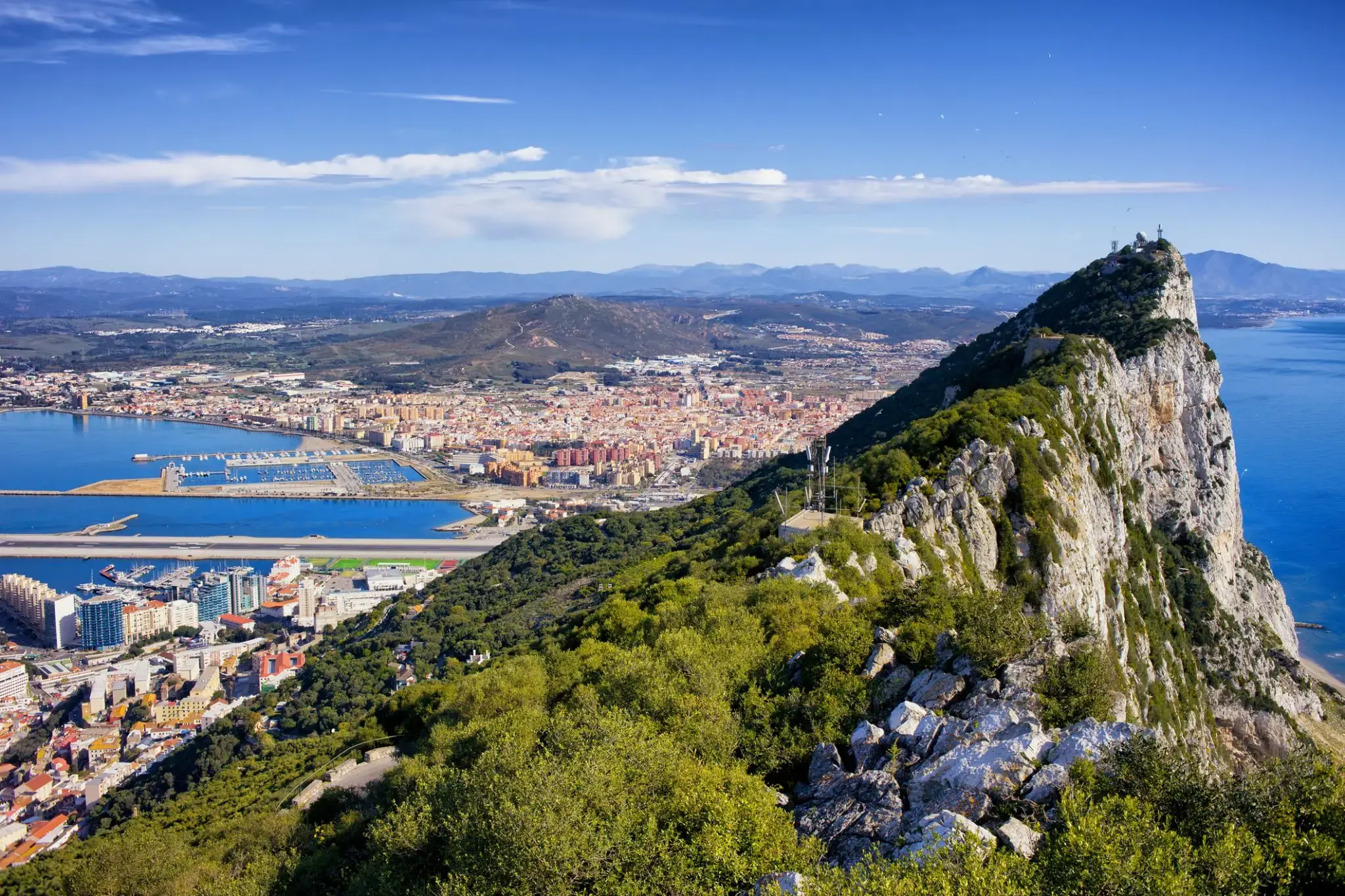
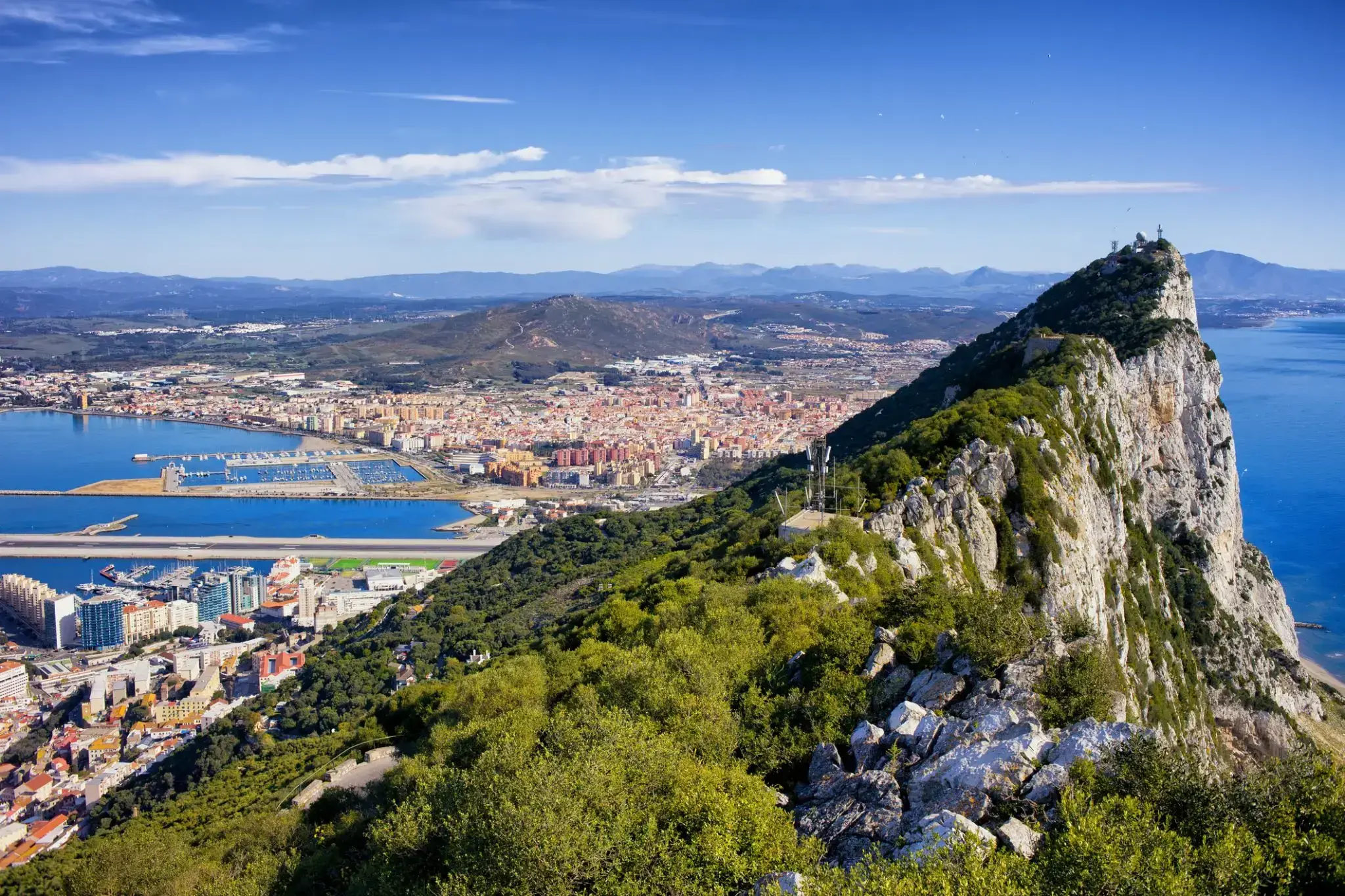
Gibraltar is a British Overseas Territory located at the southern tip of the Iberian Peninsula. It has an area of 6.7 km2 (2.6 sq mi) and is bordered to the north by Spain. The landscape is dominated by the Rock of Gibraltar at the foot of which is a densely populated town area, home to over 30,000 people, primarily Gibraltarians. It shares a maritime border with Morocco.
In 1704, Anglo-Dutch forces captured Gibraltar from Spain during the War of the Spanish Succession on behalf of the Habsburg claim to the Spanish throne. The territory was ceded to Great Britain in perpetuity under the Treaty of Utrechtin 1713. During World War II it was an important base for the Royal Navy as it controlled the entrance and exit to the Mediterranean Sea, which is only 8 miles (13 km) wide at this naval choke point. It remains strategically important, with half the world's seaborne trade passing through the strait. Today Gibraltar's economy is based largely on tourism, online gambling, financial services and cargo ship refuelling.
The sovereignty of Gibraltar is a point of contention in Anglo-Spanish relations because Spain asserts a claim to the territory. Gibraltarians rejected proposals for Spanish sovereignty in a 1967 referendum and, in a 2002 referendum, the idea of shared sovereignty was also rejected.
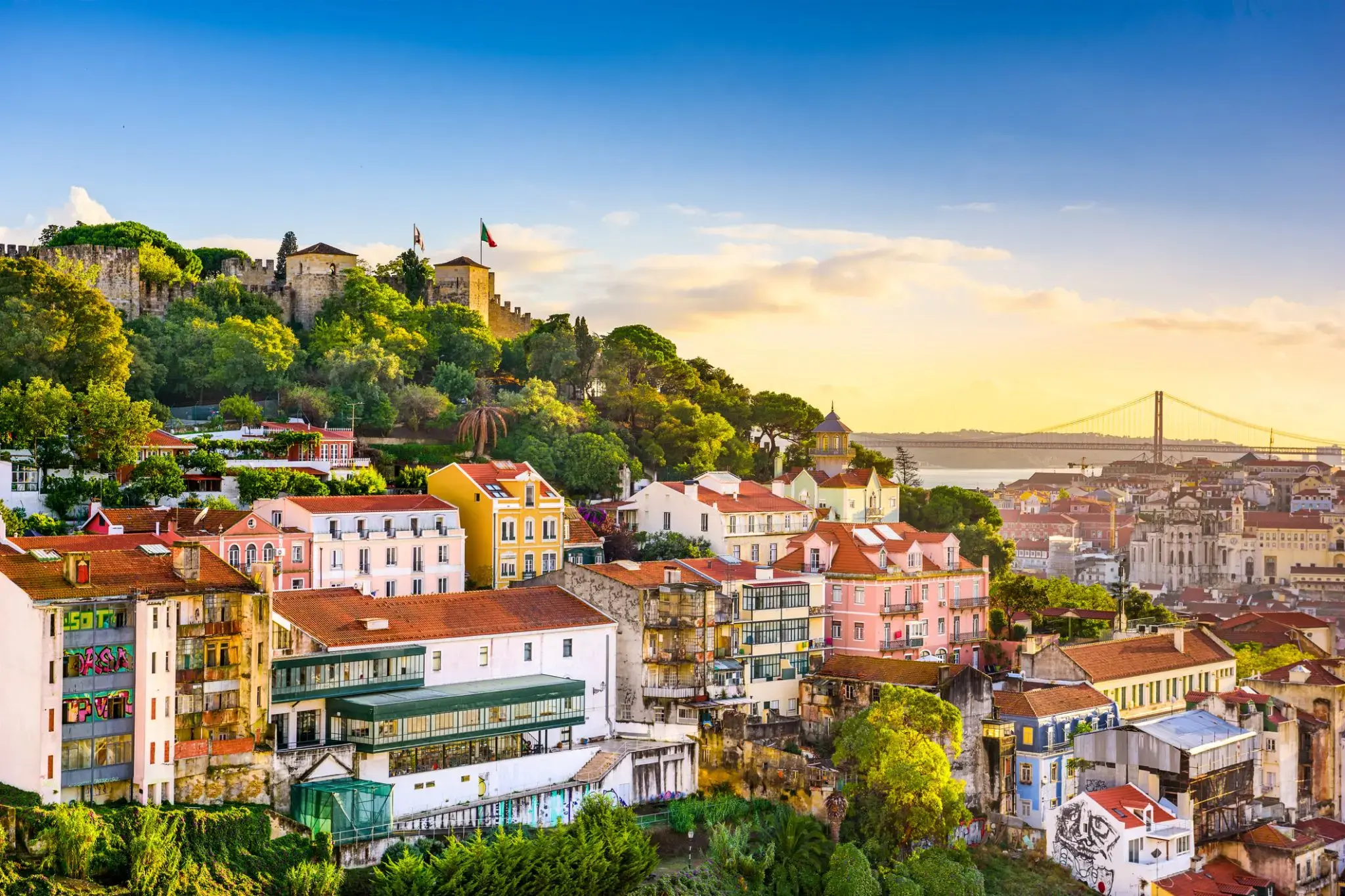
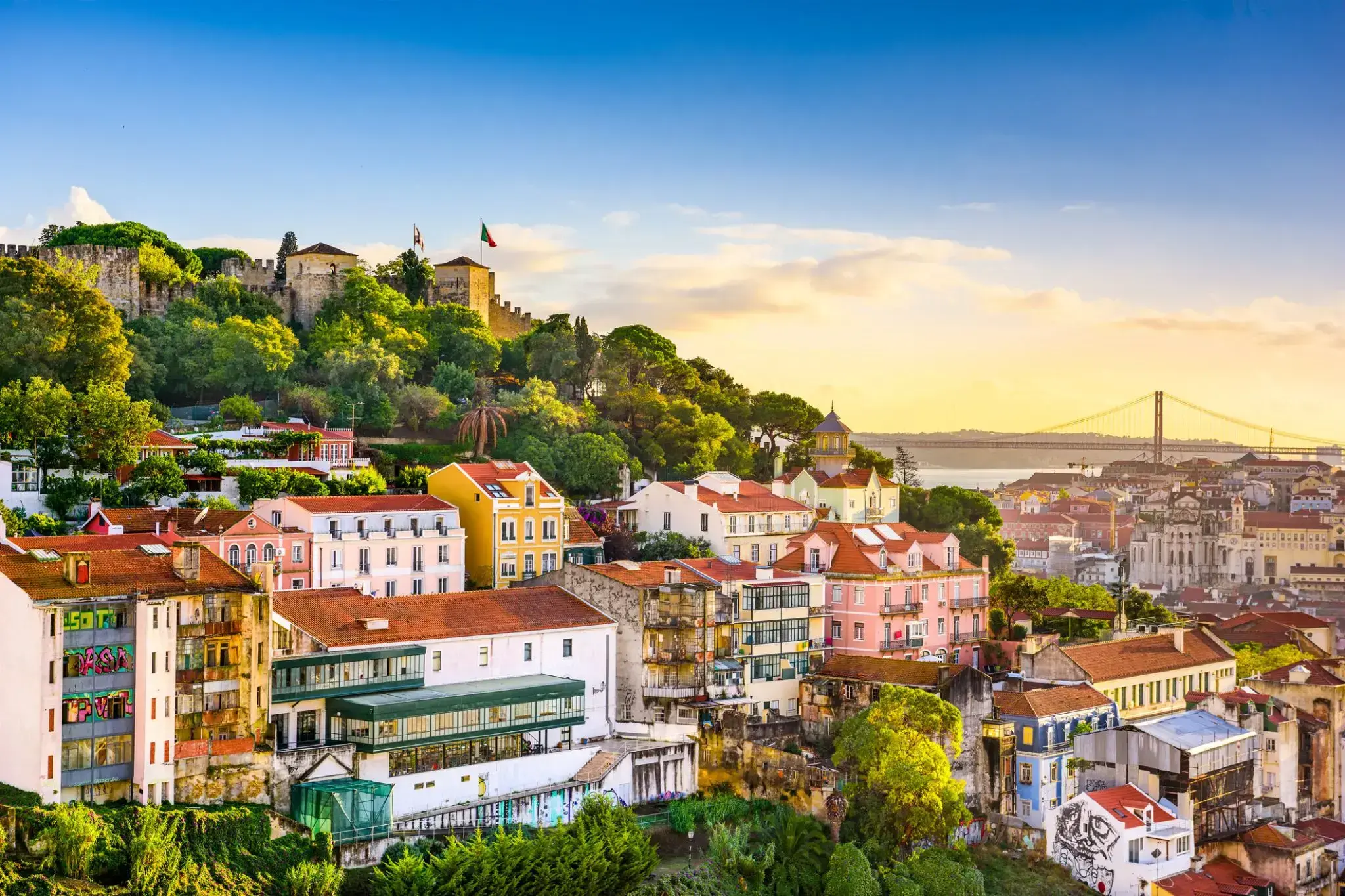
Lisbon is the capital and the largest city of Portugal, with an estimated population of 505,526 within its administrative limits in an area of 100.05 km2. Its urban area extends beyond the city's administrative limits with a population of around 2.8 million people, being the 11th-most populous urban area in the European Union. About 3 million people live in the Lisbon Metropolitan Area (which represents approximately 27% of the country's population). It is mainland Europe's westernmost capital city and the only one along the Atlantic coast. Lisbon lies in the western Iberian Peninsula on the Atlantic Ocean and the River Tagus. The westernmost areas of its metro area form the westernmost point of Continental Europe, which is known as Cabo da Roca, located in the Sintra Mountains.
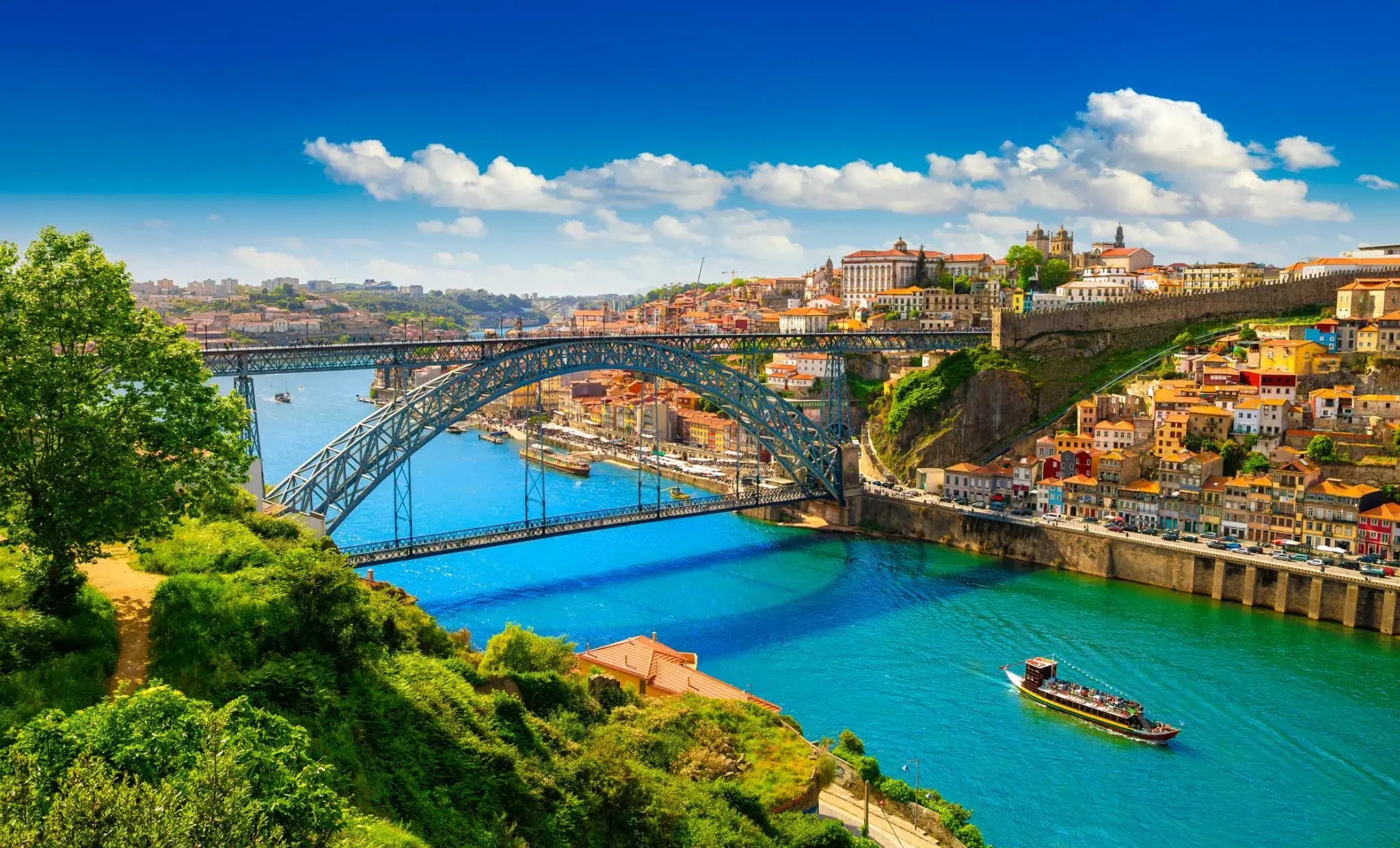
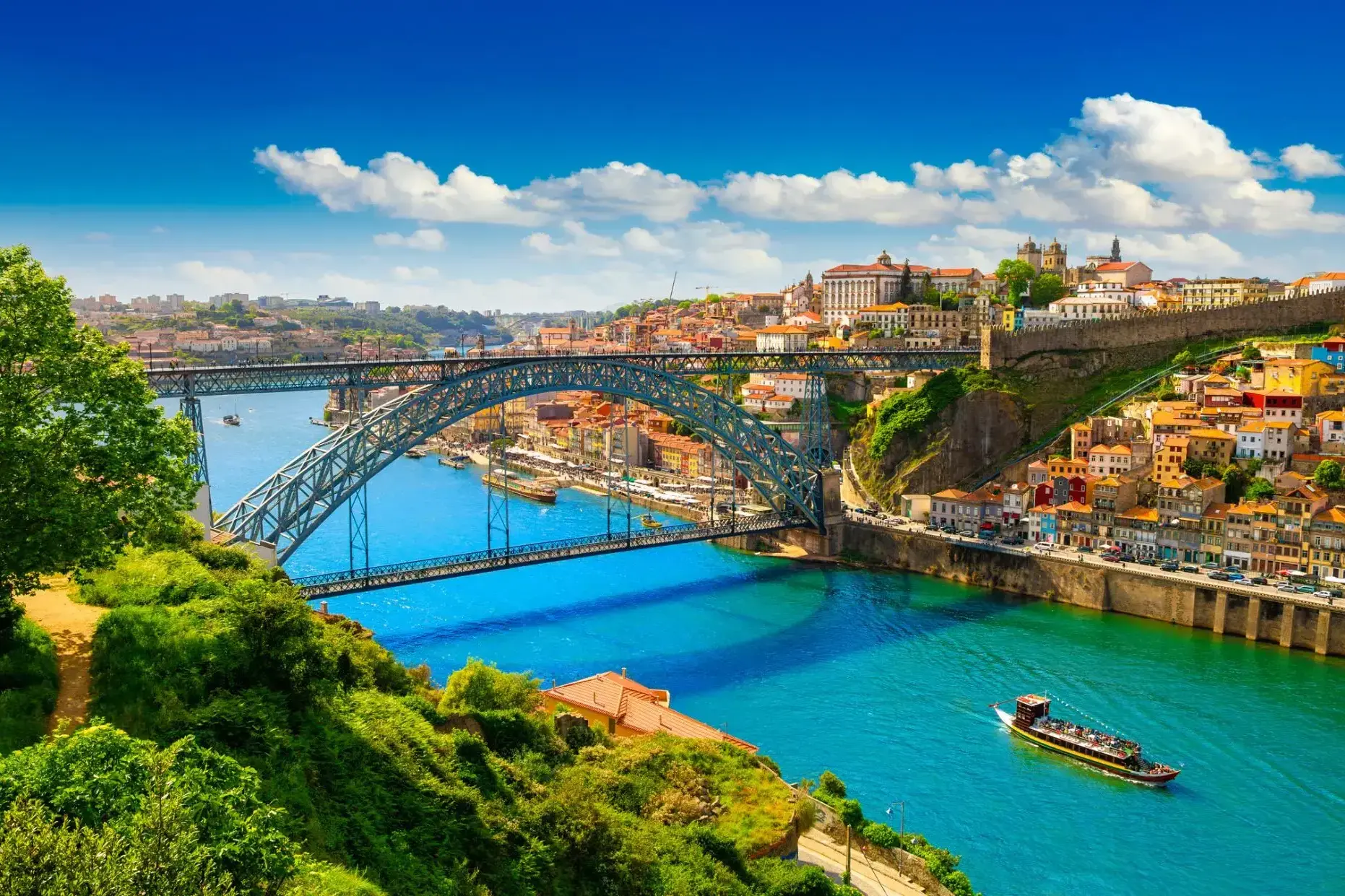
Порту является вторым по величине городом Португалии после Лиссабона и одним из крупных городских районов Пиренейского полуострова. Население самого города составляет 237 591 человек, а в столичном районе Порту, который выходит за административные пределы города, проживает 1,9 миллиона человек (2011 год) на площади 2 395 км2 (925 кв. Миль), что делает его вторым самый большой городской район в Португалии. Он признан глобальным городом гамма-уровня Исследовательской группой по глобализации и глобальным городам (GaWC), единственным португальским городом, кроме Лиссабона, который был признан глобальным городом.
Расположенный вдоль устья реки Дору на севере Португалии, Порту является одним из старейших европейских центров, и его историческое ядро было объявлено ЮНЕСКО объектом Всемирного наследия в 1996 году. Западная часть его городской территории простирается до береговой линии Атлантического океана. Его поселение датируется много веков, когда он был форпостом Римской империи. Его объединенное кельтско-латинское имя, Portus Cale, было названо происхождением названия «Португалия», основанного на транслитерации и устной эволюции от латыни. На португальском языке название города пишется с определенной статьей о Порту ; следовательно, его английское название произошло от неправильного толкования устного произношения и упоминается как Опорто в современной литературе и многими ораторами.

Travelers find in La Coruña the perfect place to experience the atmosphere of Spain’s Atlantic coast, where modern promenades meet historical landmarks and cozy beaches. The city is known for having the world’s oldest functioning Roman lighthouse – the Tower of Hercules, built nearly 2000 years ago and still guiding ships today. Here, you can enjoy a stroll along one of Europe’s longest seafront promenades, taking in ocean panoramas and the fresh breeze.
In La Coruña, guests discover the rich Galician gastronomic culture, with seafood served in traditional tapas bars and contemporary restaurants. Local markets delight with fresh products, while the city’s cultural life is filled with festivals, exhibitions, and live street music. This destination offers travelers a unique blend of historical depth, sea views, and warm Spanish atmosphere, leaving a sense of lightness and inspiration after the visit.
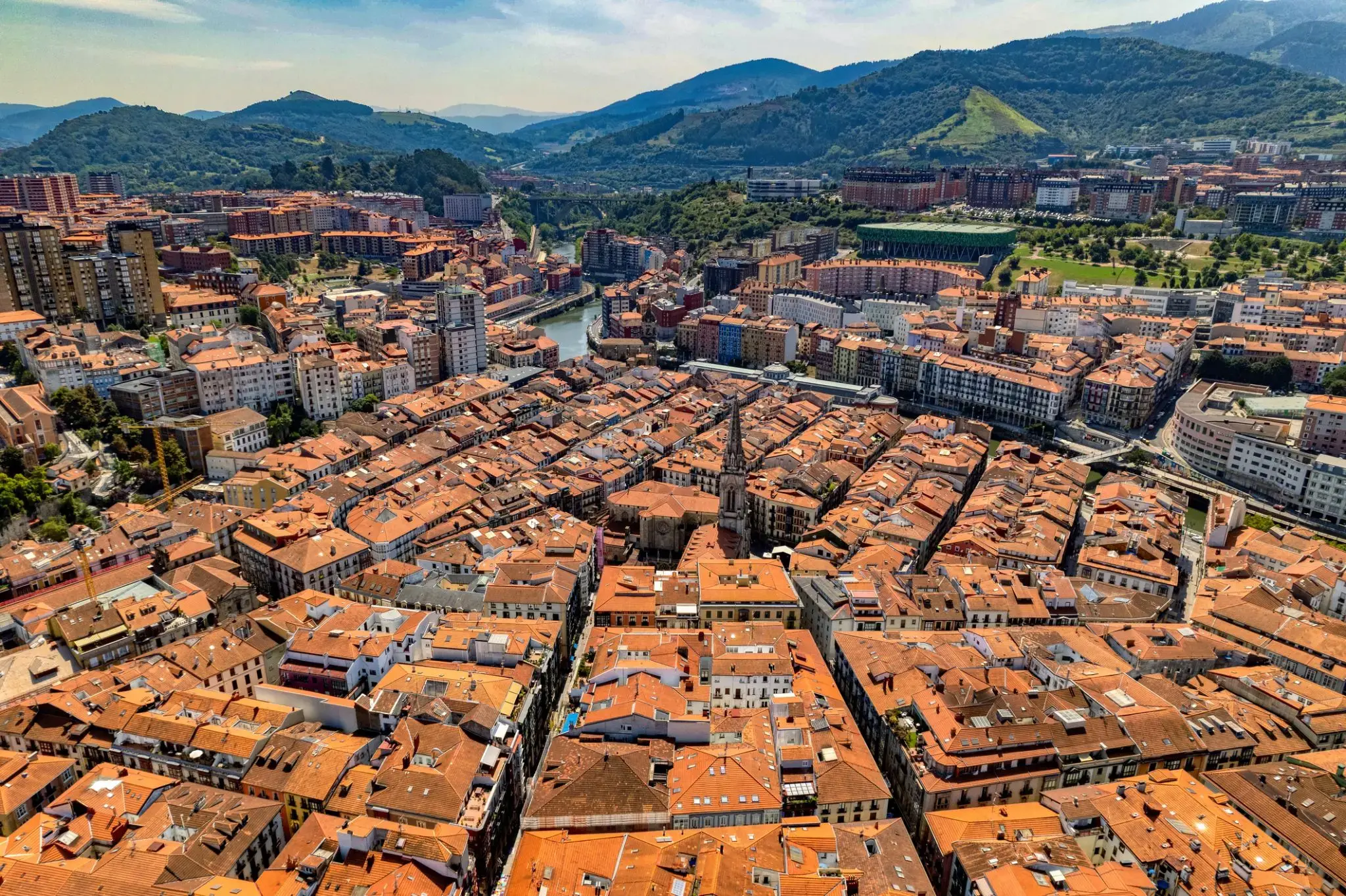
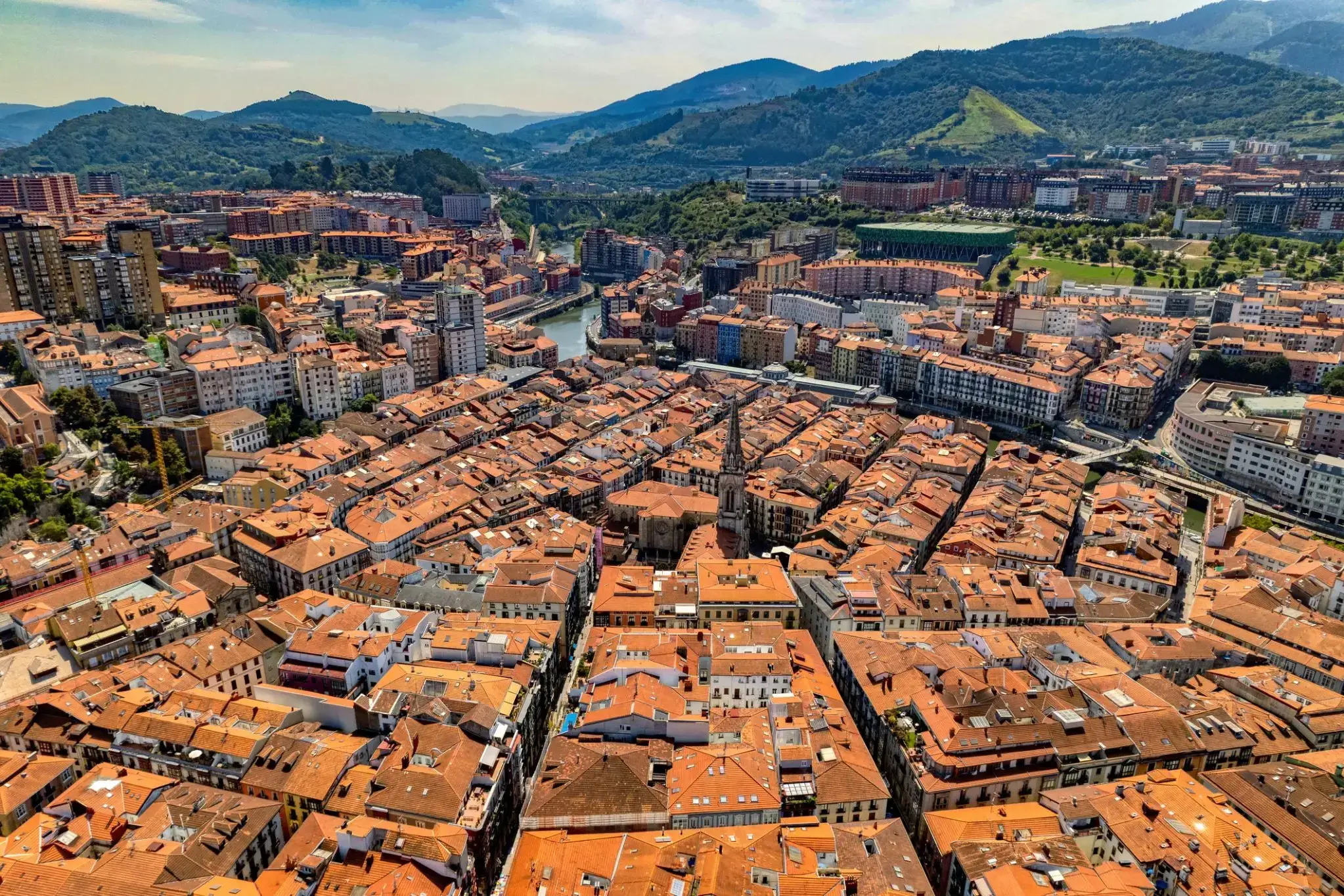
Bilbao is a city in northern Spain, the largest city in the province of Biscay and in the Basque Country as a whole. It is also the largest city proper in northern Spain. Bilbao is the tenth largest city in Spain, with a population of 345,141 as of 2015. The Bilbao metropolitan area has roughly 1 million inhabitants, making it one of the most populous metropolitan areas in northern Spain; with a population of 875,552 the comarca of Greater Bilbao is the fifth-largest urban area in Spain. Bilbao is also the main urban area in what is defined as the Greater Basque region.
Bilbao is situated in the north-central part of Spain, some 16 kilometres (10 mi) south of the Bay of Biscay, where the economic social development is located, where the estuary of Bilbao is formed. Its main urban core is surrounded by two small mountain ranges with an average elevation of 400 metres (1,300 ft). Its climate is shaped by the Bay of Biscay low-pressure systems and mild air, moderating summer temperatures by Iberian standards, with low sunshine and high rainfall. The annual temperature range is low for its latitude.
After its foundation in the early 14th century by Diego López V de Haro, head of the powerful Haro family, Bilbao was a commercial hub of the Basque Country that enjoyed significant importance in Green Spain. This was due to its port activity based on the export of iron extracted from the Biscayan quarries. Throughout the nineteenth century and the beginning of the twentieth, Bilbao experienced heavy industrialisation, making it the centre of the second-most industrialised region of Spain, behind Barcelona. At the same time an extraordinary population explosion prompted the annexation of several adjacent municipalities. Nowadays, Bilbao is a vigorous service city that is experiencing an ongoing social, economic, and aesthetic revitalisation process, started by the iconic Bilbao Guggenheim Museum, and continued by infrastructure investments, such as the airport terminal, the rapid transit system, the tram line, the Azkuna Zentroa, and the currently under development Abandoibarra and Zorrozaurrerenewal projects.
Bilbao is also home to football club Athletic Club de Bilbao, a significant symbol for Basque nationalism due to its promotion of only Basque players and one of the most successful clubs in Spanish football history.
On 19 May 2010, the city of Bilbao was recognised with the Lee Kuan Yew World City Prize, awarded by the city state of Singapore, in collaboration with the Swedish Nobel Academy. Considered the Nobel Prize for urbanism, it was handed out on 29 June 2010. On 7 January 2013, its mayor, Iñaki Azkuna, received the 2012 World Mayor Prize awarded every two years by the British foundation The City Mayors Foundation, in recognition of the urban transformation experienced by the Biscayan capital since the 1990s. On 8 November 2017, Bilbao was chosen the Best European City 2018 at The Urbanism Awards 2018, awarded by the international organisation The Academy of Urbanism.


the capital of France, on the Seine River; population 2,203,817 (2006). Paris was held by the Romans, who called it Lutetia, and by the Franks, and was established as the capital in 987 under Hugh Capet. It was organized into three parts—the Île de la Cité (an island in the Seine), the Right Bank, and the Left Bank—during the reign of Philippe-Auguste 1180–1223. The city's neoclassical architecture dates from the modernization of the Napoleonic era, which continued under Napoleon III, when the bridges and boulevards of the modern city were built.