
Rejs morski · 18.01.2028 – 18.07.2028 · 182 nocy
Around the world in 180 days
Cena i dostępność kajutTrasa i informacje o rejsie
Premium- Miami
- Miami
- Cartagena (Bolívar)
- Puerto Lemon
- Puerto Quetzal
- Puerto Vallarta
- Cabo San Lucas
- Los Angeles
- Mazatlán
- Acapulco
- Puerto Madero
- Puntarenas
- Panama City, Floryda
- Manta
- Lima
- Pisco
- Valparaiso
- Puerto Montt
- Fiordy i kanały Chile
- Fiordy i kanały Chile
- Punta Arenas
- Punta Arenas
- REJS PO ZATOCE PARADISE
- Port Stanley, Falklandy
- Buenos Aires
- Buenos Aires
- Montevideo
- Punta del Este
- Rio de Janeiro
- Rio de Janeiro
- Boca de Valeria
- Manaus
- Manaus
- Parintins
- Santarem
- Bridgetown
- Kingstown
- Mindelu
- Santa Cruz, około. Teneryfa (Wyspy Kanaryjskie)
- Malaga
- Barcelona
- Palma de Mallorca
- Sete/Seta
- Cannes
- Livorno
- Messina, wł. Sycylia
- Valletta
- Split
- Miedź
- Chioggia
- Chioggia
- Rijeka
- Zadar
- Dubrownik
- Kotor
- Bar
- Korfu
- Katakolo
- Milos
- Chania (Souda), Kreta
- Pireus (Ateny)
- Stambuł
- Stambuł
- Kepez (Canakkale)
- Selcuk
- Marmaris
- Mykonos
- Gition
- Neapol
- Rzym (Civitavecchia)
- Sorrento, Capri
- ZATOKA ORANŻOWA
- Portoferraio
- La Spezia
- Ayachcho
- Monte Carlo
- Saint Tropez
- Almeria
- Gibraltar
- Sewilla
- Portiman
- Lizbona
- Lizbona
- Porto
- La Coruna
- Gijon
- Bordeaux
- Bordeaux
- Bordeaux
- La Rochelle
- Saint-Malo
- Paryż
- Bruges
- Od Eymein
- Londyn
- Dublin
- Belfast
- Glasgow
- Torshavn
- Heimaey
- Reykjavik
- Reykjavik
- Isafjordur
- Akureyri
- Grundarfjordur
- Paamiut
- Nuuk
- Nuuk
- Corner-Brook
- Sydnej
- Halifax
- Nowy Jork
- Nowy Jork
| Data | Port | Przypłynięcie | Wypłynięcie |
|---|---|---|---|
| 18.01.2028 |
Miami
USA
|
07:00 | — |
| 19.01.2028 |
Miami
USA
|
— | 17:00 |
| 20.01.2028 |
Dzień na morzu
|
— | — |
| 21.01.2028 |
Dzień na morzu
|
— | — |
| 22.01.2028 |
Cartagena (Bolívar)
Kolumbia
|
14:30 | 22:00 |
| 23.01.2028 |
Dzień na morzu
|
— | — |
| 24.01.2028 |
Puerto Lemon
Costa Rica
|
07:00 | 16:00 |
| 25.01.2028 |
Dzień na morzu
|
— | — |
| 26.01.2028 |
Dzień na morzu
|
— | — |
| 27.01.2028 |
Dzień na morzu
|
— | — |
| 28.01.2028 |
Puerto Quetzal
Gwatemala
|
07:00 | 16:00 |
| 29.01.2028 |
Dzień na morzu
|
— | — |
| 30.01.2028 |
Dzień na morzu
|
— | — |
| 31.01.2028 |
Puerto Vallarta
Meksyk
|
09:30 | 19:00 |
| 01.02.2028 |
Dzień na morzu
|
— | — |
| 02.02.2028 |
Cabo San Lucas
Meksyk
|
10:00 | 18:00 |
| 03.02.2028 |
Dzień na morzu
|
— | — |
| 04.02.2028 |
Dzień na morzu
|
— | — |
| 05.02.2028 |
Los Angeles
USA
|
06:00 | 17:00 |
| 06.02.2028 |
Dzień na morzu
|
— | — |
| 07.02.2028 |
Dzień na morzu
|
— | — |
| 08.02.2028 |
Mazatlán
Meksyk
|
10:30 | 19:30 |
| 09.02.2028 |
Dzień na morzu
|
— | — |
| 10.02.2028 |
Acapulco
Meksyk
|
10:00 | 19:00 |
| 11.02.2028 |
Dzień na morzu
|
— | — |
| 12.02.2028 |
Puerto Madero
Meksyk
|
07:00 | 17:00 |
| 13.02.2028 |
Dzień na morzu
|
— | — |
| 14.02.2028 |
Puntarenas
Costa Rica
|
07:00 | 19:00 |
| 15.02.2028 |
Dzień na morzu
|
— | — |
| 16.02.2028 |
Panama City, Floryda
USA
|
07:00 | 18:00 |
| 17.02.2028 |
Dzień na morzu
|
— | — |
| 18.02.2028 |
Manta
Ecuador
|
09:00 | 20:00 |
| 19.02.2028 |
Dzień na morzu
|
— | — |
| 20.02.2028 |
Dzień na morzu
|
— | — |
| 21.02.2028 |
Lima
Peru
|
07:00 | 17:00 |
| 22.02.2028 |
Pisco
Peru
|
07:00 | 17:00 |
| 23.02.2028 |
Dzień na morzu
|
— | — |
| 24.02.2028 |
Dzień na morzu
|
— | — |
| 25.02.2028 |
Dzień na morzu
|
— | — |
| 26.02.2028 |
Valparaiso
Chile
|
06:00 | 18:00 |
| 27.02.2028 |
Dzień na morzu
|
— | — |
| 28.02.2028 |
Puerto Montt
Chile
|
10:00 | 18:00 |
| 29.02.2028 |
Fiordy i kanały Chile
Chile
|
— | — |
| 01.03.2028 |
Fiordy i kanały Chile
Chile
|
— | — |
| 02.03.2028 |
Punta Arenas
Chile
|
13:00 | — |
| 03.03.2028 |
Punta Arenas
Chile
|
— | 16:00 |
| 04.03.2028 |
Dzień na morzu
|
— | — |
| 05.03.2028 |
Dzień na morzu
|
— | — |
| 06.03.2028 |
REJS PO ZATOCE PARADISE
|
— | — |
| 07.03.2028 |
Dzień na morzu
|
— | — |
| 08.03.2028 |
Dzień na morzu
|
— | — |
| 09.03.2028 |
Port Stanley, Falklandy
Falkland islands
|
07:00 | 18:00 |
| 10.03.2028 |
Dzień na morzu
|
— | — |
| 11.03.2028 |
Dzień na morzu
|
— | — |
| 12.03.2028 |
Dzień na morzu
|
— | — |
| 13.03.2028 |
Buenos Aires
Argentyna
|
08:00 | — |
| 14.03.2028 |
Buenos Aires
Argentyna
|
— | 18:45 |
| 15.03.2028 |
Montevideo
Uruguay
|
08:00 | 18:00 |
| 16.03.2028 |
Punta del Este
Uruguay
|
07:00 | 17:00 |
| 17.03.2028 |
Dzień na morzu
|
— | — |
| 18.03.2028 |
Dzień na morzu
|
— | — |
| 19.03.2028 |
Rio de Janeiro
Brazylia
|
11:00 | — |
| 20.03.2028 |
Rio de Janeiro
Brazylia
|
— | 17:00 |
| 21.03.2028 |
Dzień na morzu
|
— | — |
| 22.03.2028 |
Dzień na morzu
|
— | — |
| 23.03.2028 |
Dzień na morzu
|
— | — |
| 24.03.2028 |
Dzień na morzu
|
— | — |
| 25.03.2028 |
Dzień na morzu
|
— | — |
| 26.03.2028 |
Dzień na morzu
|
— | — |
| 27.03.2028 |
Dzień na morzu
|
— | — |
| 28.03.2028 |
Boca de Valeria
Brazylia
|
07:00 | 15:00 |
| 29.03.2028 |
Manaus
Brazylia
|
18:00 | — |
| 30.03.2028 |
Manaus
Brazylia
|
— | 18:00 |
| 31.03.2028 |
Parintins
Brazylia
|
13:00 | 19:00 |
| 01.04.2028 |
Santarem
Brazylia
|
07:00 | 12:30 |
| 02.04.2028 |
Dzień na morzu
|
— | — |
| 03.04.2028 |
Dzień na morzu
|
— | — |
| 04.04.2028 |
Dzień na morzu
|
— | — |
| 05.04.2028 |
Bridgetown
Barbados
|
06:00 | 23:30 |
| 06.04.2028 |
Kingstown
Saint Vincent i Grenadyny
|
08:30 | 16:30 |
| 07.04.2028 |
Dzień na morzu
|
— | — |
| 08.04.2028 |
Dzień na morzu
|
— | — |
| 09.04.2028 |
Dzień na morzu
|
— | — |
| 10.04.2028 |
Dzień na morzu
|
— | — |
| 11.04.2028 |
Dzień na morzu
|
— | — |
| 12.04.2028 |
Dzień na morzu
|
— | — |
| 13.04.2028 |
Mindelu
Cape Verde
|
07:00 | 19:00 |
| 14.04.2028 |
Dzień na morzu
|
— | — |
| 15.04.2028 |
Dzień na morzu
|
— | — |
| 16.04.2028 |
Santa Cruz, około. Teneryfa (Wyspy Kanaryjskie)
Hiszpania
|
07:00 | 17:00 |
| 17.04.2028 |
Dzień na morzu
|
— | — |
| 18.04.2028 |
Dzień na morzu
|
— | — |
| 19.04.2028 |
Malaga
Hiszpania
|
07:00 | 23:00 |
| 20.04.2028 |
Dzień na morzu
|
— | — |
| 21.04.2028 |
Barcelona
Hiszpania
|
06:00 | 19:00 |
| 22.04.2028 |
Palma de Mallorca
Hiszpania
|
07:00 | 14:00 |
| 23.04.2028 |
Sete/Seta
Francja
|
09:00 | 19:00 |
| 24.04.2028 |
Cannes
Francja
|
08:00 | 19:00 |
| 25.04.2028 |
Livorno
Włochy
|
07:00 | 22:00 |
| 26.04.2028 |
Dzień na morzu
|
— | — |
| 27.04.2028 |
Messina, wł. Sycylia
Włochy
|
07:00 | 17:00 |
| 28.04.2028 |
Valletta
Malta
|
07:00 | 16:00 |
| 29.04.2028 |
Dzień na morzu
|
— | — |
| 30.04.2028 |
Split
Chorwacja
|
09:00 | 18:00 |
| 01.05.2028 |
Miedź
Slovenia
|
10:30 | 20:00 |
| 02.05.2028 |
Chioggia
Włochy
|
07:00 | — |
| 03.05.2028 |
Chioggia
Włochy
|
— | 17:00 |
| 04.05.2028 |
Rijeka
Chorwacja
|
09:00 | 19:00 |
| 05.05.2028 |
Zadar
Chorwacja
|
07:00 | 16:00 |
| 06.05.2028 |
Dubrownik
Chorwacja
|
09:30 | 23:00 |
| 07.05.2028 |
Kotor
Czarna Góra
|
07:00 | 17:00 |
| 08.05.2028 |
Bar
Czarna Góra
|
07:00 | 17:00 |
| 09.05.2028 |
Korfu
Grecja
|
07:00 | 17:00 |
| 10.05.2028 |
Katakolo
Grecja
|
07:00 | 17:00 |
| 11.05.2028 |
Milos
Grecja
|
09:00 | 20:00 |
| 12.05.2028 |
Chania (Souda), Kreta
Grecja
|
07:00 | 17:00 |
| 13.05.2028 |
Pireus (Ateny)
Grecja
|
05:30 | 19:00 |
| 14.05.2028 |
Dzień na morzu
|
— | — |
| 15.05.2028 |
Stambuł
Turcja
|
07:00 | — |
| 16.05.2028 |
Stambuł
Turcja
|
— | 17:00 |
| 17.05.2028 |
Kepez (Canakkale)
Turcja
|
07:00 | 16:00 |
| 18.05.2028 |
Selcuk
Turcja
|
07:30 | 18:00 |
| 19.05.2028 |
Marmaris
Turcja
|
07:00 | 17:00 |
| 20.05.2028 |
Mykonos
Grecja
|
07:00 | 17:00 |
| 21.05.2028 |
Gition
Grecja
|
07:00 | 19:00 |
| 22.05.2028 |
Dzień na morzu
|
— | — |
| 23.05.2028 |
Neapol
Włochy
|
07:00 | 16:00 |
| 24.05.2028 |
Rzym (Civitavecchia)
Włochy
|
06:00 | 19:00 |
| 25.05.2028 |
Sorrento, Capri
Włochy
|
08:00 | 19:00 |
| 26.05.2028 |
ZATOKA ORANŻOWA
|
10:00 | 20:00 |
| 27.05.2028 |
Portoferraio
Włochy
|
07:00 | 19:00 |
| 28.05.2028 |
La Spezia
Włochy
|
07:00 | 20:00 |
| 29.05.2028 |
Ayachcho
Francja
|
09:30 | 19:00 |
| 30.05.2028 |
Monte Carlo
Monaco
|
07:00 | 23:30 |
| 31.05.2028 |
Saint Tropez
Francja
|
07:00 | 16:00 |
| 01.06.2028 |
Dzień na morzu
|
— | — |
| 02.06.2028 |
Almeria
Hiszpania
|
09:00 | 22:00 |
| 03.06.2028 |
Gibraltar
Wielka Brytania
|
10:00 | 18:00 |
| 04.06.2028 |
Sewilla
Hiszpania
|
07:00 | 21:00 |
| 05.06.2028 |
Portiman
Portugalia
|
07:00 | 17:00 |
| 06.06.2028 |
Lizbona
Portugalia
|
06:00 | — |
| 07.06.2028 |
Lizbona
Portugalia
|
— | 17:30 |
| 08.06.2028 |
Porto
Portugalia
|
08:30 | 17:30 |
| 09.06.2028 |
La Coruna
Hiszpania
|
10:00 | 19:00 |
| 10.06.2028 |
Gijon
Hiszpania
|
07:00 | 17:00 |
| 11.06.2028 |
Bordeaux
Francja
|
16:00 | — |
| 12.06.2028 |
Bordeaux
Francja
|
— | — |
| 13.06.2028 |
Bordeaux
Francja
|
— | 19:00 |
| 14.06.2028 |
La Rochelle
Francja
|
07:00 | 19:00 |
| 15.06.2028 |
Dzień na morzu
|
— | — |
| 16.06.2028 |
Saint-Malo
Francja
|
07:00 | 17:00 |
| 17.06.2028 |
Paryż
Francja
|
07:00 | 20:00 |
| 18.06.2028 |
Bruges
Belgia
|
10:30 | 20:00 |
| 19.06.2028 |
Od Eymein
Holandia
|
09:00 | 22:00 |
| 20.06.2028 |
Dzień na morzu
|
— | — |
| 21.06.2028 |
Londyn
Wielka Brytania
|
06:00 | 17:00 |
| 22.06.2028 |
Dzień na morzu
|
— | — |
| 23.06.2028 |
Dublin
Irlandia
|
07:00 | 18:00 |
| 24.06.2028 |
Belfast
Wielka Brytania
|
07:00 | 18:00 |
| 25.06.2028 |
Glasgow
Wielka Brytania
|
06:00 | 18:00 |
| 26.06.2028 |
Dzień na morzu
|
— | — |
| 27.06.2028 |
Torshavn
Faroe Islands
|
07:00 | 17:00 |
| 28.06.2028 |
Dzień na morzu
|
— | — |
| 29.06.2028 |
Heimaey
Islandia
|
07:00 | 20:00 |
| 30.06.2028 |
Reykjavik
Islandia
|
07:00 | — |
| 01.07.2028 |
Reykjavik
Islandia
|
— | 17:00 |
| 02.07.2028 |
Isafjordur
Islandia
|
07:00 | 17:00 |
| 03.07.2028 |
Akureyri
Islandia
|
07:00 | 16:00 |
| 04.07.2028 |
Grundarfjordur
Islandia
|
11:00 | 18:00 |
| 05.07.2028 |
Dzień na morzu
|
— | — |
| 06.07.2028 |
Dzień na morzu
|
— | — |
| 07.07.2028 |
Paamiut
Greenland
|
08:00 | 17:00 |
| 08.07.2028 |
Nuuk
Greenland
|
23:45 | — |
| 09.07.2028 |
Nuuk
Greenland
|
— | 17:00 |
| 10.07.2028 |
Dzień na morzu
|
— | — |
| 11.07.2028 |
Dzień na morzu
|
— | — |
| 12.07.2028 |
Corner-Brook
Kanada
|
09:00 | 20:00 |
| 13.07.2028 |
Dzień na morzu
|
— | — |
| 14.07.2028 |
Sydnej
Australia
|
07:00 | 17:00 |
| 15.07.2028 |
Halifax
Kanada
|
10:30 | 18:30 |
| 16.07.2028 |
Dzień na morzu
|
— | — |
| 17.07.2028 |
Nowy Jork
USA
|
10:00 | — |
| 18.07.2028 |
Nowy Jork
USA
|
— | 19:00 |
-
 Dzień 1: 07:00
Miami / USA
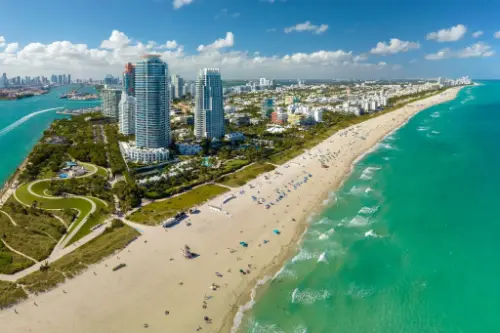
Miami, officially the City of Miami, is the cultural, economic and financial center of South Florida. Miami is the seat of Miami-Dade County, the most populous county in Florida. The city covers an area of about 56.6 square miles (147 km2), between the Everglades to the west and Biscayne Bay on the east; with a 2017 estimated population of 463,347, Miami is the sixth most densely populated major city in the United States. The Miami metropolitan area is home to 6.1 million people and the seventh-largest metropolitan area in the nation. Miami's metro area is the second-most populous metropolis in the southeastern United States and fourth-largest urban area in the U.S.
Miami is a major center, and a leader in finance, commerce, culture, media, entertainment, the arts, and international trade. The Miami Metropolitan Area is by far the largest urban economy in Florida and the 12th largest in the United States with a GDP of $344.9 billion as of 2017. In 2012, Miami was classified as an "Alpha−" level world city in the World Cities Study Group's inventory. In 2010, Miami ranked seventh in the United States and 33rd among global cities in terms of business activity, human capital, information exchange, cultural experience, and political engagement. In 2008, Forbes magazine ranked Miami "America's Cleanest City", for its year-round good air quality, vast green spaces, clean drinking water, clean streets, and citywide recycling programs. According to a 2009 UBS study of 73 world cities, Miami was ranked as the richest city in the United States, and the world's seventh-richest city in terms of purchasing power. Miami is nicknamed the "Capital of Latin America" and is the largest city with a Cuban-American plurality.
Greater Downtown Miami has one of the largest concentrations of international banks in the United States, and is home to many large national and international companies. The Civic Center is a major center for hospitals, research institutes, medical centers, and biotechnology industries. For more than two decades, the Port of Miami, known as the "Cruise Capital of the World", has been the number one cruise passenger port in the world. It accommodates some of the world's largest cruise ships and operations, and is the busiest port in both passenger traffic and cruise lines. Metropolitan Miami is also a major tourism hub in the southeastern U.S. for international visitors, ranking number two in the country after New York City.
-
Dzień 2: 17:00
Miami / USA
Miami, officially the City of Miami, is the cultural, economic and financial center of South Florida. Miami is the seat of Miami-Dade County, the most populous county in Florida. The city covers an area of about 56.6 square miles (147 km2), between the Everglades to the west and Biscayne Bay on the east; with a 2017 estimated population of 463,347, Miami is the sixth most densely populated major city in the United States. The Miami metropolitan area is home to 6.1 million people and the seventh-largest metropolitan area in the nation. Miami's metro area is the second-most populous metropolis in the southeastern United States and fourth-largest urban area in the U.S.
Miami is a major center, and a leader in finance, commerce, culture, media, entertainment, the arts, and international trade. The Miami Metropolitan Area is by far the largest urban economy in Florida and the 12th largest in the United States with a GDP of $344.9 billion as of 2017. In 2012, Miami was classified as an "Alpha−" level world city in the World Cities Study Group's inventory. In 2010, Miami ranked seventh in the United States and 33rd among global cities in terms of business activity, human capital, information exchange, cultural experience, and political engagement. In 2008, Forbes magazine ranked Miami "America's Cleanest City", for its year-round good air quality, vast green spaces, clean drinking water, clean streets, and citywide recycling programs. According to a 2009 UBS study of 73 world cities, Miami was ranked as the richest city in the United States, and the world's seventh-richest city in terms of purchasing power. Miami is nicknamed the "Capital of Latin America" and is the largest city with a Cuban-American plurality.
Greater Downtown Miami has one of the largest concentrations of international banks in the United States, and is home to many large national and international companies. The Civic Center is a major center for hospitals, research institutes, medical centers, and biotechnology industries. For more than two decades, the Port of Miami, known as the "Cruise Capital of the World", has been the number one cruise passenger port in the world. It accommodates some of the world's largest cruise ships and operations, and is the busiest port in both passenger traffic and cruise lines. Metropolitan Miami is also a major tourism hub in the southeastern U.S. for international visitors, ranking number two in the country after New York City.
-
Dzień 3:
Dzień na morzu / Morze
-
Dzień 4:
Dzień na morzu / Morze
-
 Dzień 5: 14:30–22:00
Cartagena (Bolívar) / Kolumbia
Starożytne mury forteczne, uliczni muzycy i karaibskie słońce tworzą niepowtarzalną atmosferę w Cartagenie (Bolívar) – perle kolumbijskiego wybrzeża. Miasto wpisane na listę światowego dziedzictwa UNESCO zachwyca kolonialną architekturą, uroczymi dziedzińcami i aromatem świeżo parzonej kawy z licznych kawiarni.
Zanurz się w tętniący życiem rytm Cartageny, spacerując brukowanymi uliczkami Starego Miasta, gdzie każdy zakątek kryje opowieści o piratach i hiszpańskich konkwistadorach. Zachód słońca przy starożytnej twierdzy Castillo San Felipe de Barajas to idealne zakończenie dnia pełnego kultury, historii i tropikalnego uroku.
-
Dzień 6:
Dzień na morzu / Morze
-
 Dzień 7: 07:00–16:00
Puerto Lemon / Costa Rica
Puerto Limón, commonly known as Limón (Spanish for "lemon"), is the capital city and main hub of Limón province, as well as of the cantón (county) of Limón in Costa Rica. It is the second largest city in Costa Rica, with a population of over 55,000, and is home of the Afro-Costa Rican community. Part of the community traces its roots to Italian, Jamaican and Chinese laborers who worked on a late nineteenth-century railroad project that connected San José to Puerto Limón. Until 1948, the Costa Rican government did not recognize Afro-Caribbean people as citizens and restricted their movement outside Limón province. As a result of this "travel ban", this Afro-Caribbean population became firmly established in the region, which influenced decisions not to move even after it was legally permitted. Nowadays, there is a significant outflow of Limón natives who move to the country's Central Valley in search for better employment and education. The Afro-Caribbean community speaks Spanish and Limonese Creole, a creole of English.
Puerto Limón contains two port terminals, Limón and Moín, which permit the shipment of Costa Rican exports as well as the anchoring of cruise ships. In 2016, the government pledged ₡93 million ($166,000) for a new cruise ship terminal for Puerto Limón.
Health care is provided for the city by Hospital Dr. Tony Facio Castro. Two small islands, Uvita Island and Isla de Pájaros, are just offshore.
-
Dzień 8:
Dzień na morzu / Morze
-
Dzień 9:
Dzień na morzu / Morze
-
Dzień 10:
Dzień na morzu / Morze
-
 Dzień 11: 07:00–16:00
Puerto Quetzal / Gwatemala
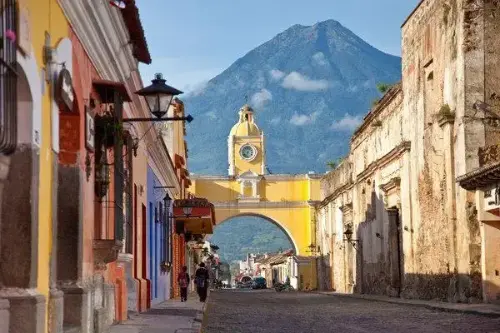
Puerto Quetzal to ważne miasto portowe na wybrzeżu Gwatemali, położone w regionie Pacyfiku. Jest jednym z najpopularniejszych portów docelowych dla statków wycieczkowych, co czyni go istotnym węzłem transportowym i głównym wejściem dla podróżnych przybywających do kraju. Puerto Quetzal jest także punktem wyjścia do odkrywania cudów przyrody Gwatemali, w tym słynnych wulkanów i malowniczych plaż. W pobliżu znajdują się takie atrakcje, jak wulkan Acatenango i Park Narodowy Monterrico, który słynie z ekosystemu oraz plaż odpowiednich do surfingu.
Oprócz piękna przyrody Puerto Quetzal przyciąga podróżnych swoją unikalną atmosferą. Miasto zachowało klimat wybrzeża Pacyfiku z urokliwymi wioskami rybackimi i restauracjami, w których można skosztować świeżych owoców morza. Jego strategiczne położenie i rozwinięta infrastruktura sprawiają, że Puerto Quetzal jest wygodnym punktem wyjścia do podróży po Gwatemali, zarówno dla tych, którzy chcą odkrywać starożytne ruiny Majów, takie jak Tikal, jak i dla tych, którzy szukają relaksu na plaży.
-
Dzień 12:
Dzień na morzu / Morze
-
Dzień 13:
Dzień na morzu / Morze
-
 Dzień 14: 09:30–19:00
Puerto Vallarta / Meksyk
Ciepła morska bryza wita gości w Puerto Vallarta, malowniczym kurorcie na wybrzeżu Pacyfiku, gdzie góry Sierra Madre spotykają się ze złotymi plażami. Miasto słynie z przytulnej atmosfery, wąskich brukowanych uliczek w historycznym centrum oraz słynnej promenady Malecon, ozdobionej nowoczesnymi rzeźbami i sztuką uliczną. Tutaj można nie tylko cieszyć się słońcem, ale także obserwować wieloryby w zatoce Banderas w sezonie migracyjnym.
Dla podróżnych Puerto Vallarta oferuje bogatą kulturę i kulinarne doznania – od tradycyjnych tacos i świeżych owoców morza po galerie sztuki i meksykańskie festiwale muzyczne. Miasto jest również popularne wśród miłośników nurkowania i snorkelingu dzięki rafom koralowym i krystalicznie czystej wodzie. To miejsce, gdzie można połączyć relaks nad oceanem z odkrywaniem natury i życia kulturalnego Meksyku.
-
Dzień 15:
Dzień na morzu / Morze
-
 Dzień 16: 10:00–18:00
Cabo San Lucas / Meksyk
Cabo San Lucas or simply Cabo, is a resort city at the southern tip of the Baja California Peninsula, in the Mexican state of Baja California Sur. As of 2015, the population of the city was 81,111 inhabitants. Cabo San Lucas together with San José del Cabo is known as Los Cabos. Together they form a metropolitan area of 305,983 inhabitants.
Cabo has been rated as one of Mexico's top 5 tourist destinations; it is known for its beaches, scuba diving locations, balnearios, the sea arch El Arco de Cabo San Lucas, and marine life. The Los Cabos Corridor has become a heavily trafficked vacation destination for tourists, with numerous resorts and timeshares along the coast between Cabo San Lucas and San José del Cabo.
Cabo houses a range of wildlife, including rays, sharks, birds, and a range of fish, such as mahi-mahi (dorado), and striped marlin.
-
Dzień 17:
Dzień na morzu / Morze
-
Dzień 18:
Dzień na morzu / Morze
-
 Dzień 19: 06:00–17:00
Los Angeles / USA
Los Angeles officially the City of Los Angeles and often known colloquially by its initials L.A., is the most populous city in California and the second most populous city in the United States, after New York. With an estimated population of four million, Los Angeles is the cultural, financial, and commercial center of Southern California. Nicknamed the "City of Angels" partly because of its name's Spanish meaning, Los Angeles is known for its Mediterranean climate, ethnic diversity, Hollywood, and the entertainment industry, and sprawling metropolis.
Los Angeles is in a large basin bounded by the Pacific Ocean on one side and by mountains as high as 10,000 feet (3,000 m) on the others. The city proper, which covers about 469 square miles (1,210 km2), is the seat of Los Angeles County, the most populated county in the country. Los Angeles is also the principal city of the Los Angeles metropolitan area, the second largest in the United States after that of New York City, with a population of 13.1 million. It is part of the Los Angeles-Long Beach combined statistical area, also the nation's second most populous area with a 2015 estimated population of 18.7 million.
Los Angeles is one of the most substantial economic engines within the United States, with a diverse economy in a broad range of professional and cultural fields. Los Angeles is also famous as the home of Hollywood, a major center of the world entertainment industry. A global city, it has been ranked 6th in the Global Cities Index and 9th in the Global Economic Power Index. The Los Angeles combined statistical area also has a gross metropolitan productof $831 billion (as of 2008), making it the third-largest in the world, after the Tokyo and New York metropolitan areas. Los Angeles hosted the 1932 and 1984 Summer Olympics and will host the event for a third time in 2028. The city also hosted the Miss Universe pageant twice, in 1990 and 2006, and was one of 9 American cities to host the 1994 FIFA men's soccer World Cup and one of 8 to host the 1999 FIFA women's soccer World Cup, hosting the finalmatch for both tournaments.
Historically home to the Chumash and Tongva, Los Angeles was claimed by Juan Rodríguez Cabrillo for Spain in 1542 along with the rest of what would become Alta California. The city was officially founded on September 4, 1781, by Spanish governor Felipe de Neve. It became a part of Mexico in 1821 following the Mexican War of Independence. In 1848, at the end of the Mexican–American War, Los Angeles and the rest of California were purchased as part of the Treaty of Guadalupe Hidalgo, becoming part of the United States. Los Angeles was incorporated as a municipality on April 4, 1850, five months before California achieved statehood. The discovery of oil in the 1890s brought rapid growth to the city. The completion of the Los Angeles Aqueduct in 1913, delivering water from Eastern California, later assured the city's continued rapid growth.
-
Dzień 20:
Dzień na morzu / Morze
-
Dzień 21:
Dzień na morzu / Morze
-
 Dzień 22: 10:30–19:30
Mazatlán / Meksyk
Mazatlán to żywe miasto nadbrzeżne na wybrzeżu Pacyfiku w Meksyku, w stanie Sinaloa. Słynie z długich piaszczystych plaż, doskonałych warunków do uprawiania sportów wodnych i malowniczych zachodów słońca. Mazatlán przyciąga turystów swoją unikalną atmosferą, łącząc nowoczesną infrastrukturę z tradycyjnym meksykańskim urokiem. W mieście znajdują się nie tylko plaże, ale także zabytkowe centrum, w którym znajdują się budynki z czasów kolonialnych. Jednym z najpopularniejszych szlaków turystycznych przebiega wzdłuż nabrzeża, z którego roztacza się zapierający dech widok na Ocean Spokojny oraz słynne wyspy, takie jak Isla de la Piedra.
Mazatlán słynie również z bogatego dziedzictwa kulturowego i wyjątkowej gastronomii. Miasto jest centrum przemysłu rybnego, a świeże owoce morza stanowią podstawę lokalnej kuchni. Co roku odbywa się tutaj Tydzień Karnawałowy, który przyciąga tysiące turystów z całego świata. Mazatlán jest również znany z akwarium morskiego oraz historycznej dzielnicy z architekturą z XIX wieku.
-
Dzień 23:
Dzień na morzu / Morze
-
 Dzień 24: 10:00–19:00
Acapulco / Meksyk
-
Dzień 25:
Dzień na morzu / Morze
-
 Dzień 26: 07:00–17:00
Puerto Madero / Meksyk
-
Dzień 27:
Dzień na morzu / Morze
-
 Dzień 28: 07:00–19:00
Puntarenas / Costa Rica
Puntarenas is the capital and largest city in the Province of Puntarenas, on the Pacific coast of Costa Rica.
-
Dzień 29:
Dzień na morzu / Morze
-
 Dzień 30: 07:00–18:00
Panama City, Floryda / USA
Panama City, położone na północno-zachodnim wybrzeżu Florydy, słynie z długich, białych plaż z miękkim, kwarcowym piaskiem i ciepłych, szmaragdowych wód Zatoki Meksykańskiej. To nadmorskie miasto jest popularne zarówno wśród rodzin z dziećmi, jak i miłośników sportów wodnych: można tu uprawiać kajakarstwo, parasailing, nurkowanie i wędkarstwo. Szczególną atrakcją jest promenada — Pier Park — gdzie znajdują się sklepy, restauracje i centra rozrywki.
Poza plażowaniem Panama City oferuje także unikalne atrakcje przyrodnicze. W pobliżu znajduje się rezerwat St. Andrews State Park, gdzie można obserwować delfiny, spacerować ścieżkami wśród wydm i lasów sosnowych lub wybrać się na wycieczkę na wyspę Shell Island, zachowaną w stanie nienaruszonym. Miasto łączy atmosferę kurortu z południowym urokiem, oferując spokojny, a jednocześnie pełen wrażeń wypoczynek.
-
Dzień 31:
Dzień na morzu / Morze
-
 Dzień 32: 09:00–20:00
Manta / Ecuador
Manta
-
Dzień 33:
Dzień na morzu / Morze
-
Dzień 34:
Dzień na morzu / Morze
-
 Dzień 35: 07:00–17:00
Lima / Peru
Lima jest stolicą i największym miastem Peru. Położona jest w dolinach rzek Chillón, Rímac i Lurín, w środkowej przybrzeżnej części kraju, z widokiem na Ocean Spokojny. Wraz z portem morskim Callao tworzy ciągły obszar miejski znany jako Obszar Metropolitalny Limy. Z populacją ponad 9 milionów mieszkańców, Lima jest najludniejszym obszarem metropolitalnym Peru i trzecim co do wielkości miastem w obu Amerykach (według definicji "samego miasta"), za São Paulo i Meksykiem.
Lima została założona przez hiszpańskiego konkwistadora Francisco Pizarro 18 stycznia 1535 roku jako Ciudad de los Reyes. Stała się stolicą i najważniejszym miastem Wicekrólestwa Peru. Po peruwiańskiej wojnie o niepodległość stała się stolicą Republiki Peru. Około jednej trzeciej ludności kraju mieszka w obszarze metropolitalnym.
-
 Dzień 36: 07:00–17:00
Pisco / Peru
To malownicze miasto portowe na wybrzeżu Pacyfiku przyciąga podróżnych swoją bogatą historią i bliskością unikalnych atrakcji przyrodniczych. Pisco (Peru) to brama do słynnego Rezerwatu Narodowego Paracas, gdzie odwiedzający mogą zobaczyć rzadkie gatunki zwierząt i podziwiać zachwycające krajobrazy pustynnych wydm, plaż oraz morskich jaskiń.
Ponadto Pisco słynie z mocnej brandy winogronowej o tej samej nazwie, uważanej za jedną z najlepszych w Ameryce Łacińskiej. Miasto jest również punktem wyjścia na rejsy do Wysp Ballestas, zamieszkałych przez lwy morskie, pingwiny i liczne ptaki morskie, co czyni je obowiązkowym miejscem dla miłośników przyrody i aktywnego wypoczynku.
-
Dzień 37:
Dzień na morzu / Morze
-
Dzień 38:
Dzień na morzu / Morze
-
Dzień 39:
Dzień na morzu / Morze
-
 Dzień 40: 06:00–18:00
Valparaiso / Chile
-
Dzień 41:
Dzień na morzu / Morze
-
 Dzień 42: 10:00–18:00
Puerto Montt / Chile
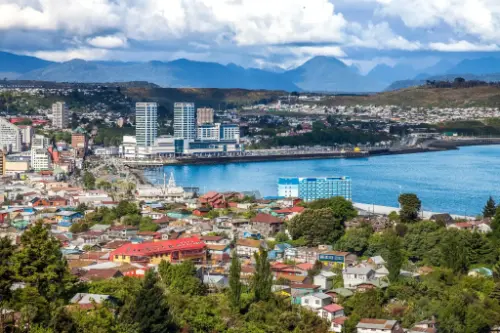
Puerto Montt is a port city and commune in southern Chile, located at the northern end of the Reloncaví Sound in the Llanquihue Province, Los Lagos Region, 1,055 km to the south of the capital, Santiago. The commune spans an area of 1,673 km2 (646 sq mi) and has a population of 245,902 in 2017. It is bounded by the communes of Puerto Varas to the north, Cochamó to the east and southeast, Calbuco to the southwest and Maullín and Los Muermos to the west.
Founded as late as 1853 during the German colonization of southern Chile, Puerto Montt soon outgrew older neighboring cities due to its strategic position at the southern end of the Chilean Central Valley being a gateway city into Chiloé Archipelago, Llanquihue and Nahuel Huapi lakes and Western Patagonia.
Puerto Montt has gained renown and grown significantly due to the rise of Chile as the second largest salmon producer of the world during the 1990s and 2000s. However, the Chilean salmon aquaculture crisis of the late 2000s resulted at least temporarily in severe unemployment and exposed weaknesses in the local economy. The city's cultural heritage mixes elements of Chiloé culture with German heritage although the city has attracted a significant number of newcomers from all over Chile in the last 30 years due to employment opportunities.
-
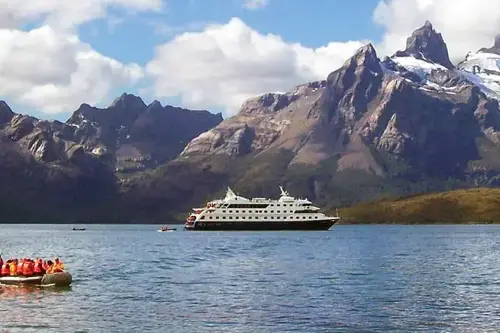 Dzień 43:
Fiordy i kanały Chile / Chile
-
Dzień 44:
Fiordy i kanały Chile / Chile
-
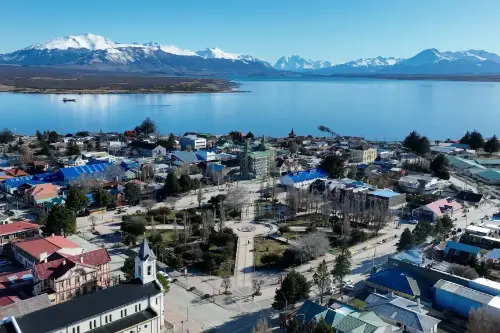 Dzień 45: 13:00
Punta Arenas / Chile
-
Dzień 46: 16:00
Punta Arenas / Chile
-
Dzień 47:
Dzień na morzu / Morze
-
Dzień 48:
Dzień na morzu / Morze
-
Dzień 49:
REJS PO ZATOCE PARADISE
-
Dzień 50:
Dzień na morzu / Morze
-
Dzień 51:
Dzień na morzu / Morze
-
 Dzień 52: 07:00–18:00
Port Stanley, Falklandy / Falkland islands
Stanley is the capital of the Falkland Islands. It is located on the island of East Falkland, on a north-facing slope in one of the wettest parts of the islands. At the 2016 census, the town had a population of 2,460 the entire population of the Falkland Islands was 3,398 on Census Day on 9 October 2016
Stanley is represented by five members of the Legislative Assembly of the Falkland Islands, currently Stacy Bragger, Barry Elsby, Mark Pollard, Roger Spink and Leona Vidal Roberts.
Stanley is the main shopping centre on the islands and the hub of East Falkland's road network. Attractions include the Falkland Islands Museum, Government House – built in 1845 and home to the Governor of the Falkland Islands – and a golf course, as well as a whale-bone arch, a totem pole, several war memorials and the shipwrecks in its harbour. The Falkland Islands Company owns several shops. Stanley has four pubs, 11 hotels and guesthouses, three restaurants, a fish and chip shop and the main tourist office. There are three churches, including the Anglican Christ Church Cathedral, the southernmost Anglican cathedral in the world, and the Roman Catholic St. Mary's Church. A bomb disposal unit in the town is a legacy of the Falklands War.
The town hall serves as a post office, philatelic bureau, law court and dance hall. The police station also contains the islands' only prison, with a capacity of 13 in the cells.
The community centre includes a swimming pool (the only public one in the islands), a sports centre, library, and school. A grass football pitch is located by the community centre and hosts regular games.
Stanley Racecourse, located on the west side of Stanley, holds a two-day horse racing meeting every year on 26 and 27 December. The Christmas races have been held here for over 100 years.
Stanley Golf Course has an 18-hole course and a club house. It is also located to the west of Stanley.
King Edward VII Memorial Hospital is the islands' main hospital, with doctors' practice and surgery, radiology department, dental surgery and emergency facilities.
Several bus and taxi companies operate out of Stanley.
Stanley is also home to the Falkland Islands Radio Station (FIRS), the Stanley office of the British Antarctic Survey, and the office of the weekly Penguin News newspaper.
A nursery and garden centre is also here, in whose greenhouses some of the islands' vegetables are grown.
-
Dzień 53:
Dzień na morzu / Morze
-
Dzień 54:
Dzień na morzu / Morze
-
Dzień 55:
Dzień na morzu / Morze
-
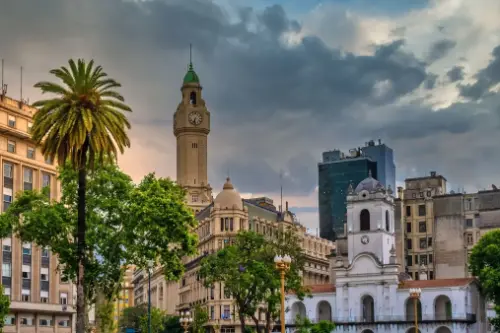 Dzień 56: 08:00
Buenos Aires / Argentyna
the capital city and chief port of Argentina, in the eastern central part of the country, on the Plata River; population 3,042,600 (est. 2008).
-
Dzień 57: 18:45
Buenos Aires / Argentyna
the capital city and chief port of Argentina, in the eastern central part of the country, on the Plata River; population 3,042,600 (est. 2008).
-
 Dzień 58: 08:00–18:00
Montevideo / Uruguay
Montevideo is the capital and largest city of Uruguay. According to the 2011 census, the city proper has a population of 1,319,108 (about one-third of the country's total population) in an area of 201 square kilometres (78 sq mi). The southernmost capital city in the Americas, Montevideo is situated on the southern coast of the country, on the northeastern bank of the Río de la Plata.
The city was established in 1724 by a Spanish soldier, Bruno Mauricio de Zabala, as a strategic move amidst the Spanish-Portuguese dispute over the platine region. It was also under brief British rule in 1807. Montevideo is the seat of the administrative headquarters of Mercosur and ALADI, Latin America’s leading trade blocs, a position that entailed comparisons to the role of Brussels in Europe.
-
 Dzień 59: 07:00–17:00
Punta del Este / Uruguay
Punta del Este — urugwajski kurort nad Atlantykiem
Punta del Este to jeden z najsłynniejszych kurortów Ameryki Południowej, położony na południowym wybrzeżu Urugwaju, gdzie spotykają się wody Oceanu Atlantyckiego i estuarium La Platy. Miasto słynie z kontrastów — luksusowe dzielnice z nowoczesnymi wieżowcami, jachtami i wykwintnymi restauracjami sąsiadują z cichymi, piaszczystymi plażami, malowniczymi wydmami i falami idealnymi do surfowania. Nazywane jest „Monako Ameryki Południowej” ze względu na swoją luksusową infrastrukturę i popularność wśród międzynarodowych celebrytów.
Poza plażami, Punta del Este oferuje wiele atrakcji kulturalnych i przyrodniczych: rzeźba „La Mano”, która stała się symbolem miasta, muzeum sztuki współczesnej Ralli oraz pobliskie wyspy z fokami. Warto też odwiedzić artystyczną dzielnicę La Barra lub podziwiać zachód słońca przy latarni morskiej. W sezonie letnim (grudzień–luty) miasto tętni życiem, przyciągając turystów z całego świata szukających słońca, komfortu i dynamicznego życia nocnego.
-
Dzień 60:
Dzień na morzu / Morze
-
Dzień 61:
Dzień na morzu / Morze
-
 Dzień 62: 11:00
Rio de Janeiro / Brazylia
Rio de Janeiro is the second-most populous municipality in Brazil and the sixth-most populous in the Americas. The metropolis is anchor to the Rio de Janeiro metropolitan area, the second-most populous metropolitan area in Brazil and sixth-most populous in the Americas. Rio de Janeiro is the capital of the state of Rio de Janeiro, Brazil's third-most populous state. Part of the city has been designated as a World Heritage Site, named "Rio de Janeiro: CariocaLandscapes between the Mountain and the Sea", by UNESCO on 1 July 2012 as a Cultural Landscape.
Founded in 1565 by the Portuguese, the city was initially the seat of the Captaincy of Rio de Janeiro, a domain of the Portuguese Empire. Later, in 1763, it became the capital of the State of Brazil, a state of the Portuguese Empire. In 1808, when the Portuguese Royal Court transferred itself from Portugal to Brazil, Rio de Janeiro became the chosen seat of the court of Queen Maria I of Portugal, who subsequently, in 1815, under the leadership of her son, the Prince Regent, and future King João VI of Portugal, raised Brazil to the dignity of a kingdom, within the United Kingdom of Portugal, Brazil, and Algarves. Rio stayed the capital of the pluricontinental Lusitanian monarchy until 1822, when the War of Brazilian Independence began. This is one of the few instances in history that the capital of a colonising country officially shifted to a city in one of its colonies. Rio de Janeiro subsequently served as the capital of the independent monarchy, the Empire of Brazil, until 1889, and then the capital of a republican Brazil until 1960 when the capital was transferred to Brasília.
-
Dzień 63: 17:00
Rio de Janeiro / Brazylia
Rio de Janeiro is the second-most populous municipality in Brazil and the sixth-most populous in the Americas. The metropolis is anchor to the Rio de Janeiro metropolitan area, the second-most populous metropolitan area in Brazil and sixth-most populous in the Americas. Rio de Janeiro is the capital of the state of Rio de Janeiro, Brazil's third-most populous state. Part of the city has been designated as a World Heritage Site, named "Rio de Janeiro: CariocaLandscapes between the Mountain and the Sea", by UNESCO on 1 July 2012 as a Cultural Landscape.
Founded in 1565 by the Portuguese, the city was initially the seat of the Captaincy of Rio de Janeiro, a domain of the Portuguese Empire. Later, in 1763, it became the capital of the State of Brazil, a state of the Portuguese Empire. In 1808, when the Portuguese Royal Court transferred itself from Portugal to Brazil, Rio de Janeiro became the chosen seat of the court of Queen Maria I of Portugal, who subsequently, in 1815, under the leadership of her son, the Prince Regent, and future King João VI of Portugal, raised Brazil to the dignity of a kingdom, within the United Kingdom of Portugal, Brazil, and Algarves. Rio stayed the capital of the pluricontinental Lusitanian monarchy until 1822, when the War of Brazilian Independence began. This is one of the few instances in history that the capital of a colonising country officially shifted to a city in one of its colonies. Rio de Janeiro subsequently served as the capital of the independent monarchy, the Empire of Brazil, until 1889, and then the capital of a republican Brazil until 1960 when the capital was transferred to Brasília.
-
Dzień 64:
Dzień na morzu / Morze
-
Dzień 65:
Dzień na morzu / Morze
-
Dzień 66:
Dzień na morzu / Morze
-
Dzień 67:
Dzień na morzu / Morze
-
Dzień 68:
Dzień na morzu / Morze
-
Dzień 69:
Dzień na morzu / Morze
-
Dzień 70:
Dzień na morzu / Morze
-
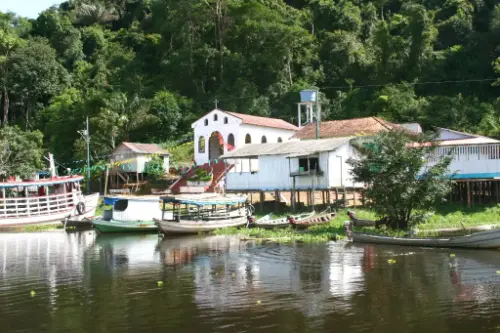 Dzień 71: 07:00–15:00
Boca de Valeria / Brazylia
Położona w delcie Amazonki, Boca de Valeria to maleńka wioska rybacka zamieszkana przez zaledwie 75 osób. Tutaj możesz poczuć wyjątkową okazję zanurzenia się w spokojny i niezwykły rytm życia Amazonii. Otoczone lasami równikowymi i drewnianymi domami pokrytymi palmowymi liśćmi, miejsce to zachwyca autentyczną atmosferą.
Mieszkańcy Boca de Valeria tworzą urocze ręcznie robione pamiątki, które można kupić jako wspomnienie z tej magicznej części Amazonii. Odwiedzający poczują spokój i serdeczność lokalnej społeczności oraz docenią piękno dziewiczej przyrody.
-
 Dzień 72: 18:00
Manaus / Brazylia
W sercu Amazonii, gdzie natura i historia łączą się w unikalną całość, znajduje się miasto Manaus — stolica stanu Amazonas i największe miasto regionu z ponad milionem mieszkańców. Zyskało sławę podczas boomu kauczukowego w ubiegłym wieku, kiedy to w 1896 roku wybudowano luksusową Operę, której materiały sprowadzono z Europy mimo wysokich kosztów. Otoczone dżunglą z trzech stron, Manaus wyróżnia się w porównaniu z europejskimi miastami zacienionymi uliczkami, niewielkimi parkami oraz tradycyjnymi czyścicielami butów. Zaledwie dziesięć minut spacerem od centrum można zobaczyć domy na palach z dachami z liści palmowych, zamieszkane przez rdzenne rodziny, które oferują autentyczną atmosferę Amazonii.
Jednym z naturalnych cudów miasta jest „Spotkanie Wód”. Tutaj ciemne, bogate w minerały wody Rio Negro łączą się z żółtawymi wodami rzeki Solimões, tworząc potężną Amazonkę. Przez około dwa kilometry te wody płyną obok siebie, nie mieszając się ze względu na różnicę temperatur, co tworzy imponujący spektakl przyrody. Manaus uważane jest za jedno z najczystszych ekologicznie miast na świecie i znajduje się zaledwie pięć godzin lotu od Rio de Janeiro — idealny punkt startowy do odkrywania niesamowitej amazońskiej dżungli.
-
Dzień 73: 18:00
Manaus / Brazylia
W sercu Amazonii, gdzie natura i historia łączą się w unikalną całość, znajduje się miasto Manaus — stolica stanu Amazonas i największe miasto regionu z ponad milionem mieszkańców. Zyskało sławę podczas boomu kauczukowego w ubiegłym wieku, kiedy to w 1896 roku wybudowano luksusową Operę, której materiały sprowadzono z Europy mimo wysokich kosztów. Otoczone dżunglą z trzech stron, Manaus wyróżnia się w porównaniu z europejskimi miastami zacienionymi uliczkami, niewielkimi parkami oraz tradycyjnymi czyścicielami butów. Zaledwie dziesięć minut spacerem od centrum można zobaczyć domy na palach z dachami z liści palmowych, zamieszkane przez rdzenne rodziny, które oferują autentyczną atmosferę Amazonii.
Jednym z naturalnych cudów miasta jest „Spotkanie Wód”. Tutaj ciemne, bogate w minerały wody Rio Negro łączą się z żółtawymi wodami rzeki Solimões, tworząc potężną Amazonkę. Przez około dwa kilometry te wody płyną obok siebie, nie mieszając się ze względu na różnicę temperatur, co tworzy imponujący spektakl przyrody. Manaus uważane jest za jedno z najczystszych ekologicznie miast na świecie i znajduje się zaledwie pięć godzin lotu od Rio de Janeiro — idealny punkt startowy do odkrywania niesamowitej amazońskiej dżungli.
-
 Dzień 74: 13:00–19:00
Parintins / Brazylia
Otoczony żywymi tradycjami i malowniczą przyrodą, region na wyspie Parintins oferuje wyjątkowe połączenie kulturalnej zabawy i tropikalnej dziczy. Co roku odbywa się tu słynny festiwal Bumba-Meu-Boi, który przyciąga tysiące turystów z całego świata, pragnących zanurzyć się w lokalne legendy, muzykę i taniec. Dodatkowo okolice obfitują w rzeki i lasy, gdzie można cieszyć się spacerami i poznawać bogactwo amazońskiej fauny.
Podróż do Parintins to szansa, aby odkryć nie tylko piękno amazońskich krajobrazów, ale także żywą kulturę brazylijskiego narodu. Małe wioski z przyjaznymi mieszkańcami, tradycyjne rękodzieło i kuchnia tworzą atmosferę przytulności i autentyczności. To miejsce, gdzie każdy gość znajdzie coś dla siebie — od zapierających dech w piersiach przygód przyrodniczych po niezapomniane doświadczenia kulturalne.
-
 Dzień 75: 07:00–12:30
Santarem / Brazylia
-
Dzień 76:
Dzień na morzu / Morze
-
Dzień 77:
Dzień na morzu / Morze
-
Dzień 78:
Dzień na morzu / Morze
-
 Dzień 79: 06:00–23:30
Bridgetown / Barbados
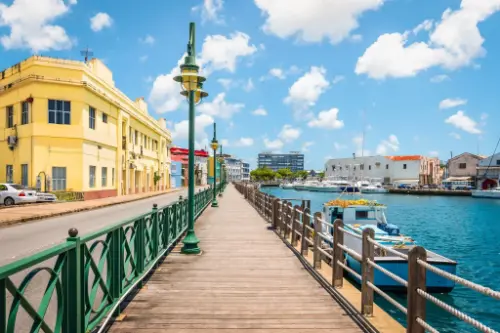
Bridgetown to stolica i największe miasto Barbadosu. Dawniej znane jako „Miasto św. Michała” (The Town of Saint Michael), obszar Greater Bridgetown znajduje się w parafii św. Michała. Miejscowi czasami nazywają je „Miastem” (The City), ale najczęściej po prostu „Town”. W 2014 roku populacja aglomeracji wynosiła około 110 000 mieszkańców.
Port Bridgetown znajduje się w zatoce Carlisle (13.106°N 59.632°W) na południowo-zachodnim wybrzeżu wyspy. Części obszaru Greater Bridgetown, ogólnie zdefiniowane przez obwodnicę (ABC Highway), leżą blisko granic sąsiednich parafii Christ Church i St. James. Międzynarodowe lotnisko Grantley Adams znajduje się 16 kilometrów na południowy wschód od centrum Bridgetown i oferuje codzienne loty do głównych miast Wielkiej Brytanii, USA, Kanady i Karaibów. Obecnie nie ma już lokalnych władz miejskich; Bridgetown jest okręgiem wyborczym w parlamencie krajowym. W latach 50. i 60. XX wieku, podczas istnienia Federacji Brytyjskich Terytoriów Indyjskich, Bridgetown było jednym z trzech miast rozważanych jako możliwa stolica federacji.
Obecna lokalizacja miasta została założona przez angielskich osadników w 1628 roku; wcześniejsza osada pod nadzorem Sir Williama Courtena znajdowała się w St. James Town. Bridgetown jest ważnym celem turystycznym na Karaibach, a także znaczącym centrum finansowym, informatycznym, konferencyjnym i portem dla statków wycieczkowych. 25 czerwca 2011 roku „Historyczne Bridgetown i jego garnizon” zostały wpisane na listę światowego dziedzictwa UNESCO.
-
 Dzień 80: 08:30–16:30
Kingstown / Saint Vincent i Grenadyny
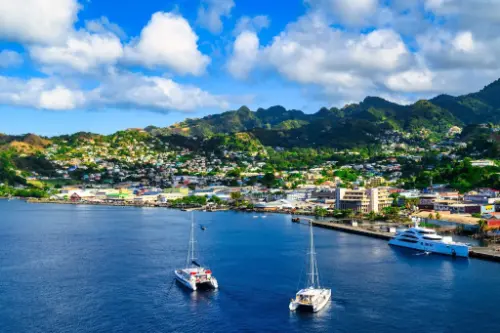
Kingstown to stolica i największe miasto Saint Vincent i Grenadyn, położone na zachodnim wybrzeżu wyspy Saint Vincent na Morzu Karaibskim. Miasto słynie z kolonialnej architektury, wąskich uliczek, kolorowych budynków oraz zachwycających widoków na ocean. Jedną z głównych atrakcji jest Ogród Botaniczny w Kingstown, założony w 1765 roku, który jest jednym z najstarszych ogrodów botanicznych na Karaibach. Spacerując po ogrodzie, można podziwiać egzotyczną roślinność i malownicze krajobrazy. Kingstown pełni również funkcję ważnego ośrodka handlowego i kulturalnego kraju. W mieście często organizowane są parady karnawałowe i lokalne festiwale, które ukazują bogatą kulturę i tradycje wyspy. Dla miłośników historii interesującym miejscem będzie Fort Charlotte, zbudowany w XVIII wieku, skąd roztacza się panoramiczny widok na port i nadbrzeżne okolice. Kingstown łączy w sobie urok starego kolonialnego miasta z żywym duchem współczesności, co czyni go atrakcyjnym zarówno dla turystów, jak i dla tych, którzy chcą poznać codzienne życie wyspy. -
Dzień 81:
Dzień na morzu / Morze
-
Dzień 82:
Dzień na morzu / Morze
-
Dzień 83:
Dzień na morzu / Morze
-
Dzień 84:
Dzień na morzu / Morze
-
Dzień 85:
Dzień na morzu / Morze
-
Dzień 86:
Dzień na morzu / Morze
-
 Dzień 87: 07:00–19:00
Mindelu / Cape Verde
Turkusowe fale Atlantyku otaczają zatokę Mindelo na wyspie São Vicente, zapraszając podróżnych do zanurzenia się w rytmy muzyki kabowerdyjskiej i ciepłej atmosfery. To miasto, znane jako kulturalna stolica Republiki Zielonego Przylądka, zachwyca kolorowymi kolonialnymi budynkami, żywymi dźwiękami morny i coladeiry oraz ulicznymi kawiarniami, w których można spróbować świeżych owoców morza przy dźwiękach gitary.
W Mindelo na gości czekają spacery nadmorską promenadą z widokiem na góry i port, przytulne sklepiki z lokalnym rękodziełem oraz piaszczyste plaże, gdzie delikatny wiatr niesie zapach oceanu. To miasto daje szansę poczuć powolne tempo wyspiarskiego życia, zanurzyć się w muzyce rozbrzmiewającej na każdym kroku i zabrać do domu wspomnienia o prawdziwym Cabo Verde, pełnym uśmiechów i ciepłego słońca.
-
Dzień 88:
Dzień na morzu / Morze
-
Dzień 89:
Dzień na morzu / Morze
-
 Dzień 90: 07:00–17:00
Santa Cruz, około. Teneryfa (Wyspy Kanaryjskie) / Hiszpania
-
Dzień 91:
Dzień na morzu / Morze
-
Dzień 92:
Dzień na morzu / Morze
-
 Dzień 93: 07:00–23:00
Malaga / Hiszpania
Málaga is a municipality, capital of the Province of Málaga, in the Autonomous Community of Andalusia, Spain. With a population of 569,130 in 2015, it is the second-most populous city of Andalusia and the sixth-largest in Spain. The southernmost large city in Europe, it lies on the Costa del Sol (Coast of the Sun) of the Mediterranean, about 100 kilometres (62.14 miles) east of the Strait of Gibraltar and about 130 km (80.78 mi) north of Africa.
Málaga's history spans about 2,800 years, making it one of the oldest cities in the world. According to most scholars, it was founded about 770 BC by the Phoenicians as Malaka From the 6th century BC the city was under the hegemony of Ancient Carthage, and from 218 BC, it was ruled by the Roman Republic and then empire as Malaca (Latin). After the fall of the empire and the end of Visigothic rule, it was under Islamic rule as Mālaqah for 800 years, but in 1487, the Crown of Castille gained control after the Reconquista. The archaeological remains and monuments from the Phoenician, Roman, Arabic and Christian eras make the historic center of the city an "open museum", displaying its history of nearly 3,000 years.
This important cultural infrastructure and the artistic heritage have culminated in the nomination of Málaga as a candidate for the 2016 European Capital of Culture.
The painter and sculptor Pablo Picasso, Hebrew poet and Jewish philosopher Solomon Ibn Gabirol and the actor Antonio Banderas were born in Málaga. The magnum opus of Cuban composer Ernesto Lecuona, "Malagueña", is named after the music of this region of Spain.
The most important business sectors in Málaga are tourism, construction and technology services, but other sectors such as transportation and logistics are beginning to expand. The Andalusia Technology Park (PTA), located in Málaga, has enjoyed significant growth since its inauguration in 1992. Málaga is the main economic and financial centre of southern Spain, home of the region's largest bank, Unicaja, and the fourth-ranking city in economic activity in Spain behind Madrid, Barcelona and Valencia.
-
Dzień 94:
Dzień na morzu / Morze
-
 Dzień 95: 06:00–19:00
Barcelona / Hiszpania
Mając reputację jednego z najatrakcyjniejszych miast w Europie, Barcelona świętuje swoją rolę stolicy Katalonii. Kosmopolityczna i międzynarodowa atmosfera miasta sprawia, że jest to ulubione miejsce wielu ludzi na całym świecie. Miasto jest szczególnie znane ze swojej architektury i sztuki – podróżnicy z całego świata przybywają, aby zobaczyć słynną Sagrada Familia i inne modernistyczne zabytki zaprojektowane przez Gaudiego.
Barcelona to miasto z licznymi i oryginalnymi możliwościami spędzania czasu wolnego, które sprawiają, że chcesz tu wracać. Położona na wybrzeżu Morza Śródziemnego Barcelona słynie z arcydzieł Gaudiego i architektury secesyjnej: jest jednym z najbardziej stylowych miast europejskich.
Miasto jest ośrodkiem nowych trendów w świecie kultury, mody i gastronomii. Dopełnieniem kreatywności artystów i projektantów jest ostrożne podejście do tradycyjnych placówek. Barcelona łączy w sobie urok i spokój historycznego centrum z awangardowymi nowoczesnymi dzielnicami i intensywnym tempem życia w jednym z najczęściej odwiedzanych miast na świecie.
-
 Dzień 96: 07:00–14:00
Palma de Mallorca / Hiszpania
Mallorca is the largest island in the Balearic Islands, which are part of Spain and located in the Mediterranean. The native language, as on the rest of the Balearic Islands, is Catalan, which is co-official with Spanish.
The capital of the island, Palma, is also the capital of the autonomous community of the Balearic Islands. The Balearic Islands have been an autonomous region of Spain since 1983. There are two small islands off the coast of Mallorca: Cabrera (southeast of Palma) and Dragonera (west of Palma). The anthem of Mallorca is "La Balanguera".
Like the other Balearic Islands of Menorca, Ibiza and Formentera, the island is an extremely popular holiday destination, particularly for tourists from Germany and the United Kingdom. The international airport, Palma de Mallorca Airport, is one of the busiest in Spain; it was used by 28.0 million passengers in 2017, increasing every year since 2012.
The name derives from Classical Latin insula maior, "larger island". Later, in Medieval Latin, this became Maiorica, "the larger one", in comparison to Menorca, "the smaller one".
-
 Dzień 97: 09:00–19:00
Sete/Seta / Francja
Miasto Sete, położone na południu Francji między laguną Thau a Morzem Śródziemnym, często nazywane jest „Wenecją Langwedocji” ze względu na malownicze kanały, po których pływają łodzie rybackie i wycieczkowe. Sète zostało założone w XVII wieku jako port dla Kanału Południowego (Canal du Midi) i do dziś pozostaje ważnym ośrodkiem rybołówstwa i handlu. Nad miastem góruje wzgórze Mont Saint-Clair, z którego roztacza się panoramiczny widok na słone mokradła i lazurowe wody zatoki.
Sète znane jest nie tylko ze swojego morskiego uroku, ale także z bogatego życia kulturalnego. To rodzinne miasto poety Paula Valéry’ego, którego imieniem nazwano muzeum i morski cmentarz, na którym został pochowany. Latem odbywają się tu wyjątkowe uroczystości — turnieje rycerskie na łodziach (joutes nautiques), tradycja sięgająca średniowiecza. Kuchnia lokalna słynie ze świeżych owoców morza, zwłaszcza ostryg i małży z laguny. Sète to miejsce, gdzie spotykają się duch Morza Śródziemnego, historia, gastronomia i poezja.
-
 Dzień 98: 08:00–19:00
Cannes / Francja
Cannes is a city located on the French Riviera. It is a commune located in the Alpes-Maritimes department, and host city of the annual Cannes Film Festival, Midem, and Cannes Lions International Festival of Creativity. The city is known for its association with the rich and famous, its luxury hotels and restaurants, and for several conferences. On 3 November 2011 it also played host to the G20 organisation of industrialised nations.
-
 Dzień 99: 07:00–22:00
Livorno / Włochy
Livorno is a port city on the Ligurian Sea on the western coast of Tuscany, Italy. It is the capital of the Province of Livorno, having a population of 158,493 residents in December 2017. It has traditionally been known in English as Leghorn.
The origins of Livorno are controversial, although the place was inhabited since the Neolithic Age as shown by worked bones, pieces of copper and ceramic found on the Livorno Hills in a cave between Ardenza and Montenero. The construction of the Via Aurelia coincided with the occupation of the region by the Romans, who left traces of their presence in the toponyms and ruins of towers. The natural cove called Liburna, later transformed into Livorna, before becoming Livorno, is a reference to the type of ship, the liburna, used by Roman navy. Others ancient toponyms include: Salviano (Salvius), Antignano (Ante ignem) which was the place situated before Ardenza (Ardentia) where were the beacons for the ships directed to Porto Pisano.
The name Livorna is mentioned for the first time in 1017 as a small coastal village, the port and the remains of a Roman tower. In 1077, a tower was built by Matilda of Tuscany. The Republic of Pisa owned Livorno from 1103 and built a quadrangular Fort called Quadratura dei Pisani ("Quarter of the Pisans") to defend the port. Porto Pisano was destroyed after the crushing defeat of the Pisan fleet in the Battle of Meloria in 1284. In 1399, Pisa sold Livorno to the Visconti of Milan, in 1405 it was sold to the Republic of Genoa and on 28 August 1421 it was bought by the Republic of Florence.
Between 1427 and 1429, a census counted 118 families in Livorno, including 423 persons. Monks, Jews, military personnel, and the homeless were not included in the census. The only remainder of medieval Livorno is a fragment of two towers and a wall, located inside the Fortezza Vecchia.
-
Dzień 100:
Dzień na morzu / Morze
-
 Dzień 101: 07:00–17:00
Messina, wł. Sycylia / Włochy
-
 Dzień 102: 07:00–16:00
Valletta / Malta
The capital of Malta - Valletta , is the first and almost the only city in Europe, which was once designed by architects and built according to all the rules and norms of construction. Valletta is considered to be one of the most beautiful cities on the Mediterranean. Klaipeda is on the list of the few remaining fortified towns. The center of the city is the Palace of the Grand Master of the Order of Malta, and today the residence of the President of the country, here is the seat of the Maltese Parliament. The list of places to visit in Valletta includes the Castilla Palace, the Admiralty (where the National Museum of Fine Arts is now located, with the largest painting collection in the country), a charming place in the city - the beautiful Hastings Gardens, and this is not the whole list of the riches of the capital of Malta .
-
Dzień 103:
Dzień na morzu / Morze
-
 Dzień 104: 09:00–18:00
Split / Chorwacja
Split – perła Dalmacji
Split to drugie największe miasto Chorwacji, położone nad Adriatykiem. Jego symbolem jest Pałac Dioklecjana, wpisany na listę UNESCO, otoczony wąskimi uliczkami i katedrą św. Duje.
Miasto tętni życiem na nadmorskiej promenadzie Riva, pełnej kawiarni i restauracji. W okolicy czekają plaże, m.in. słynna Bacvice.
Split to także ważny port, skąd łatwo popłynąć na chorwackie wyspy – Hvar, Brač czy Korčulę. Atmosfera śródziemnomorska i dalmatyńska kuchnia sprawiają, że Split to idealne miejsce na urlop.
-
 Dzień 105: 10:30–20:00
Miedź / Slovenia
Koper is the fifth largest city in Slovenia. Located in the southwestern part of the country, approximately five kilometres (3.1 miles) south of the border with Italy and 20 kilometers (12 miles) from Trieste, Koper is the largest coastal city in the country. It is bordered by the satellite towns of Izola and Ankaran, and anchors the Istrian region. With a unique ecology and biodiversity, it is considered an important national natural resource. It is the oldest recorded urban settlement in Slovenia. The city's Port of Koper is the major contributor to the economy of the eponymous city municipality. With only one percent of Slovenia having a coastline, the influence that the Port of Koper also has on tourism was a factor in Ankaran deciding to leave the municipality in a referendum in 2011 to establish its own. The city is a destination on a number of Mediterranean cruising lines. In 2016, the city expects 65 cruise ship arrivals (for example: Norwegian Spirit, MSC Magnifica, Norwegian Jade, MS Rhapsody of the Seas...) with the season spanning from March to December. Koper is the main urban centre of the Slovenian Istria, with a population of about 25,000.
-
 Dzień 106: 07:00
Chioggia / Włochy
-
Dzień 107: 17:00
Chioggia / Włochy
-
 Dzień 108: 09:00–19:00
Rijeka / Chorwacja
-
 Dzień 109: 07:00–16:00
Zadar / Chorwacja
-
 Dzień 110: 09:30–23:00
Dubrownik / Chorwacja
Dubrovnik is a Croatian city on the Adriatic Sea. It is one of the most prominent tourist destinations in the Mediterranean Sea, a seaport and the centre of Dubrovnik-Neretva County. Its total population is 42,615 (census 2011). In 1979, the city of Dubrovnik joined the UNESCO list of World Heritage sites.
The prosperity of the city was historically based on maritime trade; as the capital of the maritime Republic of Ragusa, it achieved a high level of development, particularly during the 15th and 16th centuries, as it became notable for its wealth and skilled diplomacy.
In 1991, after the break-up of Yugoslavia, Dubrovnik was besieged by Serbian and Montenegrin soldiers of the Yugoslav People's Army (JNA) for seven months and suffered significant damage from shelling. After repair and restoration works in the 1990s and early 2000s, Dubrovnik re-emerged as one of the top tourist destinations in the Mediterranean.
-
 Dzień 111: 07:00–17:00
Kotor / Czarna Góra
Kotor is a coastal town in Montenegro. It is located in a secluded part of the Gulf of Kotor. The city has a population of 13,510 and is the administrative center of Kotor Municipality.
The old Mediterranean port of Kotor is surrounded by fortifications built during the Venetian period. It is located on the Bay of Kotor (Boka Kotorska), one of the most indented parts of the Adriatic Sea. Some have called it the southern-most fjord in Europe, but it is a ria, a submerged river canyon. Together with the nearly overhanging limestone cliffs of Orjen and Lovćen, Kotor and its surrounding area form an impressive landscape.
Since the early 2000s Kotor has seen an increase in tourists , many of them coming by cruise ship. Visitors are attracted by the natural environment of the Gulf of Kotor and by the old town of Kotor. Kotor is part of the World Heritage Site dubbed the Natural and Culturo-Historical Region of Kotor.
The fortified city of Kotor was also included in UNESCO's World Heritage Site list as part of Venetian Works of Defence between 15th and 17th centuries: Stato da Terra – western Stato da Mar in 201
-
 Dzień 112: 07:00–17:00
Bar / Czarna Góra
Wśród zapachów gajów oliwnych i słonej bryzy Adriatyku turystów wita Bar – nadmorskie miasto w Czarnogórze, które łączy starożytną historię z urokiem morza. Można tu spacerować po uliczkach Starego Baru, gdzie ruiny dawnych twierdz przypominają o wpływach osmańskich i weneckich, lub skosztować lokalnego wina w cieniu wielowiekowej oliwki – jednej z najstarszych w Europie.
Współczesny Bar oferuje także komfortowe plaże, świeże owoce morza i doskonałe warunki do żeglowania. To idealne miejsce dla tych, którzy szukają nie tylko słońca i morza, ale także kontaktu z autentyczną kulturą bałkańską. Dzięki wygodnemu połączeniu promowemu z Włochami, Bar jest doskonałym punktem wyjścia do podróży po Adriatyku.
-
 Dzień 113: 07:00–17:00
Korfu / Grecja
Korfu uchodzi za najpiękniejszą wyspę archipelagu Jońskiego. Wyspa jest niezwykle żyzna – głównymi produktami są oliwa z oliwek, owoce południowe i wino. Stara część miasta Korfu zachwyca malowniczymi uliczkami i architekturą różnych kultur europejskich. Wyspa ma bogatą historię – przez wieki przyciągała najeźdźców, a największy wpływ na jej kulturę wywarły Włochy, co łatwo wytłumaczyć bliskością tego kraju. Korfu odwiedzali m.in. Goethe i Napoleon, a cesarzowa Elżbieta Austriacka mieszkała tu przez długi czas. Klimat sprzyja turystom – nawet latem morska bryza przynosi przyjemne orzeźwienie.
-
 Dzień 114: 07:00–17:00
Katakolo / Grecja
Katakolon to małe miasteczko nadmorskie położone na zachodzie Peloponezu w Grecji, pełniące funkcję morskiej bramy do legendarnej starożytnej Olimpii — kolebki igrzysk olimpijskich. Dzięki dogodnemu położeniu Katakolon stał się popularnym portem dla statków wycieczkowych. Port otaczają malownicze wzgórza, a wzdłuż wybrzeża znajdują się przytulne kawiarnie, sklepy z lokalnymi przysmakami i pamiątkami. Turyści często rozpoczynają swoją podróż po regionie właśnie tutaj, udając się następnie do stanowisk archeologicznych w Olimpii, oddalonych o około 30 km.
Katakolon oferuje spokojną atmosferę i tradycyjny grecki urok: wąskie uliczki, domy z dachówką i lazurowe wody Morza Jońskiego. W okolicach znajdują się winnice produkujące lokalne wino oraz niewielkie plaże idealne do kąpieli i relaksu. W miasteczku działa również Muzeum Starożytnej Techniki Greckiej, prezentujące unikalne modele starożytnych wynalazków — od automatycznych drzwi po wczesne formy komputerów. Katakolon to harmonijne połączenie historii, natury i autentycznej greckiej gościnności.
-
 Dzień 115: 09:00–20:00
Milos / Grecja
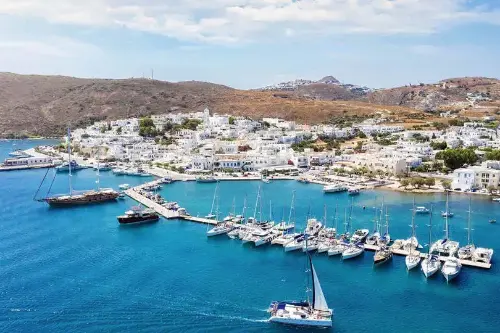
Milos, najbardziej na południe wysunięta wyspa Zachodnich Cyklad, wyróżnia się wulkanicznym krajobrazem i bogatymi zasobami mineralnymi. Słynie z koronkowego wybrzeża, oferującego ponad 75 plaż z krystalicznie czystą turkusową wodą i kolorowymi, monumentalnymi klifami.
Dzięki wulkanicznemu pochodzeniu, Milos zachwyca różnorodnością krajobrazów. W pobliżu znajdują się plaże z nieskazitelnym białym piaskiem oraz zatoczki z kamienistym dnem, otoczone białymi, czerwonymi, żółtymi, a nawet czarnymi skałami.
Wyspa zyskała światową sławę w XIX wieku dzięki odkryciu posągu Wenus z Milo, który obecnie znajduje się w Luwrze. Główny port, Adamas, dysponuje jednym z najbardziej niezawodnych naturalnych portów w Morzu Egejskim. To malownicze miasteczko oferuje brukowane uliczki, białe domy z balkonami pełnymi kwiatów oraz pachnące krzewy "armirikia" (solanki), uwiecznione przez poetów. Warto odwiedzić muzeum minerałów wyspy, które posiada bogatą ekspozycję minerałów.
-
 Dzień 116: 07:00–17:00
Chania (Souda), Kreta / Grecja
Chania (Souda), Kreta — Urok i historia
Chania, położona na północno-zachodnim wybrzeżu Krety, przyciąga podróżnych swoją historyczną atmosferą i malowniczym weneckim portem. Wąskie uliczki, budynki i przytulne kawiarnie tworzą unikalny urok, łącząc elementy architektury weneckiej i osmańskiej.
Souda to ważny port morski i promowy, położony w zatoce Souda, na wschód od Chanii. Port odgrywa kluczową rolę w sieci transportowej wyspy i ma strategiczne znaczenie dla regionu. W okolicach Chanii znajdują się stanowiska archeologiczne, w tym pozostałości starożytnych miast, a także atrakcje przyrodnicze, takie jak jaskinie i pomniki z czasów II wojny światowej.
-
 Dzień 117: 05:30–19:00
Pireus (Ateny) / Grecja
Pireus to stare miasto portowe, będące portem Aten i jednocześnie największym portem Grecji w dniu dzisiejszym. Pireus stanowi część wielkich Aten, które mogą poszczycić się bogactwem atrakcji, w tym unikalnymi zabytkami narodowej sztuki plastycznej.
Ponad dwieście muzeów i galerii, w tym Muzeum Historii Uniwersytetu, Muzeum Archeologiczne Keramejkos i wiele innych, gościnnie powita Państwa w swoich murach i zapozna z kulturą tej okolicy.
-
Dzień 118:
Dzień na morzu / Morze
-
 Dzień 119: 07:00
Stambuł / Turcja
Stambuł – największe miasto Turcji, położone nad Bosforem. Do 1930 roku znane jako Konstantynopol, było stolicą Imperium Rzymskiego, Bizantyjskiego, Łacińskiego i Osmańskiego. W mieście i jego okolicach zachowały się zabytki dawnych cywilizacji, świątynie, pałace i fortyfikacje. Dziś Stambuł to ważne centrum kultury, handlu i przemysłu. Turyści przyjeżdżają tu nie tylko, by zobaczyć historyczne pomniki, ale też zrobić zakupy na słynnych tureckich bazarach, gdzie można kupić przyprawy, biżuterię, antyki czy kolorowe fajki wodne i oczywiście potargować się jak miejscowi.
-
Dzień 120: 17:00
Stambuł / Turcja
Stambuł – największe miasto Turcji, położone nad Bosforem. Do 1930 roku znane jako Konstantynopol, było stolicą Imperium Rzymskiego, Bizantyjskiego, Łacińskiego i Osmańskiego. W mieście i jego okolicach zachowały się zabytki dawnych cywilizacji, świątynie, pałace i fortyfikacje. Dziś Stambuł to ważne centrum kultury, handlu i przemysłu. Turyści przyjeżdżają tu nie tylko, by zobaczyć historyczne pomniki, ale też zrobić zakupy na słynnych tureckich bazarach, gdzie można kupić przyprawy, biżuterię, antyki czy kolorowe fajki wodne i oczywiście potargować się jak miejscowi.
-
 Dzień 121: 07:00–16:00
Kepez (Canakkale) / Turcja
Kepez to nadmorskie miasto w prowincji Çanakkale w Turcji, położone 3 km od centrum miasta Çanakkale. Według danych z 2010 roku liczba ludności wynosiła 11 744 osoby. Na południe od Kepez znajdowało się starożytne miasto Dardanos. Na północ od niego znajduje się kurhan Dardanos, gdzie pod koniec 1959 roku przypadkowo odkryto wejście do monumentalnego grobowca. Grobowiec zbudowany był z precyzyjnie obrobionych kamiennych bloków i składa się z krytego dromosu o długości 5,20 m, przedsionka i komory grobowej.
Çanakkale, co dosłownie oznacza „twierdza garncarzy”, zasłynęło z rzemiosła garncarskiego. Dogodne położenie nad cieśniną Dardanele przyniosło mu przydomek „Brama Wybrzeża Egejskiego” – według legendy to właśnie tutaj przeprawiał się Aleksander Wielki, a później armia osmańska.
-
 Dzień 122: 07:30–18:00
Selcuk / Turcja
Śródziemnomorskie słońce, zapach lawendy i wieki historii towarzyszą podróżnym przybywającym do Selçuk, małego tureckiego miasteczka położonego zaledwie kilka kilometrów od legendarnego Efezu. Miejsce to łączy urok anatolijskiego życia z antycznymi ruinami, gdzie każdy kamień opowiada historie z czasów Cesarstwa Rzymskiego i Bizancjum. To doskonała baza wypadowa do zwiedzania jednego z najsłynniejszych stanowisk archeologicznych w Turcji, ale samo miasteczko również zasługuje na uwagę: można tu znaleźć stare meczety, bizantyjską twierdzę i pozostałości akweduktów.
W Selçuk czas płynie powoli, pozwalając na spokojne odkrywanie muzeów i ulicznych targów z przyprawami oraz ręcznie robioną ceramiką. Wiosną odbywa się tu festiwal tulipanów, a w pobliżu znajduje się Dom Matki Bożej – miejsce pielgrzymek chrześcijan. To rzadkie połączenie starożytności, religijnej symboliki i nowoczesnego tureckiego życia sprawia, że Selçuk zostawia po sobie nie tylko zdjęcia, ale i głębokie wrażenia.
-
 Dzień 123: 07:00–17:00
Marmaris / Turcja
-
 Dzień 124: 07:00–17:00
Mykonos / Grecja
Słynna, nowoczesna wyspa Mykonos przyciąga turystów swoim urokiem. Trudno oprzeć się widokowi lazurowego morza i skąpanego w słońcu białego miasta. Mykonos to wyspa kontrastów – biel domów, błękit głębin i kolorowe okna. Wśród atrakcji warto wspomnieć liczne kościoły i muzea, m.in. Muzeum Archeologiczne z amforą przedstawiającą scenę z Trojańskim koniem.
Mykonos to modny kurort i ulubione miejsce bohemy. To tutaj można zanurzyć się w wir luksusowych usług, rozrywek i nocnego życia. Ale wyspa ma także spokojniejsze oblicze – czekają na Ciebie urokliwe, ciche zakątki, idealne do relaksu i odpoczynku.
-
Dzień 125: 07:00–19:00
Gition / Grecja
-
Dzień 126:
Dzień na morzu / Morze
-
 Dzień 127: 07:00–16:00
Neapol / Włochy
Neapol to jedno z trzech największych miast Włoch, położone u stóp wulkanu Wezuwiusz na południu kraju. Miasto słynie z faktu, że lawa wulkanu pogrzebała trzy starożytne miasta, z których najsłynniejsze to Pompeje. Do dziś trwają tam wykopaliska archeologiczne, a odkryte przedmioty trafiają do Narodowego Muzeum Archeologicznego w Neapolu. W listopadzie teren Pompejów jest dostępny dla zwiedzających. Poza tym w mieście czekają katedry, pałace, place i inne atrakcje, które zachwycają turystów. No i oczywiście – tutaj spróbujesz najsmaczniejszej pizzy w całych Włoszech.
-
 Dzień 128: 06:00–19:00
Rzym (Civitavecchia) / Włochy
Rzym – jedno z najstarszych miast świata, niegdyś stolica Cesarstwa Rzymskiego, dziś stolica Włoch. Położony na siedmiu wzgórzach nad Tybrem, zachwyca pięknem i majestatem, którego nie da się oddać słowami – trzeba tu być. Każda rzeźba, fontanna czy budowla to dzieło sztuki pozostawione przez dawnych mistrzów. Najsłynniejsze atrakcje, które przyciągają turystów, to Koloseum – miejsce dawnych walk gladiatorów, Fontanna di Trevi, Schody Hiszpańskie, Bazylika św. Piotra – największy kościół Europy, a także Fora Cesarskie i Forum Romanum.
-
 Dzień 129: 08:00–19:00
Sorrento, Capri / Włochy
Sorrento is a town overlooking the Bay of Naples in Southern Italy. A popular tourist destination due to its variety of small antique shops and location on the Amalfi Coast, it can be reached easily from Naples and Pompeii as it is at the south-eastern end of the Circumvesuviana rail line. The town is most commonly known for its small shops selling an arrangement of ceramics, lacework and marquetry (woodwork).
The Sorrentine Peninsula has views of Naples, Vesuvius and the Isle of Capri. The Amalfi Drive, connecting Sorrento and Amalfi, is a narrow road that threads along the high cliffs above the Tyrrhenian Sea.
Ferries and hydrofoils connect the town to Naples, Amalfi, Positano, Capri and Ischia. Sorrento's sea cliffs and luxury hotels have attracted celebrities including Enrico Caruso and Luciano Pavarotti.
Limoncello, a digestif made from lemon rinds, alcohol, water and sugar, is produced in Sorrento. Other agricultural production includes citrus fruit, wine, nuts and olives.
-
Dzień 130: 10:00–20:00
ZATOKA ORANŻOWA
-
 Dzień 131: 07:00–19:00
Portoferraio / Włochy
Portoferraio to historyczne miasto na wyspie Elba w Toskanii, Włochy. Jako główny port i centrum administracyjne wyspy, Portoferraio przyciąga turystów swoją unikalną atmosferą, zachowaną od czasów Renesansu. Miasto zostało założone w 1548 roku i do dziś zachowało wiele historycznych zabytków, w tym wenecką twierdzę oraz stare ulice prowadzące do pięknych placów i urokliwych sklepów.
Ponadto Portoferraio jest znane z bliskości do naturalnych piękności, takich jak malownicze plaże i zielone wzgórza, idealne do spacerów i aktywnego wypoczynku. Ważną atrakcją jest Villa dei Mulini, gdzie Napoleon spędzał czas na wygnaniu, a zwiedzający mogą poznać historię jego życia. Portoferraio to idealne miejsce dla tych, którzy chcą cieszyć się spokojem, historią i naturą w jednym z najpiękniejszych zakątków Włoch.
-
 Dzień 132: 07:00–20:00
La Spezia / Włochy
-
 Dzień 133: 09:30–19:00
Ayachcho / Francja
Ajaccio is a French commune, prefecture of the department of Corse-du-Sud, and head office of the Collectivité territoriale de Corse (capital city of Corsica). It is also the largest settlement on the island. Ajaccio is located on the west coast of the island of Corsica, 210 nautical miles (390 km) southeast of Marseille.
The original city went into decline in the Middle Ages, but began to prosper again after the Genoese built a citadel in 1492 to the south of the earlier settlement. After the Corsican Republic was declared in 1755 the Genoese continued to hold several citadels, including Ajaccio, until the French took control of the island.
The inhabitants of the commune are known as Ajacciens or Ajacciennes. The most famous of these is Napoleon Bonaparte who was born in Ajaccio in 1769, and whose ancestral home, the Maison Bonaparte, is now a museum. Other dedications to him in the city include Ajaccio Napoleon Bonaparte Airport.
-
 Dzień 134: 07:00–23:30
Monte Carlo / Monaco
Monte Carlo officially refers to an administrative area of the Principality of Monaco, specifically the ward of Monte Carlo/Spélugues, where the Monte Carlo Casino is located. Informally the name also refers to a larger district, the Monte Carlo Quarter (corresponding to the former municipality of Monte Carlo), which besides Monte Carlo/Spélugues also includes the wards of La Rousse/Saint Roman, Larvotto/Bas Moulins, and Saint Michel. The permanent population of the ward of Monte Carlo is about 3,500, while that of the quarter is about 15,000. Monaco has four traditional quarters. From west to east they are: Fontvieille (the newest), Monaco-Ville (the oldest), La Condamine, and Monte Carlo.
Monte Carlo (literally "Mount Charles") is situated on a prominent escarpment at the base of the Maritime Alpsalong the French Riviera. Near the quarter's western end is the world-famous Place du Casino, the gamblingcenter which has made Monte Carlo "an international byword for the extravagant display and reckless dispersal of wealth". It is also the location of the Hôtel de Paris, the Café de Paris, and the Salle Garnier (the casino theatre which is the home of the Opéra de Monte-Carlo).
The quarter's eastern part includes the community of Larvotto with Monaco's only public beach, as well as its new convention center (the Grimaldi Forum), and the Monte-Carlo Bay Hotel & Resort. At the quarter's eastern border, one crosses into the French town of Beausoleil (sometimes referred to as Monte-Carlo-Supérieur), and just 8 kilometres (5 mi) to its east is the western border of Italy.
-
 Dzień 135: 07:00–16:00
Saint Tropez / Francja
Saint-Tropez is a town on the French Riviera, 100 kilometres (62 miles) west of Nice in the Var department of the Provence-Alpes-Côte d'Azur region of southeastern France.
Saint-Tropez was a military stronghold and fishing village until the beginning of the 20th century. It was the first town on this coast to be liberated during World War II as part of Operation Dragoon. After the war, it became an internationally known seaside resort, renowned principally because of the influx of artists of the French New Wave in cinema and the Yé-yé movement in music. It later became a resort for the European and American jet set and tourists.
-
Dzień 136:
Dzień na morzu / Morze
-
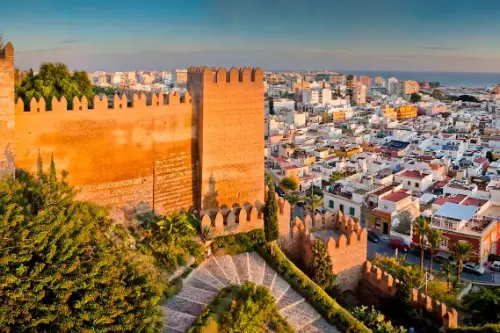 Dzień 137: 09:00–22:00
Almeria / Hiszpania
Kurort Almería położony jest na południowym wschodzie Hiszpanii. To główne miasto o tej samej nazwie w nadmorskiej prowincji Costa de Almería, w autonomicznym regionie Andaluzji. Choć jest stosunkowo młody, ten kurort dynamicznie się rozwija i kwitnie, przyciągając każdego roku coraz więcej turystów. Przyjeżdżają tutaj, by cieszyć się doskonałym wypoczynkiem, który zapewniają piękne plaże, łagodny klimat, zachwycająca przyroda, rozwinięta infrastruktura turystyczna oraz unikalna historia regionu. Almería jest preferowana przez turystów lubiących aktywny wypoczynek oraz miłośników różnorodnych rozrywek i wycieczek po atrakcjach.
-
 Dzień 138: 10:00–18:00
Gibraltar / Wielka Brytania
Gibraltar is a British Overseas Territory located at the southern tip of the Iberian Peninsula. It has an area of 6.7 km2 (2.6 sq mi) and is bordered to the north by Spain. The landscape is dominated by the Rock of Gibraltar at the foot of which is a densely populated town area, home to over 30,000 people, primarily Gibraltarians. It shares a maritime border with Morocco.
In 1704, Anglo-Dutch forces captured Gibraltar from Spain during the War of the Spanish Succession on behalf of the Habsburg claim to the Spanish throne. The territory was ceded to Great Britain in perpetuity under the Treaty of Utrechtin 1713. During World War II it was an important base for the Royal Navy as it controlled the entrance and exit to the Mediterranean Sea, which is only 8 miles (13 km) wide at this naval choke point. It remains strategically important, with half the world's seaborne trade passing through the strait. Today Gibraltar's economy is based largely on tourism, online gambling, financial services and cargo ship refuelling.
The sovereignty of Gibraltar is a point of contention in Anglo-Spanish relations because Spain asserts a claim to the territory. Gibraltarians rejected proposals for Spanish sovereignty in a 1967 referendum and, in a 2002 referendum, the idea of shared sovereignty was also rejected.
-
 Dzień 139: 07:00–21:00
Sewilla / Hiszpania
Sewilla jest stolicą i największym miastem autonomicznej wspólnoty Andaluzji oraz prowincji Sewilla w Hiszpanii. Położona jest na równinie rzeki Gwadalkiwir. Mieszkańców miasta nazywa się sevillanos (forma żeńska: sevillanas) lub hispalenses, od rzymskiej nazwy miasta, Hispalis. Sewilla liczy około 690 000 mieszkańców (dane z 2016 roku), a jej obszar metropolitalny około 1,5 miliona, co czyni ją czwartym co do wielkości miastem w Hiszpanii i 30. najbardziej zaludnioną gminą w Unii Europejskiej. Jej Stare Miasto o powierzchni 4 kilometrów kwadratowych (2 mile kwadratowe) zawiera trzy obiekty światowego dziedzictwa UNESCO: zespół pałacowy Alcázar, Katedrę i Archiwum Indii. Port w Sewilli, położony około 80 kilometrów (50 mil) od Oceanu Atlantyckiego, jest jedynym portem rzecznym w Hiszpanii.
-
 Dzień 140: 07:00–17:00
Portiman / Portugalia
Portimão is a town and a municipality in the district of Faro, in the Algarve region of southern Portugal. The population in 2011 was 55,614, in an area of 182.06 km². It was formerly known as Vila Nova de Portimão. In 1924, it was incorporated as a cidadeand became known merely as Portimão. Historically a fishing and shipbuilding centre, it has nonetheless developed into a strong tourist centre oriented along its beaches and southern coast. The two most populous towns in the Algarve are Portimão and Faro.
-
 Dzień 141: 06:00
Lizbona / Portugalia
Lizbona jest stolicą i największym miastem Portugalii, z szacowaną populacją 505 526 mieszkańców w granicach administracyjnych na obszarze 100,05 km². Jej obszar miejski rozciąga się poza granice administracyjne miasta i liczy około 2,8 miliona mieszkańców, co czyni go jedenastym najbardziej zaludnionym obszarem miejskim w Unii Europejskiej. Około 3 milionów ludzi mieszka w aglomeracji lizbońskiej (która stanowi około 27% populacji kraju). Jest to najbardziej wysunięta na zachód stolica kontynentalnej Europy i jedyna położona nad Oceanem Atlantyckim. Lizbona leży na zachodnim Półwyspie Iberyjskim nad Oceanem Atlantyckim i rzeką Tag. Najbardziej wysunięte na zachód obszary jej aglomeracji tworzą najbardziej wysunięty na zachód punkt kontynentalnej Europy, znany jako Cabo da Roca, położony w górach Sintra.
-
Dzień 142: 17:30
Lizbona / Portugalia
Lizbona jest stolicą i największym miastem Portugalii, z szacowaną populacją 505 526 mieszkańców w granicach administracyjnych na obszarze 100,05 km². Jej obszar miejski rozciąga się poza granice administracyjne miasta i liczy około 2,8 miliona mieszkańców, co czyni go jedenastym najbardziej zaludnionym obszarem miejskim w Unii Europejskiej. Około 3 milionów ludzi mieszka w aglomeracji lizbońskiej (która stanowi około 27% populacji kraju). Jest to najbardziej wysunięta na zachód stolica kontynentalnej Europy i jedyna położona nad Oceanem Atlantyckim. Lizbona leży na zachodnim Półwyspie Iberyjskim nad Oceanem Atlantyckim i rzeką Tag. Najbardziej wysunięte na zachód obszary jej aglomeracji tworzą najbardziej wysunięty na zachód punkt kontynentalnej Europy, znany jako Cabo da Roca, położony w górach Sintra.
-
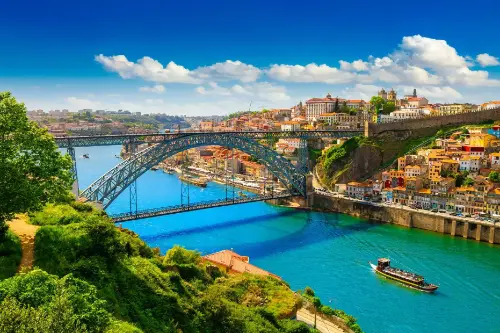 Dzień 143: 08:30–17:30
Porto / Portugalia
Порту является вторым по величине городом Португалии после Лиссабона и одним из крупных городских районов Пиренейского полуострова. Население самого города составляет 237 591 человек, а в столичном районе Порту, который выходит за административные пределы города, проживает 1,9 миллиона человек (2011 год) на площади 2 395 км2 (925 кв. Миль), что делает его вторым самый большой городской район в Португалии. Он признан глобальным городом гамма-уровня Исследовательской группой по глобализации и глобальным городам (GaWC), единственным португальским городом, кроме Лиссабона, который был признан глобальным городом.
Расположенный вдоль устья реки Дору на севере Португалии, Порту является одним из старейших европейских центров, и его историческое ядро было объявлено ЮНЕСКО объектом Всемирного наследия в 1996 году. Западная часть его городской территории простирается до береговой линии Атлантического океана. Его поселение датируется много веков, когда он был форпостом Римской империи. Его объединенное кельтско-латинское имя, Portus Cale, было названо происхождением названия «Португалия», основанного на транслитерации и устной эволюции от латыни. На португальском языке название города пишется с определенной статьей о Порту ; следовательно, его английское название произошло от неправильного толкования устного произношения и упоминается как Опорто в современной литературе и многими ораторами.
-
 Dzień 144: 10:00–19:00
La Coruna / Hiszpania
Podróżnicy odnajdują w La Coruña idealne miejsce do poczucia atmosfery atlantyckiego wybrzeża Hiszpanii, gdzie nowoczesne promenady spotykają się z historycznymi zabytkami i przytulnymi plażami. Miasto słynie z najstarszej działającej rzymskiej latarni morskiej na świecie – Wieży Herkulesa, zbudowanej prawie 2000 lat temu, która wciąż wskazuje drogę statkom. Można tu spacerować jedną z najdłuższych promenad w Europie, podziwiając oceaniczne widoki i świeży wiatr.
W La Coruña goście odkrywają bogatą galicyjską kulturę kulinarną z owocami morza, które serwowane są w tradycyjnych barach tapas oraz nowoczesnych restauracjach. Lokalne targi zachwycają świeżymi produktami, a życie kulturalne miasta wypełniają festiwale, wystawy i muzyka na żywo na ulicach. To miejsce oferuje podróżnym unikalne połączenie historycznej głębi, morskich krajobrazów i ciepłej hiszpańskiej atmosfery, pozostawiając po podróży poczucie lekkości i inspiracji.
-
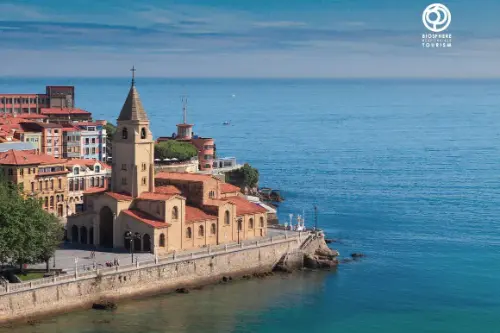 Dzień 145: 07:00–17:00
Gijon / Hiszpania
Na malowniczym wybrzeżu Zatoki Biskajskiej w hiszpańskim regionie Asturii położone jest urokliwe miasto Gijón, które zachwyca odwiedzających unikalnym połączeniem kultury, przyrody i gastronomii. Tutaj można spacerować po malowniczych plażach San Lorenzo, odwiedzać liczne muzea sztuki współczesnej oraz spróbować słynnego asturyjskiego cydru w tradycyjnych „chigres”.
Gijón to idealne miejsce dla tych, którzy cenią sobie połączenie historii i nowoczesnego życia. Poza pięknymi plażami i przytulnymi uliczkami miasto słynie z barwnych festiwali, takich jak Festiwal Morza i Festiwal Piosenki, które dodają podróży wyjątkowych wrażeń. Dla aktywnych turystów dostępne są różnorodne sporty wodne oraz szlaki piesze z zapierającymi dech w piersiach widokami na wybrzeże.
-
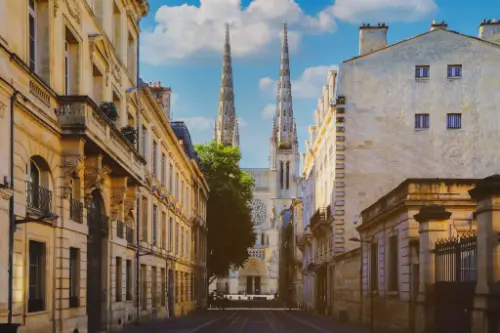 Dzień 146: 16:00
Bordeaux / Francja
Bordeaux jest miastem portowym nad Garonną w departamencie Żyronda w południowo-zachodniej Francji.
Sama gmina Bordeaux liczy 246 586 mieszkańców (2014). Wraz z przedmieściami i miastami satelickimi Bordeaux jest centrum metropolii Bordeaux. Z 1 195 335 mieszkańcami w obszarze metropolitalnym jest szóstym co do wielkości we Francji, po Paryżu, Marsylii, Lyonie, Tuluzie i Lille. Jest stolicą regionu Nowa Akwitania, a także prefekturą departamentu Żyronda. Jego mieszkańców nazywa się "Bordelais" (mężczyźni) lub "Bordelaises" (kobiety). Określenie "Bordelais" może również odnosić się do miasta i jego okolic.
Będąc w centrum ważnego regionu uprawy i produkcji wina, Bordeaux pozostaje znaczącym ośrodkiem i wywiera znaczący wpływ na światową branżę winiarską, chociaż w granicach miasta nie odbywa się żadna produkcja wina. Jest siedzibą głównych światowych targów wina, Vinexpo, a gospodarka winiarska w obszarze metropolitalnym przynosi 14,5 miliarda euro rocznie. Wino z Bordeaux jest produkowane w regionie od VIII wieku. Historyczna część miasta znajduje się na Liście Światowego Dziedzictwa UNESCO jako "wyjątkowy zespół miejski i architektoniczny" z XVIII wieku. Po Paryżu Bordeaux ma największą liczbę zachowanych zabytkowych budynków spośród wszystkich miast we Francji.
-
Dzień 147:
Bordeaux / Francja
Bordeaux jest miastem portowym nad Garonną w departamencie Żyronda w południowo-zachodniej Francji.
Sama gmina Bordeaux liczy 246 586 mieszkańców (2014). Wraz z przedmieściami i miastami satelickimi Bordeaux jest centrum metropolii Bordeaux. Z 1 195 335 mieszkańcami w obszarze metropolitalnym jest szóstym co do wielkości we Francji, po Paryżu, Marsylii, Lyonie, Tuluzie i Lille. Jest stolicą regionu Nowa Akwitania, a także prefekturą departamentu Żyronda. Jego mieszkańców nazywa się "Bordelais" (mężczyźni) lub "Bordelaises" (kobiety). Określenie "Bordelais" może również odnosić się do miasta i jego okolic.
Będąc w centrum ważnego regionu uprawy i produkcji wina, Bordeaux pozostaje znaczącym ośrodkiem i wywiera znaczący wpływ na światową branżę winiarską, chociaż w granicach miasta nie odbywa się żadna produkcja wina. Jest siedzibą głównych światowych targów wina, Vinexpo, a gospodarka winiarska w obszarze metropolitalnym przynosi 14,5 miliarda euro rocznie. Wino z Bordeaux jest produkowane w regionie od VIII wieku. Historyczna część miasta znajduje się na Liście Światowego Dziedzictwa UNESCO jako "wyjątkowy zespół miejski i architektoniczny" z XVIII wieku. Po Paryżu Bordeaux ma największą liczbę zachowanych zabytkowych budynków spośród wszystkich miast we Francji.
-
Dzień 148: 19:00
Bordeaux / Francja
Bordeaux jest miastem portowym nad Garonną w departamencie Żyronda w południowo-zachodniej Francji.
Sama gmina Bordeaux liczy 246 586 mieszkańców (2014). Wraz z przedmieściami i miastami satelickimi Bordeaux jest centrum metropolii Bordeaux. Z 1 195 335 mieszkańcami w obszarze metropolitalnym jest szóstym co do wielkości we Francji, po Paryżu, Marsylii, Lyonie, Tuluzie i Lille. Jest stolicą regionu Nowa Akwitania, a także prefekturą departamentu Żyronda. Jego mieszkańców nazywa się "Bordelais" (mężczyźni) lub "Bordelaises" (kobiety). Określenie "Bordelais" może również odnosić się do miasta i jego okolic.
Będąc w centrum ważnego regionu uprawy i produkcji wina, Bordeaux pozostaje znaczącym ośrodkiem i wywiera znaczący wpływ na światową branżę winiarską, chociaż w granicach miasta nie odbywa się żadna produkcja wina. Jest siedzibą głównych światowych targów wina, Vinexpo, a gospodarka winiarska w obszarze metropolitalnym przynosi 14,5 miliarda euro rocznie. Wino z Bordeaux jest produkowane w regionie od VIII wieku. Historyczna część miasta znajduje się na Liście Światowego Dziedzictwa UNESCO jako "wyjątkowy zespół miejski i architektoniczny" z XVIII wieku. Po Paryżu Bordeaux ma największą liczbę zachowanych zabytkowych budynków spośród wszystkich miast we Francji.
-
 Dzień 149: 07:00–19:00
La Rochelle / Francja
-
Dzień 150:
Dzień na morzu / Morze
-
 Dzień 151: 07:00–17:00
Saint-Malo / Francja
Morska bryza i krzyki mew towarzyszą Ci w Saint-Malo, mieście na wybrzeżu Bretanii, które zachowało ducha morskich przygód i niezależności. Wysokie mury obronne otaczają tu wąskie uliczki, a brukowane ścieżki prowadzą do przytulnych kawiarni z widokiem na ocean. Historia piratów i żeglarzy ożywa, gdy spacerujesz po bastionach, obserwujesz, jak przypływy zmieniają linię brzegową, lub wybierasz się łodzią na słynną wyspę Grand Bé, gdzie pochowany jest pisarz Chateaubriand.
W Saint-Malo możesz cieszyć się świeżymi owocami morza w lokalnych restauracjach, spróbować ostryg złowionych w pobliskich wodach lub urządzić piknik na piaszczystych plażach, które odsłaniają się podczas odpływu. Miasto daje poczucie jednoczesnego spokoju i wolności, łącząc malowniczą architekturę z energią Atlantyku, a morski wiatr i zapach soli w powietrzu przypominają, że tutaj historia i natura są zawsze blisko.
-
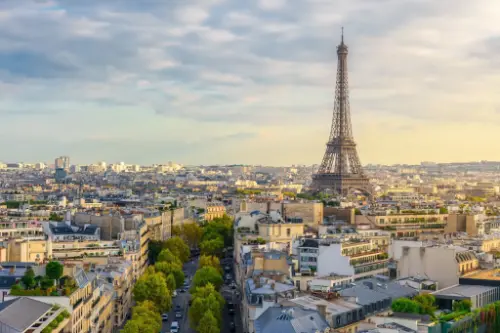 Dzień 152: 07:00–20:00
Paryż / Francja
the capital of France, on the Seine River; population 2,203,817 (2006). Paris was held by the Romans, who called it Lutetia, and by the Franks, and was established as the capital in 987 under Hugh Capet. It was organized into three parts—the Île de la Cité (an island in the Seine), the Right Bank, and the Left Bank—during the reign of Philippe-Auguste 1180–1223. The city's neoclassical architecture dates from the modernization of the Napoleonic era, which continued under Napoleon III, when the bridges and boulevards of the modern city were built.
-
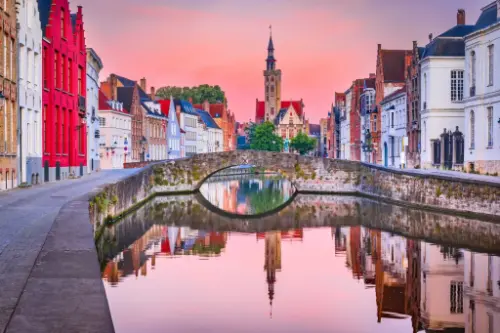 Dzień 153: 10:30–20:00
Bruges / Belgia
Bruges is the capital and largest city of the province of West Flanders in the Flemish Region of Belgium, in the northwest of the country.
The area of the whole city amounts to more than 13,840 hectares (138.4 sq km; 53.44 sq miles), including 1,075 hectares off the coast, at Zeebrugge (from Brugge aan zee, meaning "Bruges by the Sea"). The historic city centre is a prominent World Heritage Site of UNESCO. It is oval in shape and about 430 hectares in size. The city's total population is 117,073 (1 January 2008), of whom around 20,000 live in the city centre. The metropolitan area, including the outer commuter zone, covers an area of 616 km2 (238 sq mi) and has a total of 255,844 inhabitants as of 1 January 2008.
Along with a few other canal-based northern cities, such as Amsterdam, it is sometimes referred to as the Venice of the North. Bruges has a significant economic importance, thanks to its port, and was once one of the world's chief commercial cities. Bruges is well known as the seat of the College of Europe, a university institute for European studies.
-
Dzień 154: 09:00–22:00
Od Eymein / Holandia
-
Dzień 155:
Dzień na morzu / Morze
-
 Dzień 156: 06:00–17:00
Londyn / Wielka Brytania
-
Dzień 157:
Dzień na morzu / Morze
-
 Dzień 158: 07:00–18:00
Dublin / Irlandia
Dublin is the capital of, and largest city in, Ireland. It is on the east coast of Ireland, in the province of Leinster, at the mouth of the River Liffey, and is bordered on the south by the Wicklow mountains. It has an urban area population of 1,173,179, while the population of the Dublin Region (formerly County Dublin), as of 2016, was 1,347,359, and the population of the Greater Dublin area was 1,904,806.
There is archaeological debate regarding precisely where Dublin was established by Celtic-speaking people in the 7th century AD. Later expanded as a Viking settlement, the Kingdom of Dublin, the city became Ireland's principal settlement following the Norman invasion. The city expanded rapidly from the 17th century and was briefly the second largest city in the British Empire before the Acts of Union in 1800. Following the partition of Ireland in 1922, Dublin became the capital of the Irish Free State, later renamed Ireland.
Dublin is a historical and contemporary centre for education, the arts, administration and industry. As of 2018 the city was listed by the Globalization and World Cities Research Network (GaWC) as a global city, with a ranking of "Alpha -", which places it amongst the top thirty cities in the world.
-
 Dzień 159: 07:00–18:00
Belfast / Wielka Brytania
Belfast is a port city in the United Kingdom and the capital city of Northern Ireland, on the banks of the River Lagan on the east coast of Ireland. It is the largest city in Northern Ireland and second largest on the island of Ireland. It had a population of 333,871 in 2015.
By the early 1800s Belfast was a major port. It played a key role in the Industrial Revolution, becoming the biggest linen producer in the world, earning it the nickname "Linenopolis". By the time it was granted city status in 1888, it was a major centre of Irish linen production, tobacco-processing and rope-making. Shipbuilding was also a key industry; the Harland and Wolff shipyard, where the RMS Titanic was built, was the world's biggest shipyard. It also has a major aerospace and missiles industry. Industrialisation and the inward migration it brought made Belfast Ireland's biggest city and it became the capital of Northern Ireland following the Partition of Ireland in 1922. Its status as a global industrial centre ended in the decades after the Second World War.
Belfast suffered greatly in the Troubles, and in the 1970s and 1980s was one of the world's most dangerous cities. However, the city is now considered to be one of the safest within the United Kingdom. Throughout the 21st century, the city has seen a sustained period of calm, free from the intense political violence of former years and has benefitted from substantial economic and commercial growth. Belfast remains a centre for industry, as well as the arts, higher education, business, and law, and is the economic engine of Northern Ireland. Belfast is still a major port, with commercial and industrial docks dominating the Belfast Lough shoreline, including the Harland and Wolff shipyard. It is served by two airports: George Best Belfast City Airport, and Belfast International Airport 15 miles (24 km) west of the city. It is listed by the Globalization and World Cities Research Network (GaWC) as a Gamma global city.
-
 Dzień 160: 06:00–18:00
Glasgow / Wielka Brytania
Исконно шотландский город Глазго, расположен всего в 50 км от Эдинбурга. Это достаточно оживленный город с множеством интересных мест. В центре города Вас порадует множество достопримечательностей, в том числе район Сочиххол Сэнт, в котором сосредоточено много магазинов, пабов и кафе.
Восточнее расположена старая часть города, в которой можно полюбоваться Собором Глазго, посетить Музей религии и искусства Сент Мунго.
В парке Кантри расположена коллекция Баррелл — главная достопримечательность Глазго, здесь представлен китайский фарфор, антикварная мебель, импрессионистические картины. Вся эта роскошь расположена под крышей одного современного здания.
-
Dzień 161:
Dzień na morzu / Morze
-
 Dzień 162: 07:00–17:00
Torshavn / Faroe Islands
Tórshavn is the capital and largest town of the Faroe Islands. Tórshavn is in the southern part on the east coast of Streymoy. To the northwest of the city lies the 347-meter-high (1,138 ft) mountain Húsareyn, and to the southwest, the 350-meter-high (1,150 ft) Kirkjubøreyn. They are separated by the Sandá River. The town proper has a population of 13,089 (2017), and the greater urban area a population of 21,000.
The Norse established their parliament on the Tinganes peninsula in AD 850.[3] Tórshavn thus became the capital of the Faroe Islands and has remained so ever since. All through the Middle Ages the narrow peninsula jutting out into the sea made up the main part of Tórshavn. Early on, Tórshavn became the centre of the islands' trade monopoly, thereby being the only legal place for the islanders to sell and buy goods. In 1856, the trade monopoly was abolished and the islands were left open to free trade.
-
Dzień 163:
Dzień na morzu / Morze
-
 Dzień 164: 07:00–20:00
Heimaey / Islandia
-
 Dzień 165: 07:00
Reykjavik / Islandia
Reykjavík is the capital and largest city of Iceland. It is located in southwestern Iceland, on the southern shore of Faxa Bay. Its latitude is 64°08' N, making it the world's northernmost capital of a sovereign state. With a population of around 123,300 (and over 216,940 in the Capital Region), it is the heart of Iceland's cultural, economic and governmental activity, and is a popular tourist destination.
Reykjavík is believed to be the location of the first permanent settlement in Iceland, which, according to Ingólfr Arnarson, was established in AD 874. Until the 19th century, there was no urban development in the city location. The city was founded in 1786 as an official trading town and grew steadily over the following decades, as it transformed into a regional and later national centre of commerce, population, and governmental activities. It is among the cleanest, greenest, and safest cities in the world.
-
Dzień 166: 17:00
Reykjavik / Islandia
Reykjavík is the capital and largest city of Iceland. It is located in southwestern Iceland, on the southern shore of Faxa Bay. Its latitude is 64°08' N, making it the world's northernmost capital of a sovereign state. With a population of around 123,300 (and over 216,940 in the Capital Region), it is the heart of Iceland's cultural, economic and governmental activity, and is a popular tourist destination.
Reykjavík is believed to be the location of the first permanent settlement in Iceland, which, according to Ingólfr Arnarson, was established in AD 874. Until the 19th century, there was no urban development in the city location. The city was founded in 1786 as an official trading town and grew steadily over the following decades, as it transformed into a regional and later national centre of commerce, population, and governmental activities. It is among the cleanest, greenest, and safest cities in the world.
-
 Dzień 167: 07:00–17:00
Isafjordur / Islandia
Isafjörður, meaning ice fjord or fjord of ice, ice in plural genitive) is a town in the northwest of Iceland.
The oldest part of Ísafjörður with the town centre is located on a spit of sand, or eyri, in Skutulsfjörður, a fjord which meets the waters of the larger fjord Ísafjarðardjúp. With a population of about 2,600, Ísafjörður is the largest settlement in the peninsula of Vestfirðir (Westfjords) and the administration centre of the Ísafjarðarbær municipality, which includes – besides Ísafjörður – the nearby villages of Hnífsdalur, Flateyri, Suðureyri, and Þingeyri.
-
 Dzień 168: 07:00–16:00
Akureyri / Islandia
Akureyri is a town in northern Iceland. It is Iceland's Fifth largest municipality.
Nicknamed the Capital of North Iceland, Akureyri is an important port and fishing centre. The area where Akureyri is located was settled in the 9th century but did not receive a municipal charter until 1786. The town was the site of Alliedunits during World War II. Further growth occurred after the war as the Icelandic population increasingly moved to urban areas.
The area has a relatively mild climate because of geographical factors, and the town's ice-free harbour has played a significant role in its history.
-
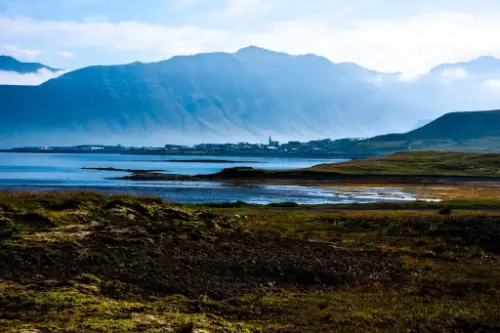 Dzień 169: 11:00–18:00
Grundarfjordur / Islandia
Grundarfjörður is a small town, situated in the north of the Snæfellsnes peninsula in the west of Iceland. It is situated between a mountain range and the sea. The nearby mountain Kirkjufell forms a small peninsula.
-
Dzień 170:
Dzień na morzu / Morze
-
Dzień 171:
Dzień na morzu / Morze
-
 Dzień 172: 08:00–17:00
Paamiut / Greenland
Zanurz się w atmosferę północnej przyrody, gdzie lodowate wody i malownicze krajobrazy tworzą wyjątkowy obraz dla każdego podróżnika. W tym zakątku Grenlandii, w małym miasteczku Paamiut, czekają na Ciebie żywe tradycje i przyjaźni mieszkańcy, którzy zachowali kulturę Inuitów oraz morskie dziedzictwo odzwierciedlone w ich rybackim stylu życia.
Paamiut to idealne miejsce dla tych, którzy chcą poczuć arktyczną ciszę i majestat natury, a także poznać unikalną florę i faunę regionu. Można tu spacerować wzdłuż wybrzeża, obserwować wieloryby i zorze polarne oraz spróbować świeżych owoców morza, przygotowywanych przez miejscowych z pasją i umiejętnościami. To ciche i autentyczne miejsce oferujące prawdziwą północną przygodę.
-
 Dzień 173: 23:45
Nuuk / Greenland
-
Dzień 174: 17:00
Nuuk / Greenland
-
Dzień 175:
Dzień na morzu / Morze
-
Dzień 176:
Dzień na morzu / Morze
-
 Dzień 177: 09:00–20:00
Corner-Brook / Kanada
-
Dzień 178:
Dzień na morzu / Morze
-
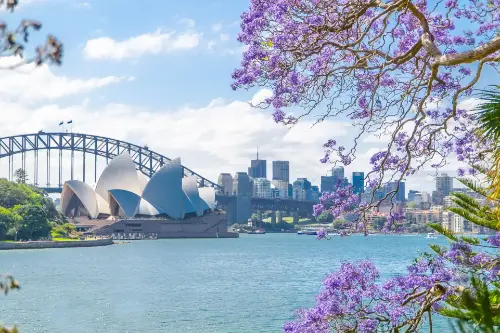 Dzień 179: 07:00–17:00
Sydnej / Australia
Sydney is the state capital of New South Wales and the most populous city in Australiaand Oceania. Located on Australia's east coast, the metropolis surrounds Port Jackson and extends about 70 km (43.5 mi) on its periphery towards the Blue Mountains to the west, Hawkesbury to the north, and Macarthur to the south. Sydney is made up of 658 suburbs, 40 local government areas and 15 contiguous regions. Residents of the city are known as "Sydneysiders". As of June 2017, Sydney's estimated metropolitan population was 5,131,326, and is home to approximately 65% of the state's population.
-
 Dzień 180: 10:30–18:30
Halifax / Kanada
Halifax, also known as the Halifax Regional Municipality (HRM), is the capital of the Canadian province of Nova Scotia. The municipality had a population of 403,131 in 2016, with 316,701 in the urban area centred on Halifax Harbour. The regional municipality consists of four former municipalities that were amalgamated in 1996: Halifax, Dartmouth, Bedford, and Halifax County.
Halifax is a major economic centre in Atlantic Canada with a large concentration of government services and private sector companies. Major employers and economic generators include the Department of National Defence, Dalhousie University, Saint Mary's University, the Halifax Shipyard, various levels of government, and the Port of Halifax. Agriculture, fishing, mining, forestry and natural gas extraction are major resource industries found in the rural areas of the municipality.
-
Dzień 181:
Dzień na morzu / Morze
-
 Dzień 182: 10:00
Nowy Jork / USA
The world famous city of New York , the largest city in the United States, with a population of 8.5 million people, and with suburbs - 20.6 million. New York is the largest economic, political, scientific, and cultural center of the United States. It is rightly called the "Main Gate" in the United States, and the world's largest John F. Kennedy Airport is located here. One of the distinguishing features of the city is the variegated national composition of the population, also called the United States in Miniature.
New York gathered in itself the whole essence of this country: fashion, religion, goods, pace and rhythm of American life. The UN headquarters is located here. There are also many universities in New York, the Academy of Sciences, and many other scientific institutions. Like any other metropolis in the world, New York invites you to visit numerous museums in the city, theaters and concert halls, including the Metropolitan Opera and Carnegie Hall. A great place to relax in New York is Central Park, where you can feed hand-held squirrels, which, to everyone's surprise, are not afraid of people. You can also appreciate the beauty of the famous Empire State Building, with a height of 102 floors, it is an example of skyscrapers, although it was built in 1829-1831. "Must see" in New York, of course, the Statue of Liberty ("Lady Liberty"), located at the mouth of the Hudson River, on the small island of Liberty. And of course, don't forget to stroll along Broadway.
-
Dzień 183: 19:00
Nowy Jork / USA
The world famous city of New York , the largest city in the United States, with a population of 8.5 million people, and with suburbs - 20.6 million. New York is the largest economic, political, scientific, and cultural center of the United States. It is rightly called the "Main Gate" in the United States, and the world's largest John F. Kennedy Airport is located here. One of the distinguishing features of the city is the variegated national composition of the population, also called the United States in Miniature.
New York gathered in itself the whole essence of this country: fashion, religion, goods, pace and rhythm of American life. The UN headquarters is located here. There are also many universities in New York, the Academy of Sciences, and many other scientific institutions. Like any other metropolis in the world, New York invites you to visit numerous museums in the city, theaters and concert halls, including the Metropolitan Opera and Carnegie Hall. A great place to relax in New York is Central Park, where you can feed hand-held squirrels, which, to everyone's surprise, are not afraid of people. You can also appreciate the beauty of the famous Empire State Building, with a height of 102 floors, it is an example of skyscrapers, although it was built in 1829-1831. "Must see" in New York, of course, the Statue of Liberty ("Lady Liberty"), located at the mouth of the Hudson River, on the small island of Liberty. And of course, don't forget to stroll along Broadway.
Twój Świat w cenie
Dzięki Twojemu Światu w cenie, będziesz cieszyć się szeroką gamą udogodnień, zapewniających najwyższy komfort i wartość rejsów ultra-premium.
Niezapomniane doznania kulinarne w licznych, wykwintnych restauracjach — wszystko bez dodatkowych opłat.
Bezpłatne kawy specjalistyczne, napoje gazowane, świeżo wyciskane soki oraz woda gazowana i niegazowana Vero Water® serwowane na całym statku.
Nielimitowany, bezpłatny dostęp do Wi-Fi w apartamentach, kabinach i wszystkich pomieszczeniach ogólnodostępnych.
Posiłki serwowane w pokoju z doskonałym wyborem dań na ciepło i zimno.
Koktajle, koktajle mleczne, gelato i firmowe lody Humphry Slocombe — zawsze w cenie.
Grupowe zajęcia fitness w Aquamar® Spa + Vitality Center są bezpłatne.
Napiwki są wliczone w cenę dla Twojej wygody.
Pranie jest bezpłatne dla wszystkich gości.
Dzięki bezpłatnym pralniom samoobsługowym na pokładzie, a także usługom prania i prasowania dla kategorii Concierge i Suite, zawsze będziesz wyglądać olśniewająco. Oprócz naszej charakterystycznej, spersonalizowanej obsługi, zapewnimy Ci wzbogacający rejs bez ukrytych kosztów i prowizji.
Podnieś poziom swoich wrażeń
Kajuty Concierge Level Veranda oferują niezrównane połączenie luksusu, przywilejów i wartości. Bogactwo udogodnień i ekskluzywnych korzyści sprawi, że Twoje wrażenia będą jeszcze bardziej wzniosłe — od dań do wyboru z The Grand Dining Room, przez bezpłatne usługi pralnicze, po nieograniczony dostęp do tarasu Aquamar Spa.
Na pokładzie Oceania Marina i Oceania Riviera możesz również skorzystać z usług dedykowanego Concierge i ekskluzywnego dostępu do prywatnego salonu Concierge Lounge.
Kajuty Concierge Level Veranda, zlokalizowane w najbardziej pożądanych miejscach statku, to coś więcej niż tylko kabiny — to niezapomniane przeżycie.
Concierge Level Veranda — Ekskluzywne przywileje
Rozszerzone menu posiłków do pokoju na lunch i kolację z The Grand Dining Room
Usługi pralnicze — do 3 sztuk bagażu na kabinę
Ekskluzywny dostęp do prywatnego salonu Concierge Lounge na statkach Oceania Marina, Oceania Riviera, Oceania Vista i Oceania Allura za pomocą karty-klucza, oferujący bezpłatne napoje, kawę, przekąski i usługi dedykowanego Concierge'a
Powitalna butelka wyśmienitego włoskiego Prosecco
Priorytetowe rezerwacje online w restauracjach specjalistycznych
Nieograniczony dostęp do tarasu Aquamar Spa
Torba z logo Oceania Cruises
Kaszmirowe koce na kolana — idealne do relaksu i przytulania
Prasowanie odzieży po wejściu na pokład
Bezpłatna usługa czyszczenia butów
Stan na 01.11.2026
Depozyt i płatności – Oceania Cruises
Depozyt ogólny:
W przypadku apartamentów typu Owner’s, Vista i Oceania Suites wymagany jest depozyt w wysokości 20% ceny rejsu od osoby.
W przypadku wszystkich pozostałych kategorii apartamentów/kabin, depozyt wynosi 500 USD od osoby.
W przypadku Grand Voyages depozyt wynosi 1500 USD od osoby.
Terminy depozytu i płatności końcowej:
Rezerwacje dokonane na ponad 150 dni przed rejsem:
Depozyt w wysokości 20% w przypadku apartamentów typu Owner’s, Vista i Oceania Suites oraz 500 USD w przypadku wszystkich pozostałych kategorii wymagany jest w ciągu 5 dni od rezerwacji.
Rezerwacje dokonane na 90–120 dni przed rejsem:
Pełna płatność wymagana w ciągu 3 dni od rezerwacji.
Rezerwacje dokonane na 0–90 dni przed rejsem:
Pełna płatność wymagana w dniu rezerwacji.
Ważne:
Rezerwacje, które nie zostaną wpłacone lub opłacone w całości zgodnie z niniejszym harmonogramem, zostaną automatycznie anulowane. O ile nie zaznaczono inaczej, płatność końcowa musi wpłynąć do Oceania Cruises na 150 dni przed wypłynięciem w przypadku rejsów krótszych niż 15 dni oraz na 150 dni w przypadku rejsów trwających 15 dni lub dłużej.
Oceania Cruises zastrzega sobie prawo do anulowania rezerwacji, które nie zostały w pełni opłacone w momencie płatności końcowej.
Informacje dodatkowe:
Dane paszportowe i specjalne prośby dotyczące usług pokładowych należy przesłać w momencie płatności końcowej.
Płatności można dokonać czekiem osobistym, kartą American Express, Discover, MasterCard lub Visa.
Dla wygody płatność końcowa może zostać automatycznie pobrana z karty kredytowej użytej do wpłaty początkowej.
Oceania Cruises nie ponosi odpowiedzialności za opłaty walutowe ani opłaty transakcyjne pobierane niezależnie przez banki wystawiające karty. Opłaty te nie przysługują Oceania Cruises.
Płatności kartami kredytowymi osób trzecich są akceptowane wyłącznie po uzyskaniu ważnej autoryzacji od posiadacza karty.
Depozyt i płatność – rejsy 180-dniowe
W przypadku rejsów 180-dniowych wymagany jest depozyt w wysokości 20% ceny rejsu od osoby za wszystkie apartamenty i kabiny w ciągu 7 dni od rezerwacji.
Ostateczna płatność musi zostać otrzymana najpóźniej 181 dni przed wypłynięciem, wraz z danymi paszportowymi i wszelkimi specjalnymi prośbami o usługi na pokładzie.
W przeciwnym razie rezerwacja może zostać natychmiast anulowana, a naliczone zostaną stosowne kary.
Forma płatności (FORMA PŁATNOŚCI)
Oceania Cruises akceptuje płatności za rezerwacje kartą kredytową/debetową lub przelewem bankowym.
Niestety, czeki osobiste nie są akceptowane.
Karty kredytowe/debetowe:
Akceptowane są karty American Express, Visa i Mastercard.
Uwaga: Oceania Cruises nie ponosi odpowiedzialności za opłaty za wymianę waluty/transakcje naliczane przez bank wystawiający kartę.
Ceny podane w USD — orientacyjnie 1 USD ≈ 46,50 ₴ według kursu z dnia rezerwacji
Proszę czekać…
Częste pytania
Rekomendujemy przylot dzień przed rozpoczęciem rejsu.
- W porcie należy stawić się 2–3 godziny przed wypłynięciem.
- Zamawiając transfer lotnisko–port, zaplanuj co najmniej 5 godzin między lądowaniem a planowanym wypłynięciem.
Masz jeszcze pytania?
Pomożemy wybrać rejs i odpowiemy na Twoje pytania.